

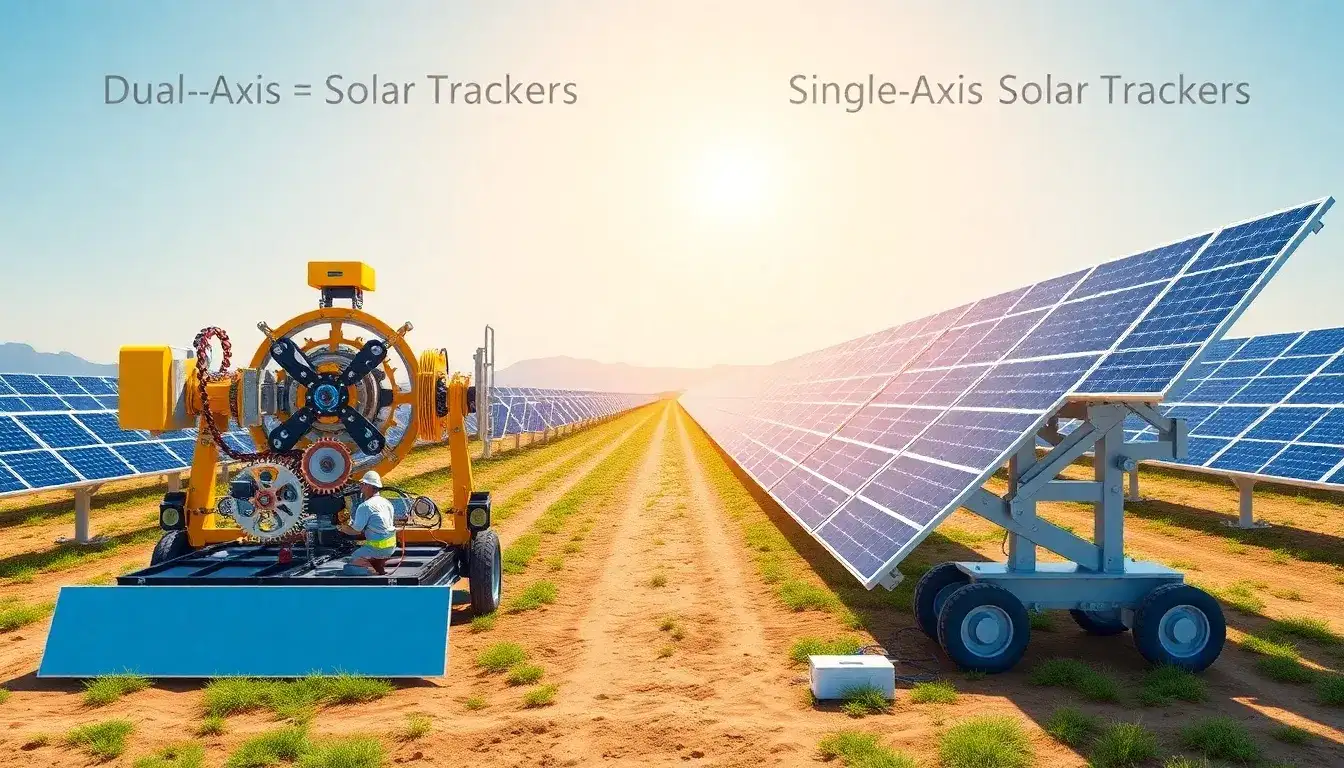
Dual-axis solar trackers are generally more expensive to maintain than single-axis trackers due to their increased complexity and higher upfront costs.
Cost Comparison and Maintenance Complexity
- Dual-axis trackers cost significantly more initially, with prices around $26,000 for a dual-axis system compared to about $20,000 for a single-axis system. This higher cost reflects the more complex mechanical and control components, such as dual motors and additional sensors.
- Maintenance is naturally more intensive for dual-axis trackers because they have more moving parts and require more sophisticated control systems to track both the vertical and horizontal position of the sun. This increases the likelihood of mechanical wear, need for lubrication, possible motor repairs, and system recalibration.
- Single-axis trackers, which move solar panels along one axis (usually east to west), are simpler and thus less expensive to maintain. They have fewer mechanical components and simpler control systems, making maintenance less costly and less frequent.
Economic Considerations
- Although dual-axis trackers can increase energy production more than single-axis trackers, the additional energy gains often do not offset the higher installation and ongoing maintenance costs. For instance, the payback period for a dual-axis system can extend to around 19 years, compared to 15.5 years for a single-axis system, largely because of these added costs and complexity.
- In many cases, it is more cost-effective to install additional fixed solar panels rather than invest in tracking systems, especially dual-axis trackers, due to their maintenance and operational expenses.
Summary
| Aspect | Single-Axis Tracker | Dual-Axis Tracker |
|---|---|---|
| Typical cost | ~$20,000 | ~$26,000 |
| Mechanical complexity | Lower (one axis movement) | Higher (two-axis movement) |
| Maintenance requirements | Lower (simpler mechanics and controls) | Higher (more motors, sensors, and controls) |
| Energy gain | Moderate | Higher but with diminishing returns |
| Economic payback period | Shorter (around 15.5 years) | Longer (around 19 years) |
In conclusion, dual-axis trackers tend to be more expensive to maintain than single-axis trackers due to their added mechanical complexity and higher component count. While they can generate more power by precisely following the sun’s path, this advantage often comes with increased maintenance costs and longer payback periods, making single-axis trackers or additional fixed panels more economically attractive in many solar projects.
Original article by NenPower, If reposted, please credit the source: https://nenpower.com/blog/are-dual-axis-trackers-more-expensive-to-maintain-than-single-axis-trackers/

