

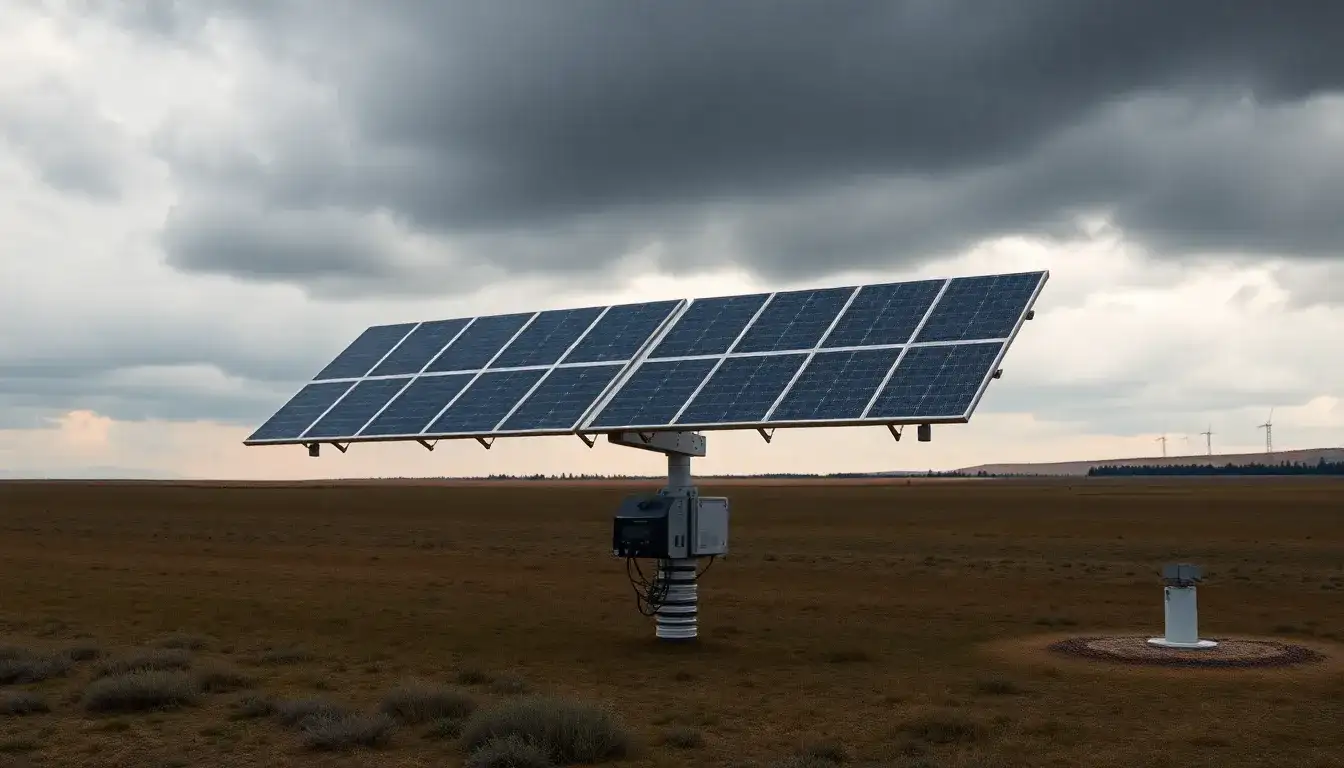
Dual-axis solar trackers can demonstrate improved efficiency in certain cloudy conditions compared to fixed systems, but their effectiveness depends on cloud dynamics and control strategies:
- Cloudy-day performance improvements:
- A radiometric cube-based control strategy for dual-axis trackers demonstrated a 40.5% energy gain over standard chronometric tracking on cloudy days by dynamically adjusting to diffuse irradiance.
- Dual-axis trackers can capture low-angle sunlight more effectively during overcast mornings/evenings compared to fixed panels.
- Variable results under heavy cloud cover:
- Some user-reported data indicates minimal gains (~1:1 efficiency) during fully overcast days, while academic studies show moderate improvements (e.g., 24.91% over fixed systems) even in overcast conditions.
- Performance depends on diffuse light utilization: Dual-axis trackers optimize panel alignment to harvest both direct and diffuse components, unlike fixed systems.
- Key differentiators:
Factor Dual-Axis Advantage Control strategy Sensor-based tracking (radiometric cube) outperforms time-based methods in clouds Daily variability Gains magnified during partial cloudiness when sun intermittently appears Seasonal impact More pronounced benefits in low-light winter months
While dual-axis trackers generally maintain some advantage over fixed systems in clouds, optimal performance requires adaptive control strategies that prioritize diffuse light capture over pure sun-following algorithms.
Original article by NenPower, If reposted, please credit the source: https://nenpower.com/blog/are-dual-axis-trackers-more-efficient-in-cloudy-conditions/

