

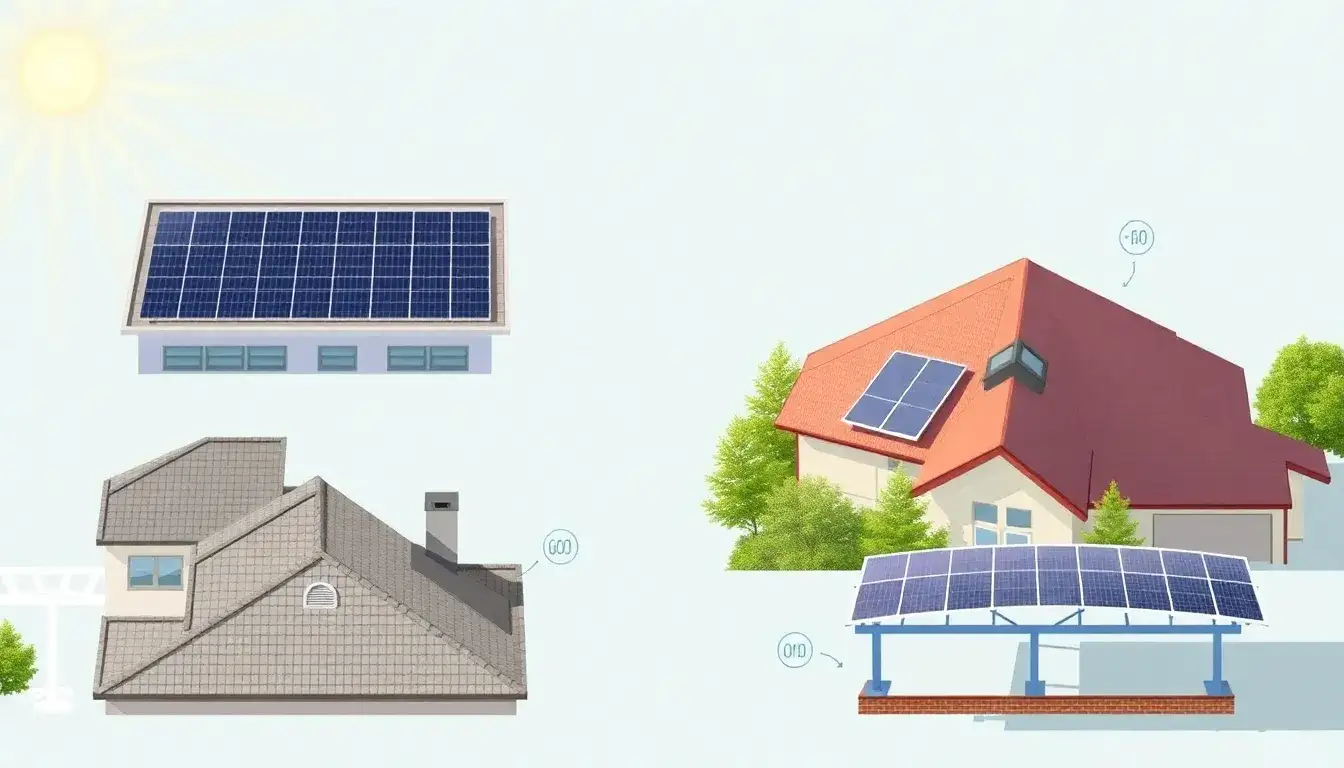
Bifacial solar panels are generally suitable for installation on many roof types, but their performance and suitability depend on specific roof characteristics:
- Reflective and Light-Colored Roofs: Bifacial panels perform best on roofs with reflective, light-colored surfaces because these increase the amount of sunlight reflected onto the backside of the panels, boosting their efficiency significantly. For example, white or light-colored roofs can reflect much more light compared to typical dark roofs, enhancing bifacial gain.
- Roof Pitch and Angle: Bifacial panels tend to work better on roofs with a pitch around 45° to 50°, which allows more reflected sunlight to hit the back of the panels. Mounting systems that create a gap between the panels and the roof also help light reach the rear side, improving energy production, though on most roofs this gap is limited compared to ground-mounted arrays.
- Non-Reflective Roofs: Roofs with dark, non-reflective materials, such as traditional asphalt shingles or non-reflective metal roofs, offer less reflected light, which reduces the additional gain from the rear side of bifacial panels. Metal roofs, depending on their finish, may or may not reflect enough sunlight to provide a substantial bifacial gain, making performance more variable.
- Panel Layout: The arrangement and spacing of panels on the roof affect how much light reaches the back surfaces. Panels placed too closely together or without gaps limit side and rear exposure to sunlight, reducing bifacial efficiency.
In summary, while bifacial solar panels can be installed on most roofs, their added benefit over traditional monofacial panels is maximized on light-colored, reflective, and appropriately pitched roofs with some elevation allowing light to reach the back side. Dark, flat, or non-reflective roofs, and those without space between panels, will see less advantage from bifacial technology.
Original article by NenPower, If reposted, please credit the source: https://nenpower.com/blog/are-bifacial-solar-panels-suitable-for-all-types-of-roofs/

