

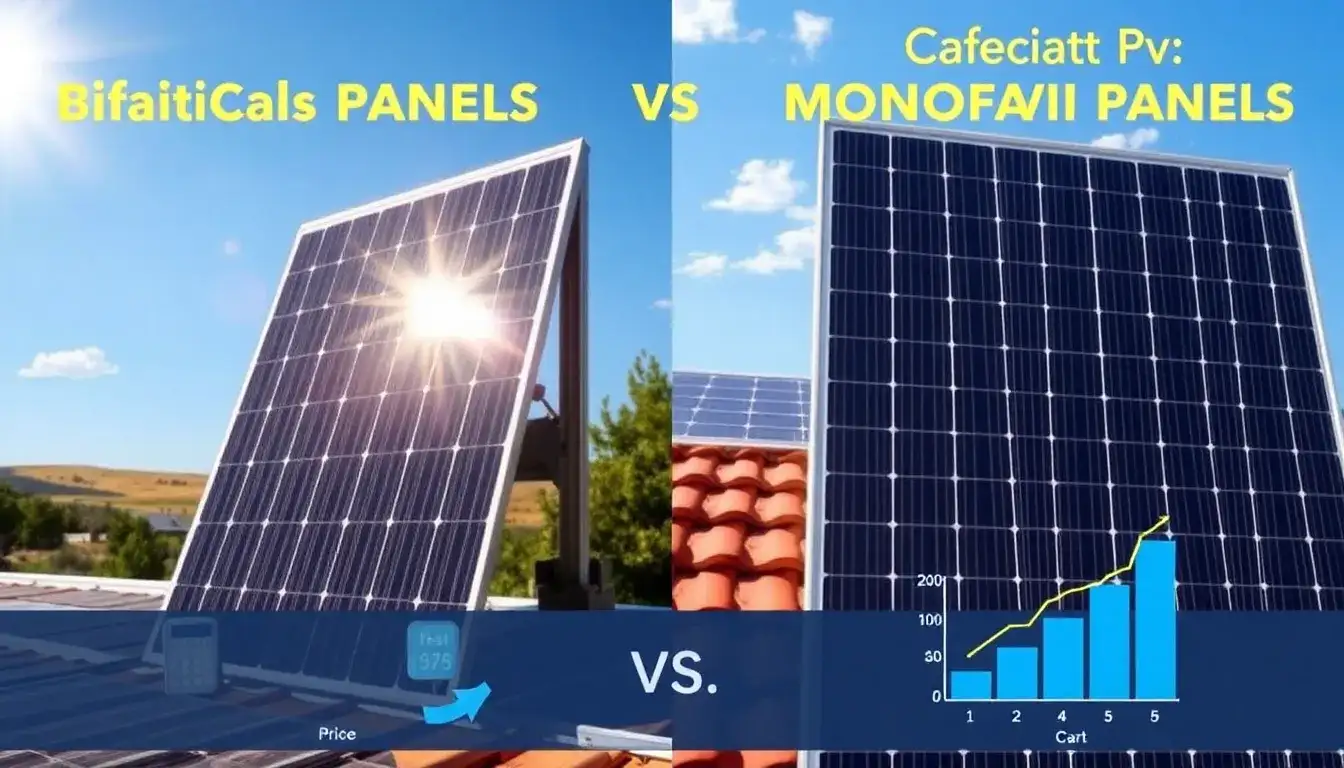
Bifacial solar panels are generally more expensive than monofacial solar panels due to their more complex design and additional materials required. Bifacial panels have solar cells on both sides, allowing them to capture sunlight from the front and the back, which enhances their energy production potential. This design complexity translates to higher manufacturing costs as well as potentially higher installation costs because they may require specialized mounting systems and site preparations to optimize their rear-side energy capture.
Specifically:
- The upfront cost for bifacial modules is higher per watt compared to monofacial modules. For example, utility-scale projects have shown bifacial modules costing about $10,000 more per megawatt than monofacial ones, although this extra investment is often recovered within a few years due to increased energy yield.
- Installation costs can also be higher for bifacial panels because they may require modifications to mounting hardware and site designs, such as optimizing tilt angles and ground reflectivity (albedo) to maximize back-side energy capture.
- Monofacial panels have a simpler construction and are typically less expensive upfront. For residential systems, typical costs cited are around £4,000-£5,000 for monofacial installations versus £5,500-£6,600 for bifacial (for a 2-3 bedroom home in the UK).
However, the higher initial cost of bifacial panels can be offset by their greater energy production, which can be 6-10% or more above monofacial panels in optimal conditions, leading to a lower levelized cost of electricity (LCOE) over the system’s lifetime. This means that although bifacial panels cost more initially, they often provide better long-term economic value in locations with favorable ground reflectivity and installation conditions.
In summary:
| Feature | Monofacial Panels | Bifacial Panels |
|---|---|---|
| Initial cost | Lower upfront cost | Higher upfront cost due to complex design and materials |
| Installation expense | Generally lower, simpler installation | Potentially higher due to specialized mounting and site optimization |
| Energy production | Lower, single-sided sunlight capture | Higher, captures sunlight on both sides, +6-10% or more yield |
| Long-term cost-effectiveness | May be more economical in low-reflectivity or constrained sites | Often more cost-effective in high-albedo and optimized installations |
Therefore, bifacial solar panels are more expensive than monofacial ones in terms of upfront costs, but their higher efficiency and energy yield can justify the extra expense depending on the project location and design.
Original article by NenPower, If reposted, please credit the source: https://nenpower.com/blog/are-bifacial-solar-panels-more-expensive-than-monofacial-ones/

