

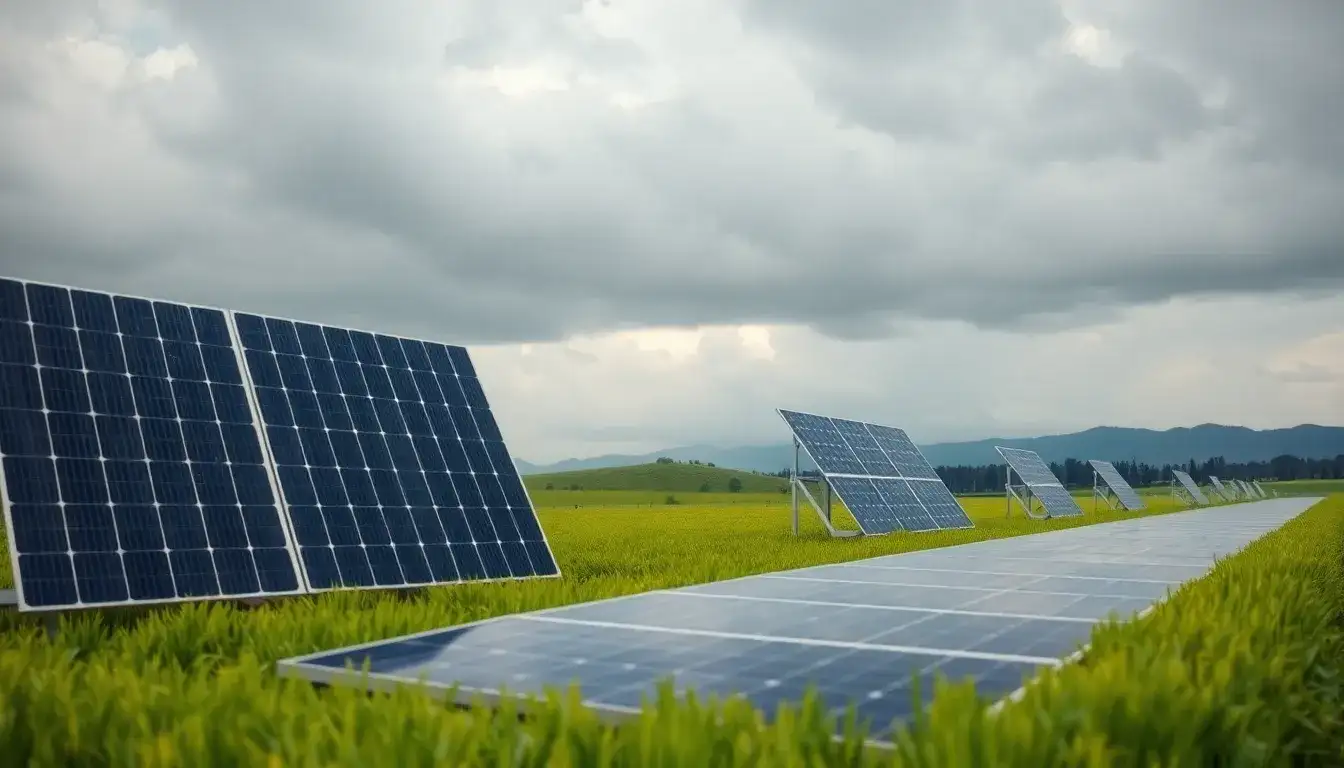
Bifacial Solar Panels in Cloudy Conditions
Bifacial solar panels are more effective in cloudy conditions compared to traditional monofacial panels. They generate power by capturing sunlight from both the front and rear sides, which maximizes energy production, especially when there is diffused or reflected sunlight.
Key Advantages:
- Capturing Diffuse Light: Bifacial panels can harness sunlight that is scattered through clouds, allowing them to produce electricity even on overcast days.
- Reflective Surfaces: They can capture reflected sunlight from surfaces like rooftops, grass, or snow, which enhances their efficiency in cloudy weather by 10-20%.
- Low Light Conditions: They perform better than monofacial panels in low-light environments, such as early morning, late afternoon, or under shaded areas.
Performance Comparison:
While bifacial panels offer improved performance in cloudy conditions, their efficiency still drops compared to sunny conditions. However, they generally outperform traditional panels by capturing additional ambient sunlight.
Cost Consideration:
Bifacial panels are more expensive than monofacial ones due to their more complex design and materials. However, their increased efficiency can offset the higher upfront cost over time, especially in areas with frequent cloud cover or limited installation space.
In summary, bifacial solar panels are indeed more effective in cloudy conditions than traditional solar panels, thanks to their ability to harness reflected and diffuse sunlight.
Original article by NenPower, If reposted, please credit the source: https://nenpower.com/blog/are-bifacial-solar-panels-more-effective-in-cloudy-conditions/

