

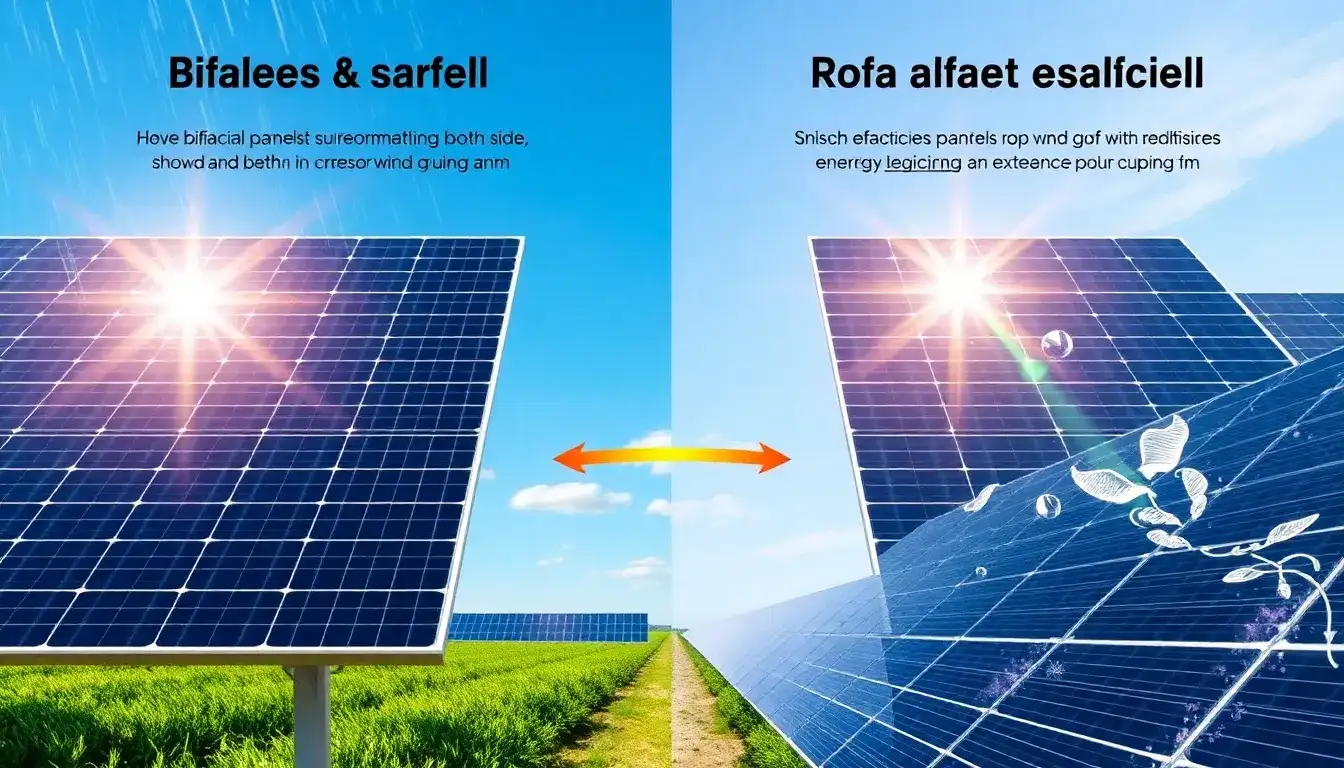
Bifacial solar panels are generally more durable than traditional (monofacial) solar panels due to several construction and design advantages:
- Double-Glass Construction: Most bifacial panels use glass on both the front and back sides, instead of the traditional glass front with a plastic backsheet found in monofacial panels. This double-glass setup significantly enhances durability against environmental stresses like wind, hail, and snow accumulation.
- Longer Lifespan and Warranties: The robust glass-glass design contributes to a longer operational lifespan for bifacial panels, commonly around 30 years, compared to about 25 years for traditional panels. Manufacturers also tend to offer longer warranties on bifacial panels as a result of their increased resilience.
- Better Sealing: Bifacial panels typically have better sealing than conventional panels, enhancing their durability and resistance to damage over time.
- Reduced Debris and Snow Impact: Because bifacial panels can be installed vertically, they are less prone to snow and debris buildup, which can otherwise obstruct energy generation. This flexibility in installation also contributes indirectly to their durability in certain environments.
In summary, bifacial solar panels’ design—especially the use of glass on both sides—makes them structurally stronger and more resistant to environmental degradation, resulting in superior durability compared to traditional monofacial panels. This durability advantage, along with higher energy output, often justifies their slightly higher upfront cost.
Original article by NenPower, If reposted, please credit the source: https://nenpower.com/blog/are-bifacial-solar-panels-more-durable-than-traditional-ones/

