

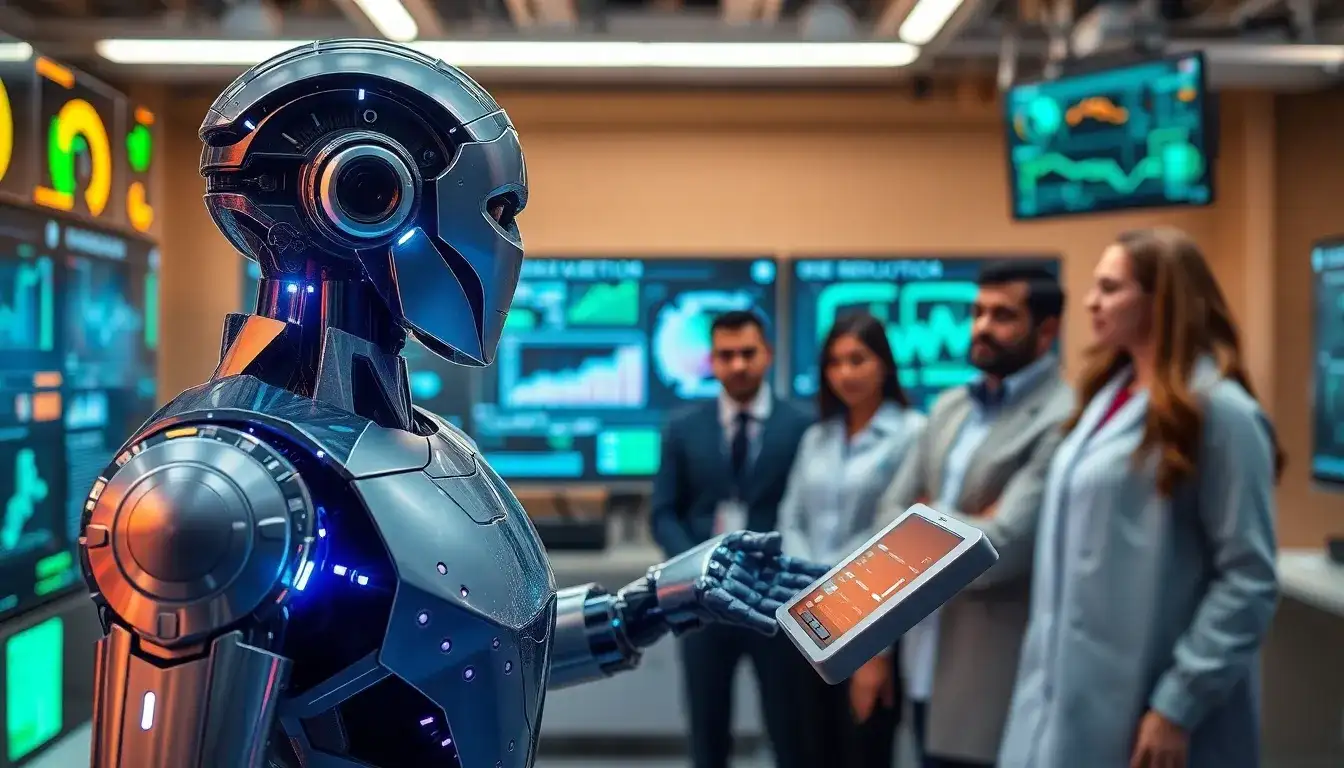
Ant Group has pioneered a groundbreaking “future prediction” control technology for robots, which was detailed in a research study published in 2026, identified by the code arXiv:2601.21998v1. This study illustrates for the first time how robots can “imagine” future events similarly to humans and subsequently decide on their actions. For instance, when cooking, if you observe water boiling in a pot, you instinctively predict it will boil over and adjust the heat or add ingredients accordingly. This “predict and act” thought process is central to human intelligence. In contrast, traditional robots react mechanically to stimuli, lacking the foresight to predict future events.
The research team at Ant Group developed an innovative technology called LingBot-VA, which endows robots with the ability to “foresee the future.” The core of this innovation involves enabling robots to create a “video preview” in their “mind” about what will happen in the next few seconds before executing any action. Based on this prediction, they can determine the best action strategy. The team tested this technology in real-world environments, allowing robots to complete six different types of complex tasks: from multi-step tasks like making breakfast to precision tasks such as inserting tubes and screwing screws, and even challenging tasks like folding clothes. The results indicated that robots equipped with “future prediction” capabilities significantly outperformed traditional robots, achieving over a 20% increase in success rates. Remarkably, this technology also demonstrated high learning efficiency; while conventional robots might need hundreds of demonstrations to master a new task, LingBot-VA can reach comparable performance levels with just 50 demonstrations.
1. The “Imagination Revolution” in Robot Control
Before discussing the core innovations of this technology, it is essential to understand the fundamental challenges faced by traditional robot control. Existing robots operate like actors following a script, deciding their next actions solely based on current observations. This “reactive control” method, while straightforward, has significant shortcomings. For example, when reaching for a cup, your brain instinctively predicts the trajectory of your arm, the weight of the cup, and the grip strength, even accounting for potential surface tilts. This predictive ability allows for smooth actions and quick adjustments in unexpected scenarios. Traditional robots, however, lack this foresight; they only react once they see the cup tipping over, often too late.
The breakthrough innovation of LingBot-VA lies in equipping robots with an “imagination engine.” This engine generates a “mental video” of environmental changes a few seconds ahead of any action. Just as a director visualizes the scene before filming, robots can now “see” the consequences of their actions before moving. This imaginative process is not merely about generating images; it relies on a profound understanding of the laws governing the physical world. By analyzing vast amounts of real-world video data, robots learn how gravity affects object motion, how contact creates deformation, and how friction alters trajectories. When encountering new scenes, they can apply this knowledge to predict object behavior.
Furthermore, LingBot-VA employs a method known as “causal world modeling.” This means that the robot’s imagination strictly follows the unidirectional flow of time—past events influence the present, the present state determines the future, and the future cannot retroactively affect the past. This causal consistency ensures that the robot’s predictions align with physical intuition, avoiding unrealistic fantasies. The architecture designed by the research team resembles a dual-brain system: the video brain imagines future visuals, while the action brain plans specific actions. These two brains work closely together through a meticulously designed “hybrid transformer” architecture, akin to the collaboration between the visual and motor cortices in the human brain, ensuring perfect synchronization between imagination and action.
Interestingly, the system also features a “real-time correction” capability. Just as a skilled driver adjusts their strategy based on changing road conditions, LingBot-VA continuously receives environmental feedback, updating its internal “world model.” When discrepancies arise between predictions and reality, the system promptly corrects its understanding, ensuring the accuracy of subsequent actions.
2. The Technical Secrets of “Temporal Memory” for Robots
Another significant limitation of traditional robots is their lack of long-term memory. They function like individuals with short-term memory loss, focusing only on immediate information while failing to retain previous events. When executing complex tasks that require multiple steps, this forgetfulness leads to severe issues. Imagine assembling a complex piece of furniture, needing to remember which parts have been installed, which screws have been used, and which section to connect next. If you forget previous progress every few seconds, the task becomes nearly impossible. This is the dilemma faced by traditional robots.
LingBot-VA addresses this issue with a clever “self-regressive” mechanism. Although “self-regressive” may sound technical, the concept is straightforward: it allows robots to reflect on and utilize their past experiences. Just as you would reference previous entries when writing a diary, robots can now review their past observations and actions, extracting useful information to guide current decisions. More specifically, the system uses a memory mechanism called “KV cache,” akin to giving robots an everlasting notebook that records every significant observation and decision. When faced with new situations, robots can consult this notebook to find relevant experiences and patterns.
This memory system is also designed with efficiency in mind. If a robot had to review hours of historical data to make a simple decision, it would be impractical. The research team implemented an “incremental update” mechanism, ensuring that only new, important information gets added to memory, and the system intelligently recognizes which historical data is most relevant to the current task. To validate this memory capability, the research team devised two specialized test tasks. The first was the “plate wiping” task, requiring the robot to accurately wipe a plate six times, necessitating counting and memory. The second was the “box searching” task, where only one of two boxes contained blocks, and the robot needed to remember which boxes had been checked to avoid redundant searches. The experimental results were impressive. In the plate wiping task, LingBot-VA achieved a 100% success rate, while the comparative system managed only 47%. In the search task, the gap was similarly significant: LingBot-VA reached 100%, while the comparative system was at just 50%. These results clearly demonstrate the importance of long-term memory in enabling robots to perform complex tasks.
The memory system’s other critical feature is its “causal masking” mechanism. This ensures that robots can only make decisions based on past and present information, without “foreseeing” future information. While this limitation may seem to increase difficulty, it actually makes the robot’s actions more aligned with the causal relationships of the real world, enhancing the system’s reliability.
3. “Noise History Enhancement”: Teaching Robots to Act Amid Imperfections
The real world is never perfect. Even when working under dim lighting or communicating in noisy environments, we can still effectively execute tasks. However, this ability to function under less-than-ideal conditions poses a significant challenge for robots, especially when they rely on high-quality visual information for decision-making. A key innovation of LingBot-VA is the “noise history enhancement” technique. Although the term sounds technical, the concept is intuitive: it deliberately exposes robots to imperfect visual information during training, teaching them to perform actions accurately even when faced with blurry, noisy, or unclear images. This training approach is analogous to teaching a learner driver to practice under various weather conditions. A driver who has practiced in sunny, rainy, and foggy conditions will be better equipped to navigate real-world complexities.
Through training with visual inputs of varying quality, robots gain enhanced robustness. The implementation is clever. During training, the system randomly adds different levels of “noise” to historical visual information, akin to applying varying intensities of a mosaic effect to clear images. Robots must learn to extract sufficient semantic content from these degraded inputs to guide their actions. This method brings two significant benefits. Firstly, it greatly accelerates reasoning speed. In traditional methods, robots must wait for complete visual reconstruction before planning actions, a process that can be time-consuming. In contrast, robots trained with noise enhancement can begin acting even when visual reconstruction is only partially complete, reducing reasoning time by nearly 50%. Secondly, this training improves the system’s adaptability to real-world situations. Real-world cameras may be dusty, lighting may be uneven, and objects may be partially obscured, all of which can degrade visual information quality. Robots trained with noise enhancement exhibit more stability in such scenarios.
The research team also discovered an intriguing phenomenon: robots do not require pixel-perfect visual reconstruction for action planning. Just as humans can accurately pick up a cup in low-light conditions, robots need only grasp the critical semantic features to execute precise actions. This finding opens new optimization avenues for robot control. To further enhance practicality, the system also employs an “asynchronous reasoning” mechanism. Just as a skilled chef can simultaneously handle multiple cooking tasks—stir-frying, boiling soup, and preparing ingredients for the next dish—robots can now simultaneously perform visual imagination and action execution, significantly improving overall efficiency.
4. Real-World Testing: Versatile Performance from Breakfast Preparation to Precision Operations
Theoretical models must ultimately be tested against real-world scenarios. The research team designed six different types of real tasks to comprehensively evaluate LingBot-VA’s practical performance. These tasks can be seen as the robot’s “final exams,” covering long-term planning, precision operations, and material handling. The breakfast-making task is arguably the most challenging comprehensive exam, requiring the robot to complete ten sequential steps: grabbing a plate, picking up bread, taking a fork, placing the bread, pressing the toaster, grabbing a cup, taking a kettle, pouring water, grabbing an apple, and finally plating the food. This task tests not only the robot’s operational skills but also its long-term memory and task planning abilities. In this task, LingBot-VA performed impressively, achieving a success rate of 75% and a completion rate of 97%. In contrast, the comparative system π0.5 had a success rate of only 70% and a completion rate of 73%. More importantly, LingBot-VA could quickly recover from minor errors rather than abandon the task entirely.
Precision operation tasks included inserting tubes and screwing screws, requiring millimeter-level precision control. The tube insertion task required the robot to accurately insert three different tubes, each with strict location and angle requirements. The screw task was even more complex, requiring the robot to first pick up paper, pour out screws, and then screw in three screws one by one. In the tube insertion task, LingBot-VA achieved a success rate of 40% and a completion rate of 85.8%, significantly outperforming the comparative system’s 30% success rate and 79.2% completion rate. This performance improvement is primarily attributed to the system’s predictive abilities, which enable it to foresee potential resistance and deviations during the insertion process and make adjustments in advance.
Handling deformable materials has always been a challenge in robotics. The clothing folding task required the robot to manage soft, easily deformable fabrics. The difficulty lies in the constantly changing state of the fabric, making traditional rigid control strategies unsuitable. In the clothing folding task, the robot needed to complete six steps: folding the left sleeve, folding the right sleeve, folding in half, smoothing out, and placing the item. LingBot-VA achieved a success rate of 35% and a completion rate of 48.8%. Although these absolute values may not seem high, it’s important to note that even humans need practice to master such tasks. More importantly, it significantly surpassed the comparative system’s success rate of 30% and completion rate of 62.9%. The pants folding task was somewhat simpler, requiring just three steps: folding at the waist, folding the legs, and placing them correctly. In this task, LingBot-VA achieved a success rate of 70% and a completion rate of 76.7%, demonstrating excellent performance.
The package unboxing task tested the robot’s ability to use tools. The robot needed to perform five steps: pick up a knife, push the blade, pass the knife, cut the seal, and open the lid. This task was unique in that it required precise control of tool pressure to cut the seal without damaging the contents. Among all tests, the most impressive aspect was LingBot-VA’s learning efficiency. Traditional robots may require hundreds of demonstrations to master these tasks, while LingBot-VA only needs 50 real-world demonstrations to achieve such performance. This high learning efficiency stems from its understanding of physical intuitions and dynamics learned from vast video data.
5. Simulation Environment Validation: Exceptional Dual-Arm Coordination and Long-Term Task Performance
In addition to real-world testing, the research team also validated LingBot-VA’s performance in two standard simulation environments. The advantage of simulation testing lies in the ability to conduct large-scale, repeatable experiments while testing more complex scenarios. RoboTwin 2.0 is a simulation platform specifically designed for testing dual-arm coordinated operations, containing 50 different tasks. These tasks require precise cooperation between two robotic arms, similar to how humans operate with both hands. For example, the “dual-hand block passing” task requires one hand to grasp a block and pass it to the other, while the “stacking three blocks” task necessitates coordinated control of different blocks’ positions and orientations. On this challenging platform, LingBot-VA achieved remarkable results, maintaining an average success rate of 92.93% in simple configurations and 91.55% in difficult configurations. In comparison, the previous best method, Motus, achieved only 88.66% and 87.02% under the same conditions. Interestingly, the research team found that the duration of tasks had minimal impact on LingBot-VA’s performance. In single-step tasks, its success rate was 94.18%, while in more complex tasks requiring three steps, it maintained a success rate of 93.22%. This stability underscores the reliability of the system’s long-term memory and planning capabilities.
The LIBERO testing platform includes four different task suites, each focusing on different robotic capabilities. The spatial reasoning suite tests the robot’s spatial cognition, while the object recognition suite assesses its generalization abilities for different objects. The goal-oriented suite evaluates task planning capabilities, and the long-term task suite tests sustained operation abilities. On this platform, LingBot-VA set new benchmarks across nearly all dimensions. It achieved a success rate of 99.6% in the object recognition suite and 98.5% in the long-term task suite, resulting in an average success rate of 98.5%, surpassing all previous methods. Notably, its performance in the long-term task suite is particularly impressive, as these tasks typically require 10-15 consecutive steps, where failure at any step results in the entire task failing. Traditional methods often see performance decline sharply as the number of steps increases, while LingBot-VA maintains high stability.
Simulation experiments also revealed another crucial feature of the system: adaptability to environmental changes. In the “difficult” mode of RoboTwin 2.0, the initial positions of objects and scene layouts are randomized, necessitating strong generalization capabilities from robots. LingBot-VA’s success rate remained above 91% in such conditions, demonstrating its genuine understanding of task essence rather than mere memorization of specific action sequences. The research team also conducted a detailed efficiency analysis. In synchronous mode, the system must wait for visual predictions to complete before executing actions, leading to some delays. However, in asynchronous mode, the system can simultaneously perform predictions and executions, reducing overall task completion time by nearly half while maintaining the same success rate.
6. In-Depth Analysis: Breakthroughs in Sample Efficiency and Generalization Ability
One of LingBot-VA’s significant advantages is its exceptional sample efficiency, meaning it can learn complex tasks from relatively few demonstrations. This ability is crucial for the practical application of robotics, as collecting large amounts of high-quality demonstration data is often expensive and time-consuming. In sample efficiency tests, the research team compared the performance of various systems with different numbers of demonstration data. The results showed that with only ten demonstrations, LingBot-VA achieved a completion rate of 61.1% in the breakfast-making task, while the comparative system π0.5 only reached 45.5%. As the number of demonstrations increased to 50, LingBot-VA’s performance improved to 97%, while π0.5 only reached 73%. The secret to this high learning efficiency lies in LingBot-VA’s “transfer learning” mechanism. The system first learns the basic laws of the physical world from a large amount of general video data, such as how gravity affects objects, how contact generates force, and how friction alters motion trajectories. This foundational knowledge serves as the robot’s “common sense,” allowing it to learn task-specific skills without starting from scratch.
Generalization ability tests showcased another critical advantage of LingBot-VA. In the object generalization tests, the system first trained on a single type of object, then was tested on its ability to handle different shapes, materials, and sizes. Results indicated that LingBot-VA could successfully manage previously unseen object types during training, accurately recognizing and manipulating items ranging from organizers to apples and from blocks to bowls. The spatial generalization test was even more intriguing, where the system trained on specific layouts of objects within a fixed area and was then tested on its capability to handle objects in random positions. Traditional systems often fail when objects appear in positions never encountered during training, while LingBot-VA demonstrated powerful spatial reasoning abilities, adapting to various new spatial configurations. The key to this generalization ability lies in the system’s “world understanding.” Unlike traditional pure imitation learning, LingBot-VA genuinely comprehends the purpose and principles of operations. When grasping an apple, it understands concepts such as “recognizing the apple, assessing the grasp point, and controlling force to avoid damage,” instead of merely executing a grasp action at coordinates (x,y,z).
The research team also tested the system’s “combinatorial generalization” ability, which is its capacity to combine elements from different tasks into new ones. For example, after learning “pick up a cup” and “pour water,” can it autonomously learn to “pour juice”? Experiments indicated that LingBot-VA indeed possesses a degree of combinatorial generalization ability. Although it is not as flexible as humans, it far exceeds traditional methods. The effects of the asynchronous processing mechanism were also thoroughly validated. In traditional synchronous mode, robots must complete a full “observe-predict-plan-execute” loop before starting the next one. However, in asynchronous mode, robots can predict and plan the next action while executing the current one, reducing response times by over half.
7. Technical Details: Hybrid Transformer Architecture and Training Strategies
The core technological architecture of LingBot-VA is based on a carefully designed “hybrid transformer” system. This system operates like an intelligent agent with two specialized brains: one is dedicated to processing visual information and predictions, while the other focuses on action planning and control. The two brains work collaboratively through a clever connection mechanism. The visual brain is built on the Wan2.2-5B model, a powerful visual understanding system pre-trained on extensive video data. It functions like a well-informed observer, capable of comprehending various object behavior patterns and physical properties. This brain has 3 billion parameters, enabling it to handle complex visual scenes. In contrast, the action brain is more compact, with about 350 million parameters, but it is specially optimized for handling robotic control tasks. This asymmetric design reflects an important observation: visual understanding typically requires more computational resources than action control because the complexity of visual information far exceeds that of action instructions.
The connection between the two brains is achieved through a “cross-attention” mechanism. This mechanism allows the action brain to “ask” the visual brain, “What important visual features should I focus on in this scene?” Simultaneously, the visual brain “informs” the action brain about “what visual changes this action might cause.” This bidirectional communication ensures close coordination between visual understanding and action planning. The training process employs a strategy known as “teacher forcing.” During training, the system uses real historical data as input rather than relying on self-generated predictive data. This approach is akin to allowing students to practice with standard answers, helping to avoid error accumulation and improving learning efficiency.
Data preparation is another critical aspect. The research team gathered robotic operation data from six different sources, totaling approximately 16,000 hours of operational records. This data encompasses various robotic platforms, environmental conditions, and task types, providing a rich and diverse learning material for the system. To address discrepancies between different robotic platforms, the research team designed a unified action representation method. Each robot’s actions are converted into a 30-dimensional vector, including the positions, postures, joint angles, and gripper states of both arms. This standardization allows knowledge learned from one platform to be transferred to another.
A technical challenge in training is balancing learning across different modalities. The learning objectives for visual prediction and action planning differ, and if not handled properly, enhancing one modality’s performance may detrimentally affect the other’s. The research team achieved coordinated development of both modalities by carefully adjusting the weights of the loss functions and learning rates. Another significant technical innovation is “variable sequence length training.” During training, the system randomly utilizes historical sequences of different lengths, ranging from one time step to eight time steps. This training method enables the system to reason across different time scales, handling situations requiring immediate responses as well as those necessitating long-term planning for complex tasks. To improve training efficiency, the system also employs optimization techniques such as “gradient accumulation” and “mixed precision training.” These techniques enable the research team to train such a large-scale model with limited computational resources while maintaining training stability.
8. Practical Application Prospects and Technological Impact
The success of LingBot-VA technology is not just a breakthrough in academic research; more importantly, it opens new possibilities for the practical application of robotics. The impact of this technology will gradually permeate various aspects of our lives. In the home service sector, robots equipped with “foreseeing the future” capabilities will be able to take on more complex household tasks. Traditional vacuum robots can only clean along preset paths, whereas the next generation of robots can observe real-time room conditions, predict areas that may require additional cleaning, and identify movable obstacles, enabling them to devise smarter cleaning strategies.
The manufacturing sector is another area poised for profound impact. Current industrial robots primarily operate in highly structured environments, where each action requires precise programming. However, LingBot-VA technology allows robots to manage more dynamic manufacturing tasks, such as assembling parts with slight shape variations, handling materials with uneven surface qualities, and adapting to temporary adjustments on production lines.
The potential applications in the medical field are equally exciting. Surgical robots equipped with predictive capabilities can better assist surgeons during complex procedures. They can anticipate tissue deformations during cuts, responses from blood vessels under pressure, and interactions between instruments and organs, thereby providing more precise and safer surgical support.
In logistics and warehousing, this technology can significantly enhance automation levels. Warehouse robots will no longer need to rely on perfect item arrangements; they will be capable of handling irregularly shaped packages, predicting the stability of stacked items, and adapting to different packaging methods. This will greatly reduce the construction and maintenance costs of automated warehouses.
Agricultural robots will also benefit from this technology. Harvesting robots can predict the reactions of fruits upon contact, determine the optimal picking angles, and adapt to fruits at varying ripeness levels. This ability is particularly important when dealing with naturally variable materials like agricultural products.
However, the widespread adoption of this technology faces some challenges. First is the demand for computational resources. LingBot-VA requires substantial computational power to operate in real-time, which may limit its application on resource-constrained devices. The research team is working on developing more lightweight versions to suit different application scenarios. Data security and privacy protection are also critical considerations. These robots need to observe and understand their surroundings, involving extensive visual data processing. Balancing user privacy with system performance will be an important topic in future developments. The system’s interpretability also requires improvement. Although LingBot-VA’s predictive capabilities are strong, understanding why it makes specific predictions and how to ensure their reliability remains an issue to be resolved, especially for safety-critical applications.
Despite these challenges, the technological direction represented by LingBot-VA is undoubtedly correct. It demonstrates the evolution of robotics from simple program execution to intelligent understanding and prediction, which will propel the entire robotics industry into a new development phase. The research team has made the related code and models publicly available, which will accelerate technological advancements across the field. It is expected that in the coming years, we will witness an increasing number of robotic products based on similar technologies entering the market, truly realizing the widespread application of robotics in daily life.
Ultimately, LingBot-VA’s most significant contribution lies not only in the breakthrough of its technology but in proving that robots can possess “imagination” and “foresight” akin to humans. The realization of this capability marks a significant step towards genuinely intelligent robotic assistants. Future robots will no longer be cold machines but intelligent partners capable of understanding, predicting, and adapting.
Q&A
Q1: What is LingBot-VA?
A: LingBot-VA is a new robotic control system developed by Ant Group, which allows robots to “imagine” what will happen in the next few seconds before executing actions, enabling them to make optimal action decisions based on these predictions.
Q2: What are the practical advantages of this predictive technology?
A: The main advantages include a significant increase in task success rates and learning efficiency. In real-world tests, LingBot-VA improved success rates by over 20% compared to traditional methods and could master complex tasks with just 50 demonstrations, while traditional methods often require hundreds.
Q3: When can ordinary people expect to use such robots?
A: Although the technology is quite mature, widespread commercial use will take time. Currently, it is primarily applied in research and industrial settings. In the next 3-5 years, we may see this technology in high-end service robots and specialized manufacturing equipment. The widespread adoption of home service robots may take longer due to cost and computational resource constraints.
Original article by NenPower, If reposted, please credit the source: https://nenpower.com/blog/ant-group-unveils-groundbreaking-future-predicting-robot-control-technology/

