

Exclusive Interview with Anker CEO Yang Meng: When My Belief in “The West Heaven” Suddenly Collapsed
By: Tiger Sniff Business and Consumption Group
Author: Zhou Yueming
Editor: Miao Zhengqing
Image: Anker Innovation
Article Summary: Anker’s Yang Meng reviews the development of the “Shallow Sea Strategy” over five years: in 2017, category anxiety spurred a strategic vision; by 2020, a three-tiered structure expanded to 27 product lines. In 2022, the company faced a crisis of talent misallocation and management issues, leading to a reduction to 17 lines and a personal low point for Yang. The core adjustments focus on reshaping values (shifting to “First Principles / Pursuit of Perfection / Mutual Growth”), concentrating on three main areas: energy, audio, and home automation, and establishing the 2023 laboratory to delve into foundational technologies. Anker now comprises a matrix of three major brands: Anker, Soundcore, and Eufy, implementing a profit-sharing model where workers receive 70% of profits, with optimistic views on AI reshaping hardware and embodied intelligence (such as robotic dogs) in the future.
- Strategic Reduction and Focus: The product lines were drastically cut from 27 to 17, eliminating businesses that deviated from the main focus (such as pet products and electric bicycles) and concentrating on energy, audio, and home automation.
- Value Restructuring: The company abandoned “Reasoning / Pursuit of Excellence” in favor of “First Principles (returning to essence) / Pursuit of Perfection (meeting fundamental needs) / Mutual Growth,” with over 50% of core departmental leaders replaced.
- Capability Development: Establishment of the “2023 Laboratory” with a team of 300-400 personnel, creating reusable technology platforms for batteries, multi-modal perception, etc., to enhance R&D reuse rates.
- Brand Integration: Independent brands like Nebula were eliminated, consolidating into the three main brands of Anker (energy), Soundcore (audio), and Eufy (home automation).
- Talent and Incentives: Implementation of a “Worker-Shareholder 70:30 profit-sharing” principle, providing fast-track promotion opportunities for key positions, with over 800 employees expected to earn over a million annually by 2025.
- Betting on AI and Robotics: Recognizing that hardware requires AI for reinvention, the company is developing “home security robotic dogs” and leveraging its security user base to build a pathway for home robot evolution.
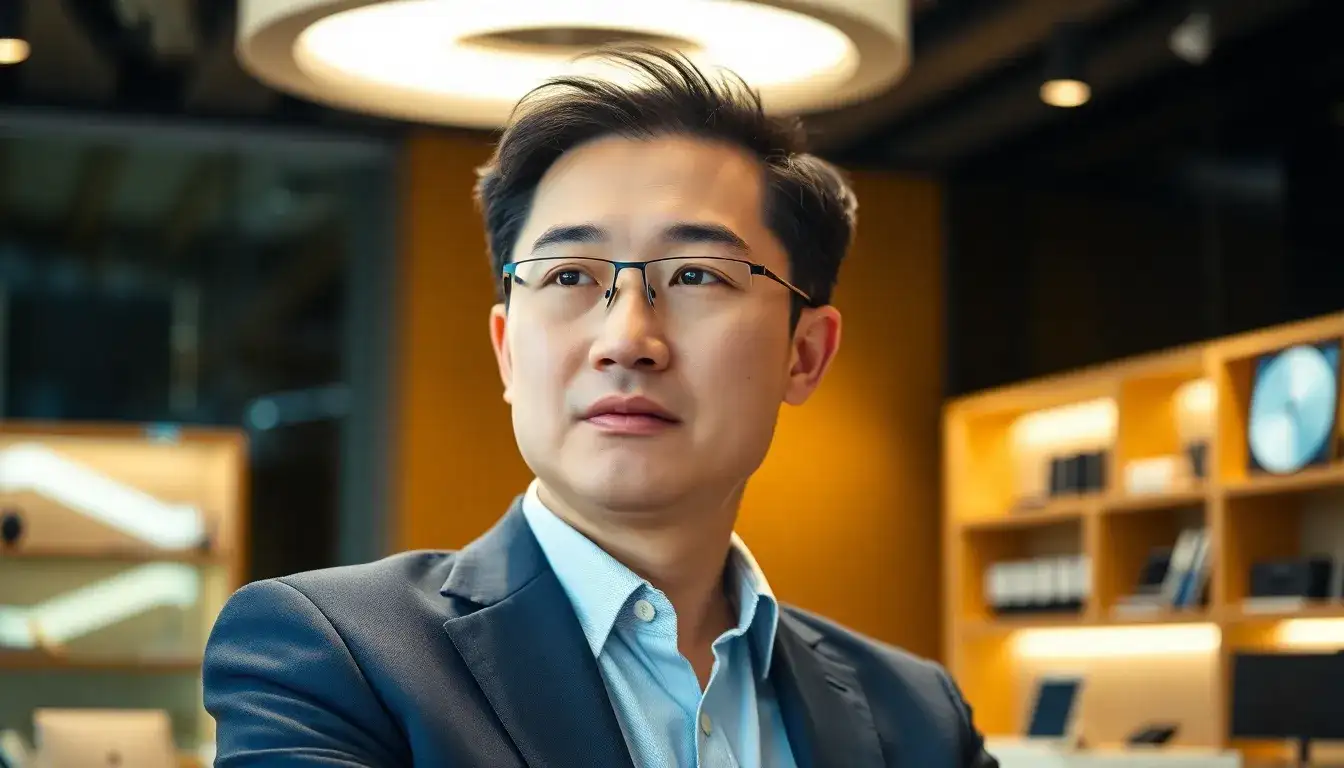
One Wednesday morning at 9:30, Anker CEO Yang Meng arrived alone at the Tiger Sniff office in Beijing for an exclusive interview. Having just flown back from the Berlin IFA exhibition, he was making a brief stop in Beijing before returning to Shenzhen. With no time for jet lag recovery, Yang, who typically avoids coffee, made an exception and ordered a cup to perk up. However, his focus throughout the conversation overshadowed any physical fatigue, leaving the coffee untouched. Over nearly three hours, from the perspective of both founder and CEO, Yang provided a comprehensive review of Anker’s journey from pursuing “Shallow Sea” to facing setbacks and regaining growth momentum over the past five years.
To briefly introduce Anker, founded in 2011, it has grown into a company with an annual revenue exceeding 24.7 billion (2024 forecast), a market value of over 70 billion, and an international revenue share exceeding 95%. Its recently released mid-year report for 2025 showed impressive figures: revenue of 12.867 billion, a 33.36% year-on-year increase; net profit of 1.167 billion, up 33.8% year-on-year. The foundation of Anker’s past success lies in its well-known “Shallow Sea Strategy.” This strategy focuses on achieving success through category innovation and channel advantages within various consumer electronics markets, each worth tens of billions.
Yang Meng likens the “Shallow Sea Strategy” to his quest for “The West Heaven,” which briefly collapsed in 2022 but has become increasingly clear in his view. Yang embodies the traits of a typical engineer, with a computer science background from Peking University, previous experience as a senior engineer at Google Search, and a stint as a “Silicon Valley elite.” He prefers discussing systems and methodologies, identifying as an “abstract” enthusiast. “Now the term ‘abstract’ has become a bit of a joke,” Yang laughs, “My MBTI type is INTP (the Logician). During my university years, people said I could work in consulting after graduation because I liked abstract concepts.”
Behind this “abstract” methodology, Anker has encountered numerous specific crises. A recent recall incident involving power banks thrust the company into the spotlight. Additionally, multiple product lines faced “systemic failures” in 2022, leading Yang into a deep depression. These challenges are shadows lurking behind impressive financial reports.
Now, five years have passed since the introduction of the Shallow Sea Strategy. What gains and losses have occurred? After shedding labels such as “Amazon’s big seller” and “king of power banks,” what is Anker’s core essence? Perhaps it’s time for a review. The following Q&A is drawn from nearly three hours of dialogue between Tiger Sniff and Yang Meng, edited for readability without compromising the original meaning.
The Sense of Crisis in “Raising Kids”
What is the “Shallow Sea Strategy”? Yang Meng chose to start from scratch. This serves as the primary reference point for understanding all of Anker’s subsequent strategic choices and organizational behaviors.
Tiger Sniff: Anker Innovation’s “Shallow Sea Strategy” is well-known. Could you elaborate on the specific origins and motivations behind this strategy?
Yang Meng: The Shallow Sea Strategy involves avoiding deep-sea super categories like smartphones, computers, and electric vehicles, and instead, focusing on optimizing mid-sized categories like charging, energy storage, home security, cleaning, headphones, and projectors. The original motivation for this strategy stemmed from a significant sense of anxiety and crisis I experienced in 2017. While writing my MBA thesis that year, I increasingly recognized the volatility of consumer electronics categories. As technology continues to evolve, product forms will be replaced. Users’ fundamental needs remain stable, but the technology and product forms that meet these needs are constantly changing. For instance, MP3 players and tapes were replaced by smartphones. Consequently, advancements in fast charging technology and increased smartphone battery capacities could render power banks obsolete. In 2017, Anker derived 40-50% of its revenue from power banks, with revenue around 10 billion. The fear of the power bank category disappearing triggered my thoughts on building a sustainable long-term business. People often talk about two mindsets in running a company: ‘raising pigs’ and ‘raising kids.’ I definitely lean towards the latter, always considering how to ensure the “kid” survives and thrives. This may relate to my fundamental character; I aim to excel in a long-term endeavor rather than chasing quick profits.
Tiger Sniff: So, your sense of crisis in 2017 prompted the need for change. But how did you ultimately settle on the “Shallow Sea Strategy”?
Yang Meng: There were two fundamental reasons behind this choice: the management approach and the assessment of the company’s landscape. First, regarding management style, I believe there are two essential models: Kings and Knights: A highly capable CEO (the King) leads a team of functional experts (the Knights), with all major decisions made by this core team, creating a relatively centralized structure. Steve Jobs of Apple and Elon Musk of Tesla are typical representatives of this model. The Federation and the President: This model empowers various business units (categories) with high autonomy, with headquarters providing support and guidance. I personally lean towards the latter and choose to be a “President” rather than a “King.” Second, the assessment of the company’s landscape involved categorizing product lines into two types: Deep Sea (super categories) like computers, cars, and CPUs, which are valued at a trillion-dollar scale, and Shallow Sea (mid-sized categories) like drones and robotic vacuums, worth tens of billions to a hundred billion. Based on this landscape, three types of entities have evolved: the first type (Blue Whales) focus on Deep Sea (super categories) such as Apple and Tesla; the second type (Great White Sharks) excel in a limited number of Shallow Sea categories, with most companies, like Dyson, falling into this category; the third type (Orca Pods) are successful conglomerates that integrate numerous Shallow Sea categories, like Procter & Gamble, Texas Instruments, Unilever, Anta, and Nongfu Spring. Most companies are typically born in the second category, like VIVO during the MP3 era. We also analyzed 500 listed companies in China and found that 90% belonged to the second category. However, we discovered a harsh reality: among the world’s top 500 companies, there are virtually no second-category companies, only first and third categories. This is because being in the second category lacks sufficient scale to become a top 500 company. Therefore, for a company to continue growing, it must choose to become either a first or third category company. However, becoming a first-category company often requires a stroke of luck. For example, OPPO and VIVO did not capitalize on the smartphone boom, which is why they couldn’t become first-category companies. Moreover, even if they hit the right window, they must survive in fierce competition. Without luck, forcing entry is futile. Anker Innovation aims to become a third-category company by constructing a robust portfolio of categories within the expansive “Shallow Sea,” ensuring sustainable long-term growth. This strategic choice is also closely related to my personal characteristics. As I mentioned earlier, I prefer being a “President” rather than a “King.” In the “Deep Sea,” a company focused on a super category requires the CEO to manage deeply and intricately, leading to a more centralized approach. For instance, Li Xiang stated that every detail of his cars is determined by him. However, I prefer theoretical exploration and abstract thinking, enjoying system construction while disliking repetitive tasks like a craftsman. My MBTI type being INTP (the Logician) aligns with this. During my university years, people suggested I could work in consulting because I enjoyed abstract reasoning, even though many now view it as a joke. Therefore, it is most suitable for me and Anker to design a system supporting multi-category operations, allowing more excellent “first positions” to engage in battles in their respective “Shallow Seas.”
Tiger Sniff: After formally introducing the “Shallow Sea Strategy” in 2020, how did Anker’s organizational structure support this strategy?
Yang Meng: In fact, from 2017 to 2020, we had already spontaneously expanded to five business units with about ten categories, but we had not yet clearly defined a theoretical framework; we were simply acting on instinct. In 2020, I felt it was necessary to consolidate and systematically promote the “Shallow Sea Strategy.” At that time, we found Huawei’s example was insightful; business units do not need to handle numerous categories but should have another layer of product lines beneath them. So, we maintained five business units but started expanding product lines, eventually reaching a maximum of 27 (in 2022). The core of the organizational structure is a three-tier management system supporting multi-category operations, which we still use today. The top level (where I am) is responsible for the company’s overall design, including mission, vision, values, and major strategic directions, as well as cross-business unit core capability building (such as core technologies, sales systems, and talent capabilities). We consider questions like “How can Anker survive for fifty or a hundred years?” and “How can Anker employees be happier?” The business unit level (BU) does not directly engage in “combat” but focuses on a specific industry direction and building necessary capabilities, such as strengthening technical fields, finding talent, creating a positive organizational environment, and deciding how many product lines to expand. Their concerns are about how to thrive in their respective industry sectors over the next ten to twenty years. The product line level is where frontline combat takes place. Their objectives are straightforward: to lead a team of dozens to hundreds in a specific sub-category and “harvest” short-term success. The establishment of this three-level structure ensures that each layer manages what it should and authorizes what should be delegated below.
The Sweet and Bitter of “Shallow Sea” Growth
Yang Meng candidly admits that Anker faced a “systemic failure” during the frantic period from 2020 to 2022. He does not shy away from recounting that chaotic time.
Tiger Sniff: During the five years of the “Shallow Sea Strategy,” were there any major turning points?
Yang Meng: 2022 was a significant watershed moment, a major obstacle. In 2021, media friends mentioned that most successful entrepreneurs face a hurdle, and if they can overcome it, things will generally go smoother. They asked me what my hurdle was, and I confidently said everything was smooth. Then, a year later, I hit a wall.
Tiger Sniff: What specific problems did you encounter?
Yang Meng: At that time, nearly 20 of the 27 product lines were struggling against competitors. However, when product line leaders reported to me, they gave us a hopeful outlook, suggesting the company should invest more.
Tiger Sniff: Did you suddenly realize these issues, or were there prior data alerts?
Yang Meng: As an introvert, I rarely communicate extensively. I do not spend my days glued to my computer reviewing their work. It was only after I personally managed the struggling robotic vacuum business, which had lost its top leader, that I realized the issues. When I got hands-on, I was shocked to find a significant gap between the operational systems and methods appearing to run smoothly and the actual situation. I discovered misalignment between talent and positions: while we seemed to have systems in place, many key roles lacked the capability to execute, leading to low team morale and a state where “people were floating above their tasks.”
Tiger Sniff: Were the issues product line-specific or business unit-specific?
Yang Meng: The business unit had problems, which in turn caused issues for all the product lines beneath it.
Tiger Sniff: So, your expectations for the business unit were unmet, yet you granted them considerable power. Doesn’t this indicate a lack of oversight on your part?
Yang Meng: All company issues ultimately rest on my shoulders. I believed that delegating power and holding meetings would be sufficient, but when I delved into the details, I realized it was far from the reality. A painful example is our 3D printing business, where we released products concurrently with another company, and our crowdfunding results were comparable. However, after our product launched, it faced significant quality issues, leading to constant complaints and returns, while the other company thrived and succeeded. The essence of the issue was that the leader of our 3D printing initiative was innovative but lacked execution skills and product experience. He was more of a specialist, capable of achieving breakthroughs from 0 to 0.1, but needed someone else to take it from 0.1 to 1.
Tiger Sniff: Reflecting on your own role, did you fail in talent recognition?
Yang Meng: Yes. Effective delegation requires deep insight into people and tasks. If one lacks a precise grasp of a leader’s capabilities, team dynamics, and the market’s reality, merely delegating authority leads to chaos.
Tiger Sniff: How did Anker handle the major failures in businesses like 3D printing?
Yang Meng: We did not disband the team. The team of over a hundred remained intact, except for one or two original leaders. We replaced the top leader with a new one, and the team was eager to turn things around. They reassessed the competition and determined that chasing after the leading company was futile. Instead, they sought new opportunities in the manufacturing sector and identified “UV printing” (printing on any object’s surface) as a new avenue. After two years of development, they broke crowdfunding records in May and are now preparing for delivery.
Tiger Sniff: The other side of the Shallow Sea strategy is that you are not fully committed to one direction; if a project isn’t performing well, you might quickly abandon it. Could this lead to a form of “short-termism”?
Yang Meng: There’s been a misunderstanding since I mentioned in 2023 that we would “cut some categories.” Some interpreted this as Anker being “short-termist,” cutting projects that don’t turn a profit within a year or two. This is entirely inaccurate. For instance, in the case of the printer team, if we count from 2021, that project has incurred about five to six hundred million in pure losses over nearly five years with almost no revenue, and only now is it ready for delivery. Similarly, for our home energy storage business, we expanded our team to several hundred in 2022. Facing competitors like EcoFlow, whose revenue was tenfold ours at that time, we consistently invested, incurring losses of two to three hundred million each year, totaling six to seven hundred million. By 2025, this business is expected to become profitable, with its market size catching up to that of the competitor. The robotic vacuum business has followed a similar trajectory, losing money from 2021 and expected to become profitable by 2025, with significant strides made this year. Since 2021, we have operated several business lines simultaneously, each incurring small losses annually. Indeed, before 2022, there was a wave of expansion, and we then slammed the brakes. If I was criticized for cutting businesses that weren’t profitable within two years, I accept that criticism. However, after 2022, we have shown great patience and continued investment in the selected paths without cutting any projects.
Tiger Sniff: However, Anker is simultaneously investing hundreds of millions in multiple new avenues; if losses continue, that could also be unsustainable. What is your “red line” for losses?
Yang Meng: My red line is simple: I monitor the overall financial health of the company. In recent years, our profit margin has consistently hovered around 7-8%. As long as our net profit margin does not drop below 5%, I can accept certain strategic losses. As an engineer, I understand that it takes multiple product iterations to build genuine R&D capabilities in a particular field; success will not come overnight. Moreover, as a company generating tens of billions in profits annually, incurring two to three hundred million in losses across several lines is within our comfort zone. If the previously loss-making project begins to turn a profit, it frees up resources to support new strategic avenues.
After the Hemorrhage: Internal Reorganization
Following the tumultuous period, the organization must undergo self-reform.
Tiger Sniff: What core measures did Anker implement to adjust during the 2022 crisis?
Yang Meng: The first step was to halt bleeding and shrink. The first task was to freeze hiring and cut down on operations. We conducted a comprehensive evaluation of the 27 product lines, ultimately reducing them to 17. At that time, each product line had aggressive hiring plans. Many product lines submitted promising business plans claiming significant revenue and profit increases while requiring more staff. If all these plans were to materialize, we would have reached 5,000 employees by 2023, up from 3,700 in September 2022, an increase of over 1,000. Naturally, we would be willing to invest if these plans could be realized, but if they couldn’t, they might leave, leaving us with a mess. Recognizing this, we began to contract, starting with freezing aggressive hiring plans. However, during this contraction, we also made every effort to find internal transfer opportunities for employees affected by the layoffs. Ultimately, despite cutting over one-third of the product lines, the total number of employees decreased from 3,700 to just over 3,400, a reduction of only about 6%.
Tiger Sniff: What principles guided the reduction from 27 to 17 product lines?
Yang Meng: The core principle was to return to the main line of business. The eliminated businesses, like pet products and electric bicycles, appeared to have market potential, but their technology stack and channel systems had low compatibility with our “main line” (like security and cleaning), which would be akin to starting a new business. These were products birthed out of a moment of “two-layered enthusiasm,” with both my excitement and that of the business unit.
Tiger Sniff: The first step was to halt bleeding and shrink; what’s the second step?
Yang Meng: Halting bleeding and shrinking was to correct obvious directional errors. For the remaining categories, we needed to focus on values. When we realized we were losing battles, we had to undertake a “rectification” of our thoughts and culture to address the root causes. We deeply reflected on our first version of values from 2017 because there was room for improvement among the overall quality of our team. Our values were about reasoning, pursuing excellence, and mutual growth. However, I later painfully recognized several significant bugs within this framework. The alienation of “reasoning”: it evolved into “each department has its own logic,” leading to inefficient decision-making and severe inter-departmental conflict. Everyone was focused on processes and local facts, but no one was investigating what was genuinely important. The misconception of “pursuing excellence”: we defined it at three levels: “surpassing yesterday’s self, surpassing the best peers, and surpassing the essential needs of consumers.” The overall logic was: first improve relative to oneself, then outperform peers, and finally, consider what consumers want. The first two levels of “surpassing” were easier to reach consensus on, while the third, surpassing consumers’ essential needs, proved challenging as each person’s understanding varied significantly. The first two “surpassing” levels were visible improvement paths, akin to “taking the stairs,” while the third “surpassing” required creating innovative products from scratch, akin to “climbing a mountain without a path.” Furthermore, our culture overly emphasized “surpassing peers,” leading the team to focus on creating “incremental products” rather than generating “creative products” based on user needs. Thus, we undertook a significant cultural shift, urging the team to focus on user value rather than competitors. As Bezos and Jobs have stated, great companies do not obsess over competition but fixate on creating value for customers. What we genuinely aspire to pursue is creativity, not mere improvement. For example, we recently released a robotic vacuum companion for climbing stairs. In Europe and the US, 60% of households have two-story homes, but middle-class families typically find it unrealistic to buy one expensive robotic vacuum for each floor. Therefore, a $1,000 robotic vacuum coupled with a $300 climbing companion better meets user needs.
Tiger Sniff: Shifting values is also a rather abstract concept. How do you go about changing and implementing them?
Yang Meng: The 2022 crisis made me acutely aware that the root problem lay in our foundational “operating system,” necessitating a fundamental solution. In 2023, we rewrote our values, followed by our mission and vision in 2024, all stemming from the aftershocks of 2022. We thoroughly upgraded our values: from “reasoning” to “First Principles”: we no longer get bogged down in surface-level facts and departmental reasoning but instead demand everyone to discard authority and experience, returning to the fundamental principles of things, focusing on the key issues. I believe this represents a “sharpening the axe doesn’t delay the work” mindset, where we first spend time clarifying the essence and boundaries of problems before taking action. From “pursuing excellence” to “pursuing perfection”: we clearly abandoned the competitive mindset of “surpassing oneself” and “surpassing peers,” focusing solely on “surpassing consumers’ essential needs.” This means we must withstand significant uncertainty and risk while striving for long-term, holistic optimal solutions, engaging in genuinely creative endeavors. “Mutual growth” has also been clarified to emphasize the resonance between individual growth and company development.
Tiger Sniff: Still quite abstract; how do you ensure that the new values translate into employee behavior?
Yang Meng: Implementing values is indeed challenging. First, we need to cultivate an environment of “collective unconscious.” People are often resistant to being lectured but can be influenced by their environment. When everyone in the organization, from leaders to colleagues, practices “First Principles” and “Pursuit of Perfection,” it fosters an atmosphere of “collective unconscious.” In such an environment, pursuing essential values and daring to innovate becomes the norm, while rigidity seems out of place. We are working to shape an “creator” environment where correct behaviors occur naturally. Additionally, we must use specific individuals, through their work and behavioral styles, to influence employees. This is primarily achieved through three levels: changing top-level personnel and promoting from the top down: I have found that implementing values must be top-down. If a department’s top leader does not embody the values, the department cannot thrive. Therefore, over the past two to three years, we have made numerous adjustments and transitions among top-level managers, with more than half replaced since 2023. I believe that key positions must be filled with individuals whose values align closely with the company’s; this is the most direct and effective approach. A specific example is our current head of the charging business unit, who worked at Huawei for 15-16 years, primarily in sales and capability development, with no prior product line management experience. The reason we entrusted the charging business to him is that during our discussions, I felt he was genuinely focused on customer value and pursuing perfection, aligning closely with our values. I now believe that when the right person embodies the values, they can excel in any role. Influencing the mid-level (assimilation): For mid-level colleagues, we adopt a “two-way selection” strategy. Some individuals will be positively influenced by the new environment and gradually adapt, while others who cannot adjust will choose to leave. We believe that when the core members of an organization firmly believe in specific behavioral standards, it creates an environment of “collective unconscious,” facilitating the assimilation of most individuals. Nurturing new talent (shaping): We actively recruit fresh graduates. They resemble blank slates and are most easily molded by the organizational culture into the forms we desire. This is a crucial way to cultivate our talent pipeline for the future.
Tiger Sniff: During the implementation of the new values, what do you think has been Anker’s biggest obstacle?
Yang Meng: The core issue has been personnel turnover. During the transformation process, many people left, including some frontline employees. Most of these departing individuals do not view their exit as their fault but attribute it to “political struggles” or “the boss’s inconsistency.” As a result, the company’s reputation on social media has suffered negative impacts, some of which stem from these former colleagues. However, I believe this is a necessary process of “replacement.” Only when the old members depart do we have the opportunity to attract individuals who resonate with the new values, and this process ultimately leads to happiness. Our new values of “First Principles, Pursuit of Perfection, Mutual Growth” inherently filter for specific types of talent: those strong in “First Principles”: they are accustomed to returning to fundamental principles in their thinking and are often seen as “daydreamers” in many traditional organizations. Much like Musk, who was seen as crazy for wanting to create electric vehicles, they are often misunderstood. “Pursuit of Perfection” individuals: they are willing to take on significant risks to pursue long-term, holistic optimal solutions, which can be viewed as “too intense” in many companies focused on short-term KPIs. “Mutual Growth” long-termists: they aspire to invest in doing something long-term but find it challenging in companies that demand quick results. When these individuals, who feel “uncomfortable” elsewhere, come to Anker and find others like them, the density of talent has significantly increased over the past two to three years. Now some people congratulate me on Anker’s innovative products, but the reality is that we have resolved personnel issues. Our vision consists of two sentences: “Creating a stimulating environment for creators” and “Cultivating a group of globally beloved brands.” The latter is common, but the former is quite rare in our search.
Tiger Sniff: What does “mutual stimulation” mean?
Yang Meng: This concept originates from Michael Porter’s industrial cluster theory. In a famous paper published in 1996, he argued that the vitality of an industrial cluster is partly due to individuals being able to “see” each other—seeing others do great things can inspire creativity. We hope to create a “creative industrial cluster” within Anker, allowing employees to feel inspired by other creators and think, “I can create something too,” rather than merely “tightening screws in circles.”
Tiger Sniff: You mentioned that values can filter talent. How do the new mission and vision achieve consensus and implementation across the company?
Yang Meng: This is a top-down and iterative co-creation process, not just a decision I made spontaneously. First, co-creation: we gathered a core management team of 40-50 individuals and held a two-day meeting in Nansha, Guangzhou, with various subgroup discussions. This involved hundreds of participants. We utilized the “ISO (Insight, Strategy, Operation)” methodology to define the problem (what kind of company we want to become), conduct internal and external observations, develop strategies, and finally translate them into specific execution plans. We don’t hire consulting firms; I am the consulting firm, haha. Second, to disseminate and implement: all-staff training: we created an online course lasting five to six hours, containing numerous internal case studies illustrating both good and bad practices regarding values—like “Anker’s Thousand and One Nights.” All new and old employees must complete this training within a year, followed by offline group discussions. We aim to break down abstract concepts like “First Principles” and “Pursuit of Perfection” into concrete, observable, and discussable behaviors, providing everyone with clear references and action guidelines. Systematic construction: we realized that successful “third-category companies” like Procter & Gamble and Texas Instruments have a coherent internal system, even filled with “jargon.” While these theories may appear complex to frontline employees and may be criticized as “brainwashing,” for a fresh graduate growing within the company, the logic is very coherent.
Tiger Sniff: However, many young people or frontline employees may not particularly enjoy hearing abstract concepts; perhaps only entrepreneurs reflect on such matters.
Yang Meng: Indeed, frontline employees prefer straightforward communication rather than overly complicated explanations. However, if entrepreneurs do not connect the dots, they may face setbacks down the line. I believe there are at least a few key points that need to be connected: first is strategy: what industry we aim to operate in, which categories to pursue, and why; second is organization and people: how we select and develop talent, the incentives and distribution of funds, and organizational design; and finally, capabilities: forming a robust enabling system at the foundational level. For instance, to launch a new business, we must mobilize talent to provide the necessary support. These three points must connect into a self-consistent “iron triangle” structure for the company to develop steadily and sustainably while ascending in cycles.
Tiger Sniff: Returning to the core adjustment strategies during the 2022 crisis, you mentioned halting bleeding, followed by value restructuring. Is there a third key measure?
Yang Meng: The third core measure is to dig deeply into the three main directions we focus on (energy, audio, home automation) and build a foundational shared technology platform. In 2023, we established our own “2023 Laboratory,” modeled after Huawei’s “2012 Laboratory.” This global distributed R&D organization, with 300-400 personnel, aims to make breakthroughs and accumulate foundational technologies to support front-end businesses. This approach serves two purposes: first, to construct a core technology platform. While people previously said Anker’s batteries were good, we lacked a unified platform department. Starting in 2023, we assembled a close to 100-person battery platform team with the goal of becoming the most stable and reliable battery provider in the consumer electronics industry. While we’ve encountered some bugs recently, we’re actively addressing them. Additionally, borrowing the Buddhist analogy of “eye, ear, nose, tongue, body, and mind,” we focus on developing multi-modal perception capabilities related to “eyes” (visual), “ears” (audio), “body” (touch), and “mind” (language) and have established dedicated laboratories around these directions. We are also investing in simulation, thermal management, general algorithms, cloud services, and operating system middleware (all our devices are based on self-developed RTOS and Linux middleware) to create reusable technology modules. Second, this enhances R&D efficiency. Our goal is that when we venture into a new category requiring ten modules, six or seven can be directly sourced from our “capability shelf,” allowing teams to focus on the remaining three to four areas of differentiated innovation. This significantly improves R&D efficiency, eliminating the need to reinvent the wheel and reducing bug-fixing time; otherwise, progress would continue to slow.
Tiger Sniff: As a tangible entity with 300-400 people, how does the “2023 Laboratory” collaborate with specific business lines?
Yang Meng: The “2023 Laboratory” operates under a global distributed structure, adhering to the principle of “where talent is, we go.” For instance, the team responsible for “ears” (audio algorithms) is located in Beijing, while part of the battery team is in Suzhou. Huawei’s R&D layout is nationwide; as a company that grew in Guangzhou and Shenzhen, the proportion of R&D personnel there does not exceed 30%. Huawei has research teams with tens of thousands in Shanghai, Beijing, Xi’an, and Chengdu, rather than gathering solely at headquarters. Our goal is to gradually increase the proportion of R&D personnel outside Shenzhen, currently under 20%. We have set up research centers of varying sizes in Suzhou, Hangzhou, Shanghai, Beijing, and Chengdu, with plans to continue expanding these “research institutes.” In terms of collaboration, these distributed R&D centers should not operate as “human resource outsourcing” but should undertake specific R&D tasks as established teams. For instance, the Hangzhou research institute might fully manage a product development group, while the Beijing team may handle the entire group’s audio algorithms. They have stable technical or product directions and a sense of belonging. The costs incurred will be allocated to the corresponding business lines or product lines for accounting purposes.
Tiger Sniff: You’ve discussed company adjustments. What personal impact did the crisis of 2022 have on you?
Yang Meng: 2022 was indeed my personal low point; I experienced severe depression.
Tiger Sniff: But why? Anker’s performance didn’t actually decline during that time.
Yang Meng: This is quite interesting. I am a deeply long-term-oriented person; I am not overly concerned about short-term events. It’s like my quest for the West Heaven—getting beaten by monsters today doesn’t deter me; as long as the long-term vision is intact, I am not easily swayed by short-term difficulties. My long-term vision was to build a long-lasting company through the Shallow Sea strategy, similar to Procter & Gamble or Texas Instruments. So every morning, I would rise happily to build, filled with faith. However, the crisis in 2022 made me feel that the “West Heaven” I was striving for was gone, and my faith collapsed. The failures were too numerous, and many product lines were unable to compete effectively; I found myself repeatedly thinking about how to avoid those failures and became trapped in that cycle.
Tiger Sniff: How did you emerge from this darkest moment?
Yang Meng: I primarily relied on two aspects: time and facts. Time can sustain you. Initially, you think you are at the brink of collapse, but after two months, you realize you are still standing, and things seem to be gradually improving. It’s like everyone believes a certain date marks the end of the world, yet when that date passes, the world doesn’t end. That inner anxiety diminishes over time. The help of meditation: Additionally, meditation proved to be an excellent method. At the beginning of 2023, on a friend’s recommendation, I participated in a ten-day closed retreat. It hit the brakes on my racing thoughts, and after ten days of not thinking about all those things, the truly important matters became clearer. The first thing I decided upon returning from meditation was to rewrite our values. It was a remarkable experience.
Tiger Sniff: Do you still practice meditation?
Yang Meng: Recently, I have eased off a bit; I’ve somewhat forgotten the pain of my past, haha. That type of meditation is quite
Original article by NenPower, If reposted, please credit the source: https://nenpower.com/blog/anker-ceo-yang-meng-reflects-on-strategic-shifts-and-challenges-following-a-crisis/

