

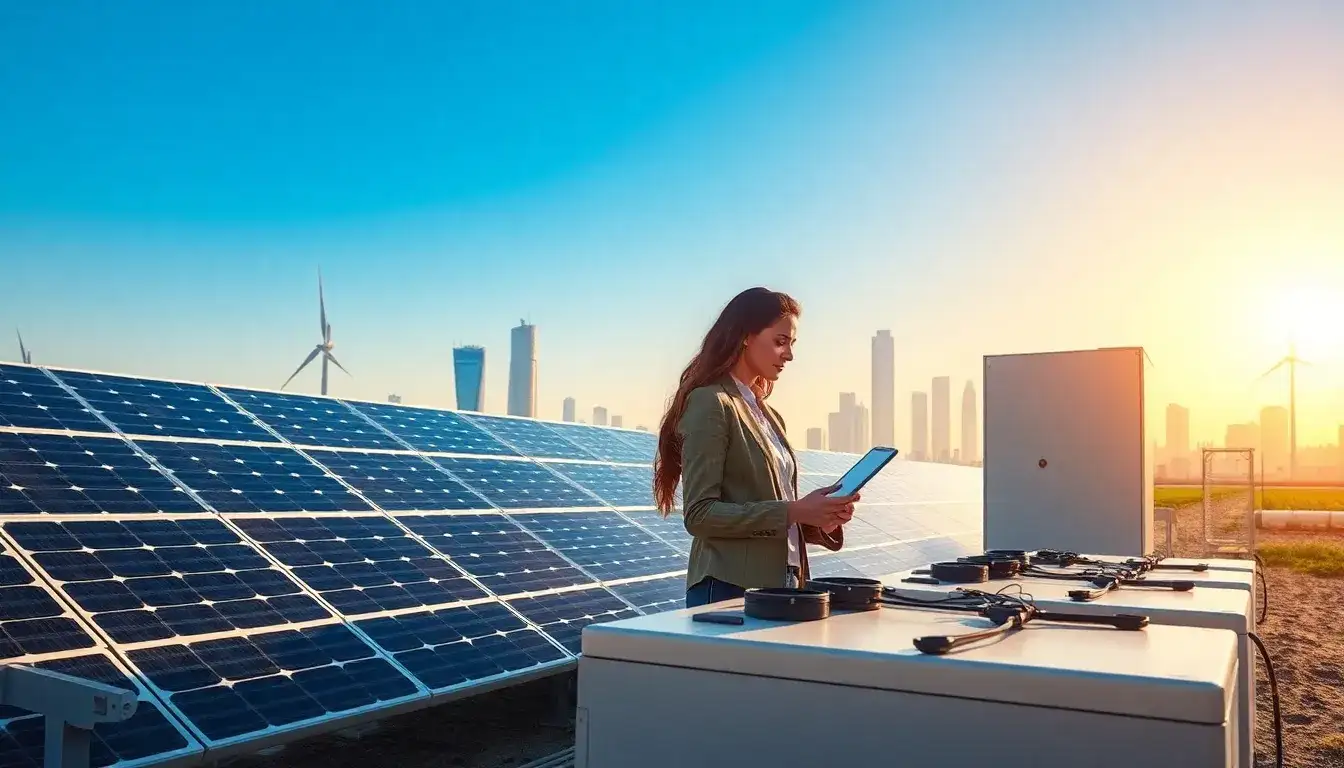
2025 Saudi Arabia Photovoltaic Battery Storage Market Analysis
The 2025 Saudi Photovoltaic Battery Storage Exhibition (SSK 2025) will take place from October 12-14, 2025, in Riyadh, Saudi Arabia. Organized by the internationally recognized event agency Terrapinn, this exhibition is one of the largest and most influential renewable energy events in the Middle East, expected to attract over 400 exhibitors and 26,000 professional visitors.
SSK 2025 will focus on areas such as photovoltaic solar energy, energy storage systems, battery technology, smart grids, and electric vehicle solutions, aiming to promote the transformation of Saudi Arabia’s energy structure and support the achievement of the Saudi Vision 2030. The exhibition will bring together key stakeholders, including utility companies, independent power producers (IPPs), financial institutions, government regulatory bodies, and energy startups, to discuss the future development of the regional energy sector.
Special themed exhibition areas will be set up at SSK 2025, including large ground-mounted power plants, distributed photovoltaics, residential energy storage, industrial-grade battery solutions, and smart distribution and energy management systems. During the event, numerous technical forums and roundtable discussions will focus on hot topics such as the digital transformation of the Saudi energy industry, integration of solar and storage, and power market reforms, providing attendees with the latest policy interpretations and insights into cutting-edge technologies.
As an important platform for promoting regional green development, SSK 2025 will attract energy developers, technology providers, and investment institutions from both the local and international markets, building a multi-layered cooperation network that covers technology, capital, and market. Through strategic agreements, project matching, and business pairing activities, the exhibition aims to accelerate the implementation of local energy projects and the advancement of international cooperation initiatives.
As Saudi Arabia accelerates its energy structure optimization, the government is continuously introducing policies to support the localization of the clean energy industry, particularly increasing investments in the combined application of photovoltaics and energy storage. Over the next five years, Saudi Arabia’s energy storage market is expected to undergo a critical transformation from demonstration applications to large-scale deployment, with closer collaboration anticipated across the entire industrial chain.
For global new energy companies, participating in SSK 2025 offers not only a window into the energy transition in the Middle East but also a strategic opportunity to expand into the Saudi and surrounding markets.
Exhibition Scope
- Photovoltaic Storage: Smart grids, photovoltaic storage power supplies, grid-connected inverters, water-pumping inverters, storage converters, UPS power supplies, anti-static inverter power supplies, voltage stabilizers, rectifiers, resistive filtering, BMS battery management systems, energy monitoring management systems, off-grid home storage systems, lithium UPS systems, high-power device integration, and solar water supply systems.
- Battery Storage Technology: Lithium-ion batteries, lead-acid batteries, nickel-cadmium/nickel-hydrogen batteries, redox flow batteries, fuel cells, battery recycling and reuse technologies, supercapacitors, and various energy storage methods.
- Energy Storage Systems: Fixed storage systems for residential, commercial, industrial, and large-scale public utility applications, as well as mobile storage systems for high-power applications and low-power devices.
- Components and Equipment for Storage Systems: Battery management systems, charging technologies and equipment, power electronic storage systems, battery testing, inspection, and safety management.
- Manufacturing Equipment, Materials, and Components: Equipment for battery manufacturing, module manufacturing, and system assembly, as well as raw materials and battery management systems.
- Bioenergy: CDM infrastructure, development, and carbon emission reduction technologies related to biogas, agricultural solutions, and gas purification equipment.
- Wind and Hydropower: Power equipment, SPP and VSPP, wind and hydropower, turbines, and measurement and control equipment.
- Other: Waste treatment equipment for the battery industry, used battery recycling technologies, R&D services, education and training, industry associations, and trade publications.
Market Overview
1. Analysis of the Saudi Photovoltaic Battery Storage Market
The Saudi photovoltaic battery storage market is undergoing a transition from centralized generation to distributed energy systems. Particularly in remote communities, military bases, and desalination facilities, independent power systems combining solar and storage have become key solutions for energy security. This localized deployment reduces reliance on long-distance transmission networks and provides greater flexibility and resilience in energy scheduling.
Notably, the Saudi energy market is shifting from being dominated by state-owned enterprises to a more diversified capital participation model. Under the leadership of the Public Investment Fund (PIF), local funds, family businesses, and technology startups are beginning to enter the fields of energy storage technology development, system integration, and operational services, driving the market towards a service-oriented and platform-based operation model.
Technical adaptability is one of the core challenges in the Saudi market. Due to the high temperatures, dust storms, and strong sunlight typical of the region, conventional battery systems face efficiency and lifespan bottlenecks. As a result, research and deployment of liquid-cooled batteries, sodium-ion batteries, and new heat-stable materials are becoming focal points to ensure long-term stable operation of systems under extreme climate conditions.
Furthermore, the Saudi government is promoting the establishment of a regional energy data platform to aggregate solar irradiation, load demand, and battery usage information, leveraging AI and blockchain technology to optimize energy storage scheduling and settlement mechanisms. This digital infrastructure will empower photovoltaic storage systems, enhancing their commercial value in auxiliary service markets such as frequency regulation and peak shaving, and steering Saudi Arabia towards a more efficient renewable energy system.
2. Segmentation of the Saudi Photovoltaic Battery Storage Industry
Monocrystalline Silicon Solar Cells: Currently the most common type of photovoltaic cell in the Saudi market, with high conversion efficiencies (generally exceeding 20%) and excellent thermal stability. These cells are widely used in large photovoltaic power plants and distributed solar projects, well-suited for the conditions of the Saudi desert.
Polycrystalline Silicon Solar Cells: These cells are relatively lower in manufacturing costs but have slightly lower efficiencies (about 15%-18%). Their economic appeal keeps them in demand for small residential photovoltaic systems, particularly in regions with lower government subsidies.
Thin Film Solar Cells: Thin film cells (e.g., CdTe, CIGS) are lightweight, flexible, and perform well in low-light conditions. They are suitable for building-integrated photovoltaics (BIPV) and mobile power scenarios. In temporary facilities, mobile energy storage systems, and future smart city projects in Saudi Arabia, thin film technology is gaining more attention.
Perovskite Tandem Solar Cells: Known for their potential for high efficiency and low manufacturing costs, perovskite cells are viewed as next-generation solar technology. While still in its early stages of commercialization, some Saudi universities and research institutions (such as KAUST) are actively involved in research on material stability and packaging durability to achieve commercial breakthroughs in high-temperature environments.
Heterojunction Technology (HJT) Solar Cells: Combining the advantages of crystalline silicon and amorphous silicon materials, HJT cells exhibit high efficiency and low temperature coefficients, making them very suitable for Saudi Arabia’s extreme climate. Despite a complex manufacturing process and high equipment investment, this technology is becoming one of the preferred routes for large photovoltaic projects in Saudi Arabia, particularly in state-led initiatives.
3. Government Policies for Saudi Photovoltaic Battery Storage
Green Corridor Energy Infrastructure Plan: The Saudi government is constructing the “Green Corridor,” which connects photovoltaic and storage projects with major cities and industrial areas. This plan supports the construction of new transmission lines and integrates storage nodes to enable real-time scheduling and load balancing of renewable energy, laying the foundation for a unified national energy market.
Financial Subsidy Pilot Mechanism for Storage Systems: Starting in 2024, the Saudi Ministry of Energy will launch a financial subsidy pilot program for energy storage systems in certain provinces, providing initial investment grants and tax reductions for commercial and agricultural users purchasing battery storage systems. This mechanism aims to promote the integration of distributed solar and storage, accelerating the penetration of new energy in end-user applications.
National R&D Program Supporting New Photovoltaic Technologies: The Saudi government has initiated the “Smart Grid 2030” strategy, promoting deep integration of energy storage systems with digital grids and guiding storage participation in Virtual Power Plants (VPPs) and demand response initiatives. The plan aims to deploy the first smart communities integrating solar and storage in cities like Riyadh and Jeddah by 2027, piloting distributed storage and blockchain energy trading platforms.
4. Trends in the Saudi Photovoltaic Battery Storage Market
Under the Vision 2030, Saudi Arabia is driving the development of tourist cities such as NEOM and the Red Sea project, which heavily utilize off-grid photovoltaic systems coupled with storage devices to meet the independent power needs of resorts, attractions, and ecological camps. This trend is creating new market opportunities for lightweight, aesthetically integrated storage products in tourism and cultural projects.
The extreme high temperatures during the Saudi summer pose challenges to the stability of storage systems, increasing demand for heat-resistant and low-degradation battery cells and system designs. Local and international manufacturers are competing to develop solutions equipped with high-temperature protection, thermal management, and smart cooling technologies, making heat adaptability an important differentiator in the Saudi storage market.
In some Saudi cities, pilot programs are exploring the integration of small and medium-sized storage systems within substations and end feeders, enabling localized storage and in-situ peak shaving and valley filling mechanisms. This model is more flexible and has a shorter investment return cycle compared to traditional centralized storage, promising quick deployment in urban expansion areas and industrial corridors to enhance grid resilience.
As early photovoltaic projects begin to reach the end of their operational life, Saudi Arabia is planning component recycling mechanisms and exploring the reuse of retired storage batteries in secondary storage markets, such as agricultural pumping stations and electric transport hubs. This trend of “photovoltaics + storage” not only extends resource lifespan but also opens new growth channels for low-income energy scenarios.
5. Overview of the Saudi Photovoltaic Battery Storage Industry
The industrial layout is gradually forming a “Western cluster + national radiation” pattern: The Saudi photovoltaic battery storage industry has initially established a cluster layout centered around the western region, particularly the Red Sea coast and NEOM area, which attract numerous photovoltaic manufacturing and storage projects due to abundant radiation resources, proximity to ports, and favorable policies. Meanwhile, cities like Riyadh and Dammam in the eastern and central regions serve as energy consumption and grid scheduling centers, facilitating the system integration and operational services for nationwide industrial development.
From bid-driven to market application expansion: In recent years, the Saudi solar and storage industry has been primarily driven by national energy bidding projects, promoting ultra-large scale ground-mounted photovoltaics and supporting storage systems, such as the Sakaka and Sudair projects. Currently, with reforms in commercial electricity pricing mechanisms and the emergence of distributed policies, the market is gradually transitioning from centralized power plants to industrial parks and self-consumption solar storage systems, evolving from a “project-oriented” to a “market-oriented” structure with increasingly diversified application scenarios.
Local manufacturing is gradually opening up key links: Saudi Arabia is actively promoting local manufacturing of photovoltaic modules, battery systems, and related inverters and control equipment, attracting international leaders like LONGi and Jinko to collaborate with several local companies. The energy storage sector is transitioning from complete reliance on imports to battery cell assembly and system integration, with some companies beginning to pilot production of new technologies such as sodium-ion batteries, steadily improving the localization level of the industrial chain.
Policy guidance and sovereign fund investment drive: The government, through the National Renewable Energy Center, the Ministry of Energy, and NEOM-specific entities, has jointly developed development strategies while sovereign funds like PIF, Saudi Aramco, and ACWA Power participate in investments and lead demonstration projects, providing policy guarantees and capital support for the entire industry.
6. Dynamics of the Saudi Photovoltaic Battery Storage Market
The application scenarios of the Saudi photovoltaic battery storage market are rapidly expanding into multiple sectors, particularly in key fields such as petrochemicals, agricultural irrigation, and water treatment. The combination of energy storage systems and photovoltaic projects not only helps reduce peak electricity costs but also improves production efficiency and energy utilization. For instance, water companies in Saudi Arabia have begun installing photovoltaic battery storage systems in desalination plants to reduce dependence on traditional energy sources and optimize energy consumption structures.
With Saudi Arabia implementing regional energy market reforms, the scheduling efficiency of photovoltaic and storage projects has significantly improved. By connecting to the power grids of neighboring countries like the UAE and Bahrain, Saudi Arabia can achieve cross-border electricity trading and balance power supply during peak load periods through energy storage systems. This model of regional and international electricity interconnection offers more market opportunities and technical collaboration space for Saudi photovoltaic storage projects.
The liquidity of funds in the Saudi photovoltaic battery storage market is increasing. In addition to traditional bank loans and government subsidies, financing channels for solar storage projects are becoming more diversified. An increasing number of projects are beginning to finance through green bonds, asset securitization, and public-private partnership (PPP) models, attracting the attention of international investors and venture capital. Supported by green finance policies, the capital costs of storage projects have further decreased, accelerating market growth expectations.
Saudi photovoltaic battery storage projects are moving towards smart and digital directions, promoting efficient and automated system management. With advanced energy management systems (EMS), artificial intelligence (AI), and big data analytics, photovoltaic storage systems can achieve automatic scheduling and fault prediction, further enhancing energy utilization efficiency and system safety. This trend positions Saudi photovoltaic storage projects advantageously in load regulation while significantly optimizing operational cost control and long-term stability.
7. Market Share of Brands in Saudi Photovoltaic Battery Storage
LONGi Solar: One of the world’s leading photovoltaic module manufacturers, LONGi Solar has maintained a significant presence in the Saudi market. Its efficient monocrystalline photovoltaic cells and modules are widely used in large-scale photovoltaic projects in Saudi Arabia, particularly in national energy bidding projects.
Jinko Solar: As one of the largest photovoltaic module suppliers globally, Jinko Solar has established a solid brand influence in Saudi Arabia. With its efficient and reliable photovoltaic batteries and storage systems, Jinko has performed well in multiple photovoltaic projects in Saudi Arabia, becoming a key market player.
Trina Solar: Another brand with wide applications in the Saudi photovoltaic market, Trina Solar offers high-efficiency photovoltaic modules that are particularly suited for high-radiation areas like Saudi Arabia, receiving positive reviews for stability and efficiency in various photovoltaic projects.
GCL-Poly Energy: As a leading photovoltaic module manufacturer in China, GCL-Poly Energy is gradually gaining market share in Saudi Arabia due to its strong manufacturing capabilities and technological R&D. The company provides integrated solutions in photovoltaic batteries and storage systems, making it popular among local enterprises and project developers.
First Solar: As a global leader in thin-film photovoltaic battery manufacturing, First Solar mainly offers thin-film photovoltaic modules in the Saudi market, which are designed to withstand high desert temperatures. Its products’ advantages in high-temperature and dust resistance have also allowed First Solar to capture a certain market share in Saudi photovoltaic projects.
Sungrow: As a leading provider of inverter and storage solutions, Sungrow also has a notable presence in Saudi photovoltaic battery storage projects. Its advanced integrated photovoltaic storage systems and powerful inverter technology are widely utilized in large photovoltaic projects, helping Saudi Arabia achieve its sustainable energy goals.
Original article by NenPower, If reposted, please credit the source: https://nenpower.com/blog/analysis-of-the-saudi-photovoltaic-battery-storage-market-for-2025/

