

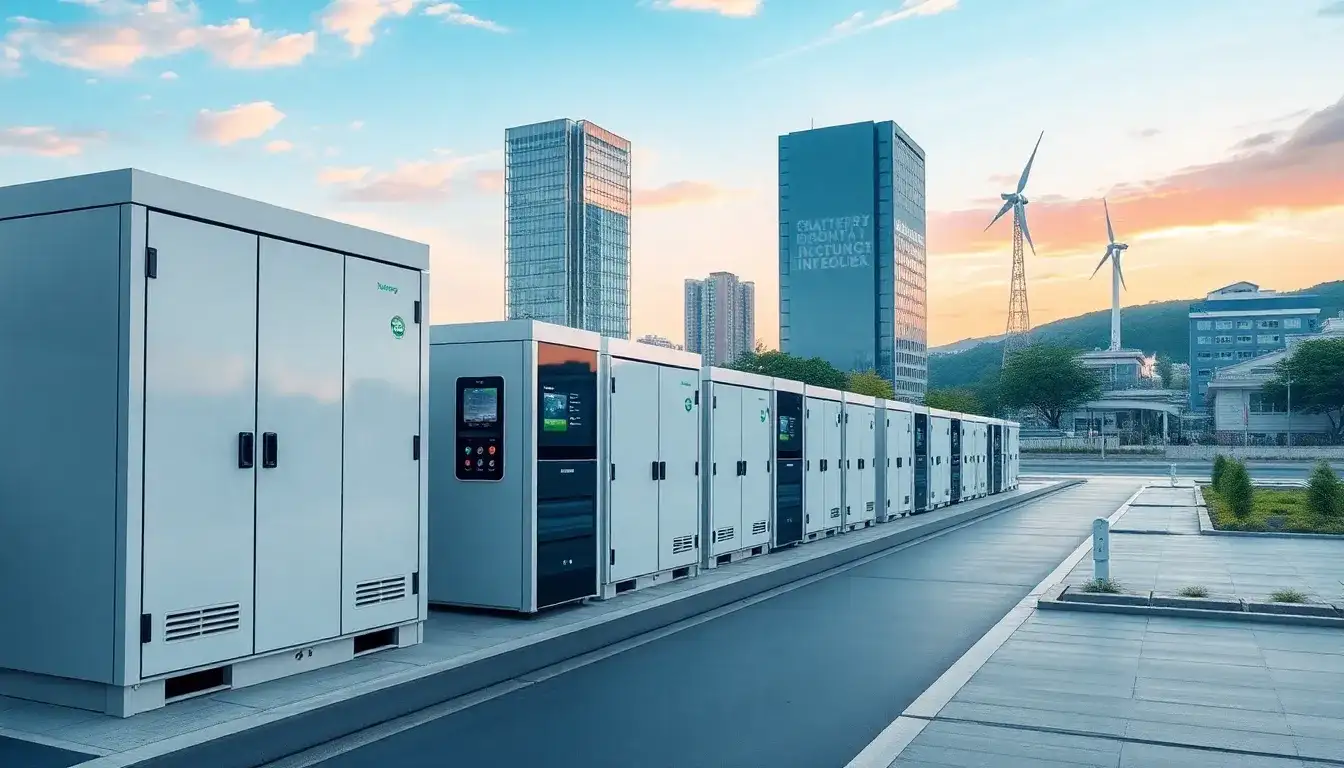
2025 Analysis of the Battery Energy Storage Market in Goyang, South Korea
The 2025 Korea Goyang Battery Energy Storage Exhibition (KBS 2025) is scheduled to take place from September 10-12, 2025, at the Korea International Exhibition Center (KINTEX). This annual event, now in its 13th edition, is organized by Korea E & Ex Inc. and is supported by Dongfang Futai (Beijing) International Exhibition Co., Ltd.
As South Korea advances toward its “Carbon Neutrality 2050” goal, Energy Storage Systems (ESS) are playing a crucial role in integrating renewable energy, grid stabilization, and energy security. Goyang, as a key industrial and technological city in the capital region, hosts numerous energy technology companies and research institutions, providing strong support for the demonstration and application of battery storage technologies.
The KBS 2025 exhibition will showcase the vital role of energy storage across various segments of the power system, aligning with the trend toward diversified energy structures. The exhibition will cover essential areas such as lithium-ion batteries, solid-state batteries, system integration, thermal management, safety monitoring, and Battery Management Systems (BMS), creating a comprehensive display pathway from R&D to manufacturing, deployment, and operation.
Moreover, the event will highlight scenario-based solutions for energy storage in residential, commercial, industrial, and large grid applications, enhancing the matching efficiency between exhibitors and professional attendees. A series of professional forums and technical exchanges will focus on innovations in energy storage materials, improvements in system safety, recycling, and the establishment of standards.
Government bodies, research institutes, and industry associations in South Korea will simultaneously release the latest policy directions and market guidance, aiding companies in understanding the interplay between technology evolution trends and policy and commercialization pathways.
With Goyang’s excellent exhibition infrastructure and its proximity to Seoul, the KBS 2025 exhibition is expected to attract energy storage technology and equipment companies from Asia, Europe, and North America, showcasing advanced global solutions and technologies. Through industrial matchmaking, trade negotiations, and demonstration project collaborations, Goyang is accelerating its development into a hub for energy storage technology in Northeast Asia and an international exchange window.
Market Analysis
1. South Korea’s Battery Energy Storage Market
The South Korean battery energy storage market is evolving from a focus on hardware to a collaborative digital energy system. With the deployment of AI scheduling systems and Energy Management Platforms (EMS), storage devices are becoming integrated into more complex multi-energy complementary scenarios, enabling real-time prediction and intelligent scheduling of resources such as solar power, wind energy, and electric vehicle charging stations. This trend transforms energy storage systems from mere “reservoirs” for the grid into intelligent nodes that provide dynamic balancing services for the electricity market.
In major cities like Seoul, Busan, and Incheon, urban renewal plans are accelerating the adoption of distributed energy storage. Renovations of old buildings, the construction of mixed-use complexes, green campuses, and microgrid community projects are incorporating energy storage systems into the integrated design of energy infrastructure. This optimization enhances load management and peak-valley regulation while promoting the implementation of new green building standards, embedding energy storage into the institutional logic of urban renewal.
In response to the increasing frequency of extreme weather events, some coastal and mountainous regions in South Korea face emergency power regulation pressures, leading local governments to include energy storage systems in their “climate resilience enhancement” initiatives. Unlike uniform deployment strategies, local areas are forming differentiated layouts regarding system capacity, safety standards, and scheduling methods, such as Jeju Island adopting high energy density solutions for isolated grid stability, while Gangwon Province favors mobile storage devices for disaster response.
The South Korean energy storage industry is enhancing its international competitiveness through modular design and standardized interfaces, particularly when targeting markets in the Middle East, Southeast Asia, and Europe, emphasizing rapid deployment, scenario adaptability, and remote monitoring capabilities. Companies like LG Energy Solutions and Samsung SDI are restructuring their product architectures, clarifying export versions from battery cells and packs to complete systems while offering after-sales, operation, maintenance, and financial support services for comprehensive transformation in energy storage technology exports.
2. Segmentation of the South Korean Battery Energy Storage Industry
By Battery Technology Type:
- Lithium-ion Battery Storage Systems (Li-ion ESS): Currently the market leader, accounting for over 85% of the share, widely used for grid regulation and residential and commercial storage. Primarily utilizing NCM (nickel-cobalt-manganese) and LFP (lithium iron phosphate), the former is suited for high energy density scenarios, while the latter emphasizes safety.
- All-Vanadium Flow Battery Storage Systems (VRFB ESS): Mainly used for long-duration energy storage projects, such as wind-solar hybrid demonstration areas, known for their repeatable charge-discharge cycles, long lifespan, and resistance to thermal runaway, suitable for medium to large industrial users.
- Solid-State Battery Storage Systems: Currently in the pilot and early industrialization phases, aimed at enhancing safety and energy density, primarily led by large enterprises in R&D trials to lay the groundwork for future energy storage alternatives.
By Application Scenario Type:
- Grid-side Storage Systems: Servicing frequency regulation, peak-shaving, and electricity spot market trading, typically large projects using containerized systems, driven by government and utility collaboration.
- User-side Storage Systems (Industrial and Commercial): Used in industrial parks, data centers, and large buildings to optimize electricity costs and ensure power supply, emphasizing high power density and integration with intelligent operation platforms.
- Residential Storage Systems (Home ESS): Compact and highly integrated, suitable for home rooftop solar systems, gradually becoming popular in green buildings in Seoul and Gyeonggi Province, focusing on easy installation and network management.
- Renewable Energy Complementary Storage Systems: Providing output smoothing and stable grid integration for wind and solar power plants, increasingly adopting hybrid battery or flow solutions to improve economic viability.
By Installation Method:
- Fixed Storage Systems: Primarily centralized construction, deployed in substations, energy parks, and port industrial areas, capable of large-scale scheduling.
- Mobile/Modular Storage Systems: Used for emergency power, remote areas, military applications, and field construction, featuring high mobility with rapidly growing market share.
3. Government Policies on Battery Energy Storage in Seoul
The Seoul city government has integrated battery storage systems (ESS) into its green building mandatory standards starting in 2023. New public buildings and large commercial facilities are required to include a certain capacity of storage devices for energy efficiency management and photovoltaic integration, guiding the incorporation of energy storage systems from the planning and design phase into the urban energy architecture.
To promote the deployment of distributed energy storage systems among residents and small to medium-sized enterprises, the Seoul city government has implemented the “Energy Independent Community” subsidy program, offering installation subsidies, energy-saving loan support, and local tax reductions, particularly encouraging residential storage products used in conjunction with solar systems to lower electricity costs and enhance urban electricity self-sufficiency.
Seoul’s urban renewal policies mandate the gradual installation of intelligent storage systems in older municipal buildings, integrated with energy management platforms for peak regulation and demand response, improving public energy efficiency. The policy emphasizes data integration and intelligent scheduling functionalities to enhance the effectiveness and management capabilities of energy storage systems.
The city of Seoul, in conjunction with the Korea Electrical Safety Corporation, has published fire safety guidelines for energy storage systems, strengthening compliance checks on system location, ventilation, explosion prevention, and fire safety measures. Regular inspection systems are being implemented for commercial and large projects, promoting the use of batteries and BMS systems that meet national standards to ensure urban operational safety.
4. Trends in the South Korean Battery Energy Storage Market
The South Korean battery energy storage market is transitioning from a focus on “selling equipment” to “selling solutions.” Leading companies are beginning to establish service systems that span battery cell manufacturing, system integration, and full lifecycle operation and maintenance. Particularly in industrial parks and urban microgrid projects, energy storage is being bundled into new service models like Energy Service Contracts (ESCO) and power hosting, where user concerns shift from initial investments to long-term returns and risk control, forming a composite business model of equipment + platform + service.
To address the high initial investment and long return cycle of energy storage systems, South Korea is gradually introducing financial tools such as green bonds, energy storage asset securitization (E-ABS), and revenue-sharing contracts. Some pilot projects are adopting models like “pay-as-you-go” and “performance guarantees,” treating energy storage systems as operational assets, with third-party financial institutions leading capital allocation to promote market-driven operations away from policy dependency.
The South Korean energy storage market is expanding into multi-industry integration. Energy storage technology is not only serving power systems but is also entering high-energy consumption industries such as data centers, port logistics, and rail transportation, fulfilling backup power, load regulation, and carbon management functions. Particularly in the realm of autonomous vehicle charging, energy storage is used as “fast charging relay stations” for flexible power supply; in the future, it will also be coupled with hydrogen systems to support intelligent scheduling across energy forms.
As South Korean energy storage systems increasingly land in overseas projects, the government and enterprises are jointly promoting proposals for international energy storage standards based on KS (Korean Industrial Standards), aiming to secure lead technology certification authority on international platforms such as ISO and IEC. South Korea hopes to boost equipment exports, patent licensing, and system integration service exports through standard output, forming a triadic global competitive strategy of “technology – standards – industry.”
5. Overview of the South Korean Battery Energy Storage Industry
The South Korean battery energy storage industry exhibits distinct regional specialization characteristics. Seoul concentrates on energy policy formulation, high-end system integration, and software platform development, while Ulsan relies on its automotive and petrochemical industry chain to drive large-scale industrial storage demand. Gumi excels in battery materials and component manufacturing, becoming a key supporting industry base. These three regions collaboratively promote a complete industrial chain system from core materials and energy storage devices to operation and maintenance platforms.
The South Korean government and higher education institutions have jointly established “Energy Storage Technology Research Centers” and offer master’s and doctoral programs in energy storage engineering to cultivate interdisciplinary talents in electrochemistry, power systems, data algorithms, and fire engineering. Additionally, companies are setting up “Energy Storage Engineer” certification standards to accelerate talent practical skill development, providing stable technical support for industry growth.
Within the South Korean energy storage industry chain, numerous small and medium-sized enterprises focus on BMS, thermal control systems, battery enclosures, and fire modules, forming a flexible and efficient supply chain structure. These enterprises are developing localized energy storage solutions for schools, convenience stores, and remote areas, achieving differentiated competition, enhancing the overall resilience and adaptability of the industry.
South Korea actively promotes the recycling and secondary use of retired electric vehicle batteries, applying them in non-critical storage scenarios such as communication base stations and electric bus battery swap stations, constructing an integrated “energy storage + recycling” system. By standardizing recycling processes and remanufacturing technologies, resource utilization efficiency is improved while lowering initial installation costs, creating a green and sustainable energy storage industry ecosystem.
6. Dynamics of the South Korean Battery Energy Storage Market
The South Korean battery energy storage market is undergoing a policy transformation, gradually shifting from the initial high-subsidy phase to a market-oriented path centered on electricity pricing mechanisms, carbon revenue, and system service fees. Recently, the Korea Energy Agency adjusted the settlement method for grid frequency regulation (FR) energy storage systems, emphasizing system efficiency and response speed. This “performance-based payment” trend encourages manufacturers to shift from merely increasing capacity to enhancing operation and control capabilities, reshaping the industry structure.
Korean battery manufacturers such as LG Energy Solution and Samsung SDI are aggressively establishing energy storage cell factories in Europe and North America, bringing back advanced technology routes and standard experiences. For instance, after participating in community energy storage projects in the United States, LG began launching similar product packages locally in South Korea to meet the needs of Seoul’s metropolitan residential market, achieving “global experience localized conversion” and forming a model of international industrial chain circulation.
The South Korean government has initiated pilot projects to include energy storage systems in the national carbon trading platform, allowing adjustable energy storage devices to earn Carbon Emission Reduction credits by reducing peak fossil fuel generation. This encourages power companies and energy storage providers to synergize in the carbon market and view energy storage systems as emission reduction assets, sparking a new wave of green financial product designs and adding new dimensions to project profitability models.
With the rapid entry of artificial intelligence and big data platforms into the energy storage field, the South Korean market is witnessing the emergence of energy storage systems with “self-learning” capabilities. These systems can optimize charge and discharge strategies in real-time based on electricity prices, climate, and load models, with some community storage already achieving automatic peak shifting and localized distribution predictions. AI technology is becoming a new core competitive advantage in the energy storage market, guiding traditional power engineering companies toward a data-driven transformation.
7. Market Share of South Korean Battery Energy Storage Brands
- LG Energy Solution – Global market share: approximately 25%-30% – Major clients: Tesla, General Motors, Hyundai – Technical advantages: High nickel NCMA batteries, lithium iron phosphate (LFP) storage batteries – Application areas: Electric vehicles (EV), grid storage, home storage.
- Samsung SDI – Global market share: approximately 20%-25% – Major clients: BMW, Rivian, Stellantis – Technical advantages: 21700 cylindrical batteries, all-solid-state batteries (trial production in 2025) – Application areas: High-end electric vehicles, industrial and commercial storage systems.
- SK On (subsidiary of SK Innovation) – Global market share: approximately 15%-20% – Major clients: Ford, Volkswagen, Kia – Technical advantages: High energy density soft-pack batteries, ultra-fast charging technology – Application areas: Electric vehicles, grid-level storage.
- Other South Korean brands (e.g., EcoPro BM, POSCO Energy) – Global market share: approximately 5%-10% – Major business: Battery materials (anodes, cathodes), small to medium-sized storage systems.
Original article by NenPower, If reposted, please credit the source: https://nenpower.com/blog/analysis-of-the-2025-battery-energy-storage-market-in-goyang-south-korea/

