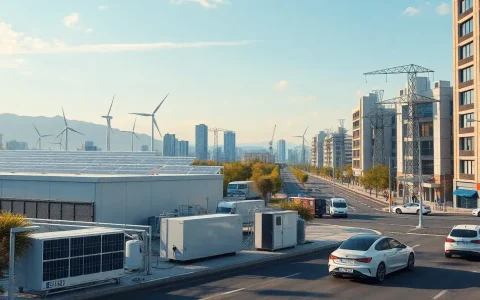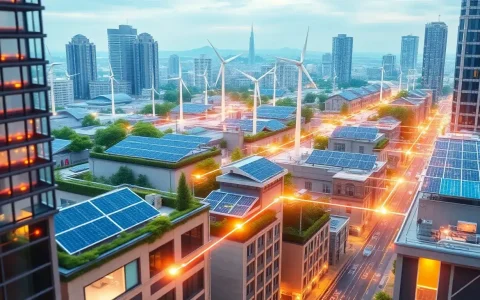
Hello everyone, I am (V:Brandcell). I’ve compiled this information to assist you. In today’s society, photovoltaic power generation is increasingly becoming a vital component of electricity supply as a renewable energy technology. With the rise of renewable energy, more businesses and individuals are paying attention to the installation costs of photovoltaic power generation systems. This article will focus on analyzing the installation costs for a 100 megawatt photovoltaic system, helping readers understand its economic viability compared to other energy technologies.
<h2>1. Basic Concept of Photovoltaic Power Generation</h2>
Photovoltaic power generation is the process of converting solar energy into electrical energy, primarily achieved through photovoltaic modules (solar panels). A photovoltaic power generation system mainly consists of photovoltaic modules, inverters, mounting structures, distribution systems, and monitoring systems. Photovoltaic systems can be categorized into small-scale systems for residential use and large-scale centralized power generation plants.

<h2>2. Installation Costs for 100 Megawatts of Photovoltaic Power Generation</h2>
The installation costs for a 100 megawatt photovoltaic power project are influenced by various factors, including the type of photovoltaic modules, geographic location, construction difficulty, and operational maintenance. According to market trends, the total investment for a 100 megawatt photovoltaic project is approximately between <b>500 million to 800 million RMB</b>. The detailed cost breakdown is as follows:
<ul>
    <li><b>Photovoltaic Module Costs:</b> As the core component of the photovoltaic power generation system, the price of modules directly impacts the overall project cost. Currently, the cost of photovoltaic modules accounts for about <b>40% to 60%</b> of the total cost.</li>
    <li><b>Inverter Costs:</b> Inverters convert the direct current generated by solar panels into alternating current. Their costs typically represent around <b>10% to 15%</b> of the total expenses.</li>
    <li><b>Mounting and Infrastructure Costs:</b> Mounting structures secure the photovoltaic modules, usually constituting <b>10% to 20%</b> of total costs.</li>
    <li><b>Installation and Commissioning Costs:</b> This includes labor and equipment transportation expenses, generally making up <b>10% to 15%</b> of the total cost.</li>
    <li><b>Other Costs:</b> Such as permit fees, design costs, and monitoring system expenses, which may account for <b>5% to 10%</b> of the total.</li>
</ul>

<h2>3. Economic Analysis of Photovoltaic Power Generation</h2>
The economic viability of photovoltaic power generation is primarily reflected in its operating costs and payback period. Although the initial investment is relatively high, the operating and maintenance costs of photovoltaic systems are significantly lower. Generally, the lifespan of a photovoltaic power station is between <b>25 to 30 years</b>. During this period, while the efficiency of photovoltaic modules may gradually decline, they can still maintain a relatively high power generation capacity. Typically, a 100 megawatt photovoltaic power station generates about <b>120 million to 150 million kilowatt-hours</b> annually. Assuming an electricity price of <b>0.5 RMB</b> per kilowatt-hour, the annual revenue could reach <b>60 million to 75 million RMB</b>. Investment return analysis indicates that the payback period for a 100 megawatt photovoltaic power station is usually around <b>6 to 8 years</b>, with a relatively high return on investment.

<h2>4. Comparison of Photovoltaic Power Generation with Other Energy Forms</h2>
When comparing photovoltaic power generation with other energy forms, we can analyze several aspects:
<ul>
    <li><b>Environmental Impact:</b> As a clean energy source, photovoltaic power generation produces almost no greenhouse gas emissions, while traditional energy sources such as coal and natural gas release significant amounts of carbon dioxide and other harmful substances during power generation.</li>
    <li><b>Resource Renewability:</b> Photovoltaic power generation relies on sunlight, a renewable natural resource, whereas coal and oil are finite resources that will deplete with increased extraction.</li>
    <li><b>Safety:</b> The operation of photovoltaic power generation systems involves minimal safety risks, in contrast to traditional energy sources like natural gas and coal, which pose certain safety risks during extraction and transportation.</li>
    <li><b>Cost Competitiveness:</b> With technological advancements, the cost of photovoltaic power generation has been decreasing annually, making it competitive with traditional energy generation costs in certain regions. This is especially true in areas with abundant sunlight, where photovoltaic power generation offers significant cost advantages.</li>
</ul>

<h2>5. Future Development Trends</h2>
With continuous technological advancements and increased production scales, the manufacturing costs of photovoltaic modules are expected to decrease further, leading to a decline in installation expenses for photovoltaic power generation in the future. Additionally, advancements in energy storage technology will provide greater flexibility for photovoltaic power applications, allowing photovoltaic power stations to better respond to fluctuations in electricity demand. With policy support and market demand, photovoltaic power generation will continue to expand its applications globally. Market forecasts suggest that in the coming years, global photovoltaic installed capacity will experience rapid growth, providing sustained momentum for the development of renewable energy.

In summary, while the installation costs for a 100 megawatt photovoltaic power generation project may be high, considering its long-term economic viability and environmental benefits, photovoltaic power generation is undoubtedly a worthy investment in clean energy technology. Through comparisons with other energy forms, we can observe photovoltaic power generation’s advantages in safety, environmental protection, and renewability, indicating a promising future ahead.
Original article by NenPower, If reposted, please credit the source: https://nenpower.com/blog/analysis-of-installation-costs-for-100-megawatt-solar-power-systems/