Amazon has initiated a new retail war! Supermarkets, AI product selection, and robotic picking are all housed within the same building. What is this e-commerce giant thinking?
Following the closure of its cashier-less store, Amazon Go, the company is once again challenging the physical retail landscape with a new store model. It has been revealed that Amazon is planning to integrate supermarkets with automated warehousing in new locations, utilizing AI technology to assist each store in selecting products for sale, thereby creating a new type of super shopping center.
According to internal documents obtained by Business Insider, Amazon is advancing an initiative codenamed Project Kobe, aimed at developing a new retail format that combines large supermarkets with automated warehouses. This is one of Amazon’s most ambitious attempts to reshape the physical retail industry. While these stores may seem similar to Walmart’s Supercenters, their operational logic is entirely different. Supercenters merge supermarkets with general merchandise retail through economies of scale, allowing consumers to complete one-stop shopping by physically browsing the store. In contrast, Project Kobe transforms retail locations into highly efficient distribution points, dedicating nearly half of the store’s space to automation, enabling consumers to enjoy both the in-store shopping experience and the rapid pickup efficiency typical of e-commerce.
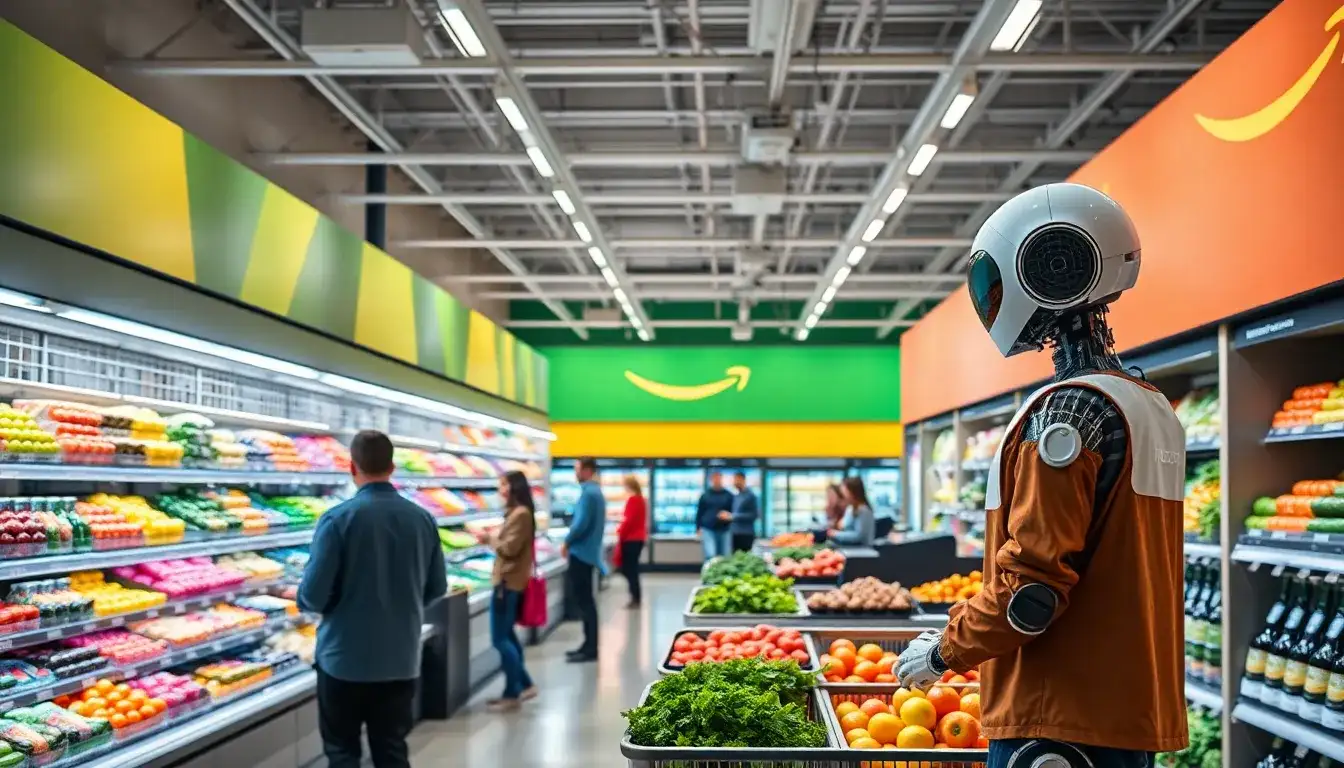
After closing Amazon Go and Fresh, the company is planning to introduce a new experimental store format. What exactly is Amazon’s Project Kobe, and how does it differ from traditional retail models? In conventional retail, the store is the core of sales, while warehousing and logistics play supporting roles. However, in the Kobe model, this relationship is completely reversed. Documents indicate that a single Kobe store could span approximately 225,000 square feet, with nearly half of that space designated for storage, picking, and packaging, effectively embedding the warehousing system within the store’s structure. This design allows a store to serve three functions simultaneously: physical shopping, online ordering for in-store pickup, and rapid delivery.
In other words, consumers will see a supermarket, but the operational essence is closer to a highly integrated logistics center. Earlier this year, Amazon announced plans to open its first Project Kobe location in Orland Park, Illinois. Internal documents reveal they plan to launch additional locations this year, and if early plans are successful, there could be an expansion to dozens of stores.
An Amazon spokesperson stated that this project is still in its very early stages, saying, “We are testing a new super shopping center concept that enables consumers to purchase a wide variety of affordable products in one go. We will continually refine the details to create the best model for our customers and our business.”
The two key components of Amazon’s super shopping center model are AI and automation. The backbone of this model consists of advanced automation and artificial intelligence. In the warehousing aspect, Amazon has implemented a robotic system from AutoStore, utilizing densely stacked containers and robots that move above to facilitate picking, significantly enhancing space utilization. Furthermore, Amazon plans to introduce its proprietary Orbital system, further integrating the handling capabilities of ambient, refrigerated, and frozen goods.
However, automation is not limited to logistics. Internal documents indicate that Amazon is developing an AI-driven product selection system, allowing product assortments to be determined beyond human input. Category managers can input strategic goals, such as enhancing a particular product category, and the system will automatically generate optimal configuration plans based on demand forecasts and spatial limitations. This system is supported by an internal AI assistant named Frida, symbolizing Amazon’s effort to delegate product selection to AI models, driven by data and algorithms.
Despite the advanced capabilities of the Kobe model, it comes with significant operational costs. According to internal estimates, the fulfillment cost of the Kobe model—which encompasses the entire process from checkout to customer delivery, including returns—will surpass that of Amazon’s existing rapid delivery network, increasing the cost per item by approximately 12%. The handling of perishable goods is even more expensive, partly due to the need for manual picking from shelves, with employees potentially traveling over 500 feet during a single picking session. Additionally, the capital expenditure for a single location is around $33 million, higher than typical store investments. These figures indicate that the Kobe project does not offer a cost advantage in the short term. However, for Amazon, this appears to be an investment in infrastructure for the future.
Currently, Walmart remains the leader in the U.S. retail market. In the grocery sector, Amazon holds only about 3% market share, significantly trailing Walmart’s 21%. More critically, Walmart’s extensive network of stores can cover around 93% of households’ same-day delivery needs, a geographical advantage that is challenging for pure e-commerce models to replicate. The intention behind the Kobe project is to create hybrid stores that combine retail and logistics capabilities, relocating warehouses and fulfillment centers closer to consumers to shorten the last mile of delivery and compensate for past geographical disadvantages compared to physical retailers.
It is noteworthy that Amazon has not always had a smooth journey in the physical retail sector. Both Amazon Go and the Amazon Fresh supermarket chain have undergone adjustments and even closures in recent years; the acquisition of Whole Foods for $13.7 billion in 2017 has not reversed Amazon’s position in physical retail. If the Project Kobe model successfully expands, the future of retail competition may not solely hinge on who offers cheaper products or more stores, but rather on who can more efficiently compress the entire supply chain into locations closest to consumers.
Original article by NenPower, If reposted, please credit the source: https://nenpower.com/blog/amazon-launches-new-retail-war-with-ai-driven-supermarkets-and-robotics-in-innovative-store-concept/