

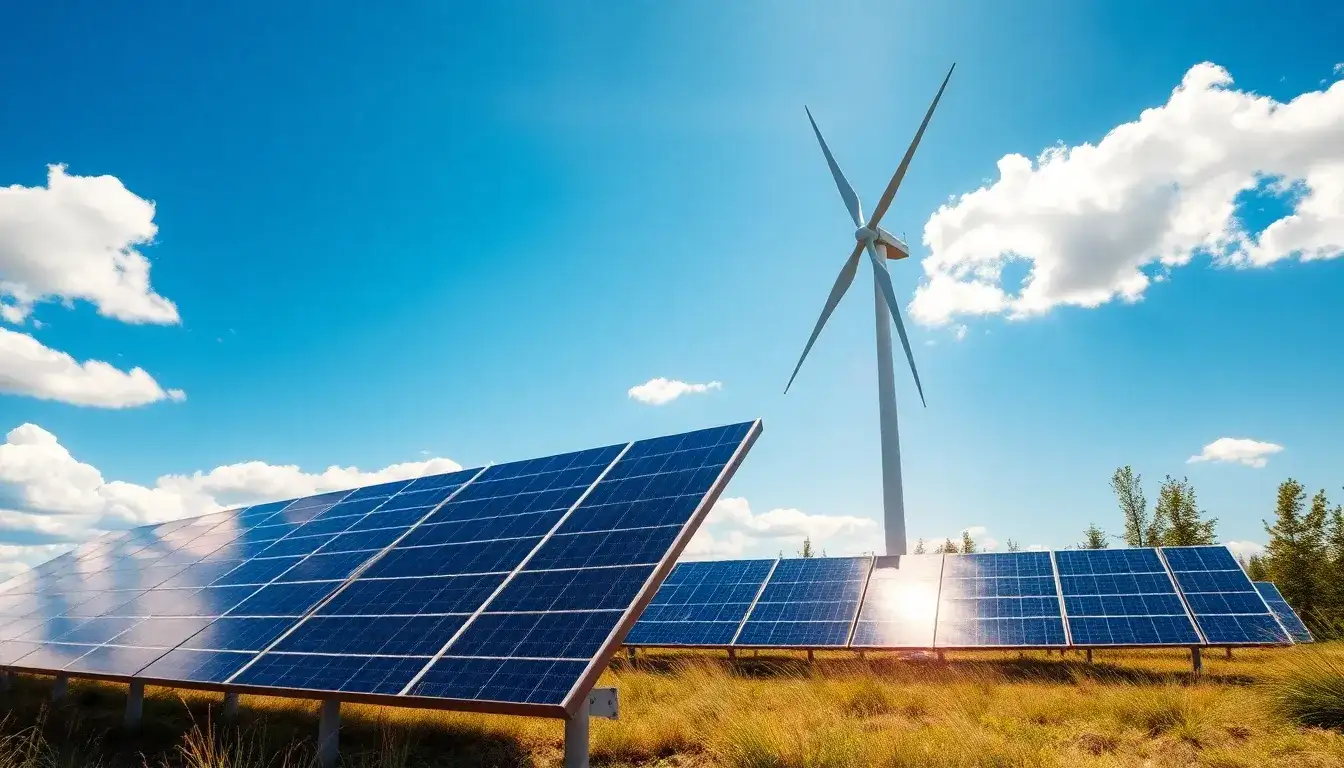
Alberta Releases New Code of Practice for Solar and Wind Renewable Energy Operations
===================================================================================
Author: Alan Harvie
Date: June 13, 2025
Effective May 31, the Government of Alberta has implemented its Code of Practice for Solar and Wind Renewable Energy Operations (the Code), established under Section 3.1(1)(c) of the Conservation and Reclamation Regulation. Following this, on June 6, the Alberta Utilities Commission (the AUC) published Bulletin 2025-06: Reclamation Security Guidelines for Wind and Solar Power Plants (the Guidelines), which outlines the criteria the AUC will use to assess the adequacy of reclamation security provided to landowners for solar and wind power projects. This Code follows the August 2023 moratorium on solar and wind energy projects, leading to an increased focus by the Government on protecting agricultural land designated for these developments.
The Code introduces several new requirements for solar and wind projects, including:
– Registering proposed and existing projects under the Approvals and Registrations Procedure Regulation;
– Providing security for reclamation costs associated with both proposed and existing projects, either to the landowner(s) or to Alberta Environment and Protected Areas (AEPA);
– Ensuring the conservation and reclamation of project sites;
– Managing the transfer of ownership of projects;
– Adhering to reporting requirements;
– Maintaining proper record-keeping for projects.
### Registration Requirements
Under the Code, all proponents of proposed and existing wind and solar projects must register their projects with AEPA. For new facilities, registration must be secured before any ground disturbance occurs for the renewable energy operation. For existing projects, proponents must obtain a registration compliant with the Code by January 1, 2027. The registration application must include:
– A conservation and reclamation report, which encompasses:
– A conservation and reclamation plan;
– A pre-disturbance site assessment;
– Spatial maps and accompanying tables detailing the project’s location;
– If reclamation security is provided to the Government, a security estimate based on Schedule 1 of the Code;
– If security is offered to the landowner, a declaration confirming that security has been provided and deemed adequate by the AUC;
– Any additional information required by AEPA.
### Security Requirements
To register a project with AEPA, proponents must provide suitable security for reclamation. The Code and Guidelines offer the choice of posting this security with either the Government or the landowner(s).
#### Required Amounts
If a proponent chooses to post security with the Government, they must submit a security estimate for the project’s total reclamation cost as specified in Schedule 1 of the Code. For new solar and wind projects, 30% of this estimated cost must be provided. For existing projects, the required amount is 15%. However, 15 years after the initial security is provided, proponents must ensure that at least 60% of the total reclamation costs is submitted to AEPA.
Alternatively, if security is posted with the landowner(s), the proponent must submit a Declaration to AEPA as previously mentioned. The Guidelines establish that to obtain AUC approval, the proponent must provide landowners with 40% of the reclamation cost estimate. This percentage applies to both new and existing projects. After 15 years, proponents must ensure that at least 70% of the total reclamation cost is provided to the landowners.
The AUC acknowledges that there are additional complexities and risks associated with landowner-held security, including potential challenges for a hosting landowner to complete reclamation work if a proponent fails to fulfill its obligations.
### Approval of Proposed Security
For new projects, proponents must either provide security directly to AEPA or submit a Declaration before registering their projects. If security is posted with the landowner(s), its adequacy will be assessed during the AUC’s Rule 007: Facility Applications process. For existing projects, the Code mandates that proponents must not operate their renewable energy facilities after January 1, 2027, without obtaining a registration under the Code. This means owners of existing projects must register with AEPA to align their reclamation security with the new requirements.
For those who initially provided security to AEPA, a new application may be necessary, along with a security estimate prepared in accordance with Schedule 1 of the Code. Existing project proponents who originally provided security to landowners must submit a Declaration to AEPA indicating that AUC has approved the security form and amount.
Interestingly, a publication from AEPA on June 4, 2025, states that owners of existing projects do not need to apply for AUC approval for security provided directly to landowners. However, this statement contradicts the regulatory framework established in the Code and Guidelines, suggesting that owners may still need AUC approval for landowner-held security.
### Conservation and Reclamation Requirements
The Code requires proponents to develop a conservation and reclamation plan as per the Conservation and Reclamation Directive for Renewable Energy Operations (2018). Before starting construction, topsoil and subsoil must be salvaged from the project site according to this plan. At the project’s end, the land must be reclaimed following the established reclamation plan.
Proponents must:
– Backfill, grade, and contour disturbed land to fit local topography;
– Replace soil materials salvaged for reclamation;
– Replant the plant community as detailed in the conservation plan;
– Obtain written approval for the desired seed mix from the landowners.
Moreover, project developers must utilize only salvaged topsoil and subsoil during reclamation, unless otherwise permitted under the conservation plan or with written consent from the landowners.
An interim monitoring site assessment is required for a minimum of three growing seasons following construction, along with a reclamation certificate site assessment upon completion of reclamation, both adhering to the 2018 Directive.
### Transfer of Ownership
The Code stipulates that project proponents cannot transfer a power plant’s AEPA registration without written consent from AEPA.
### Reporting Requirements
Individuals operating solar or wind projects must report any violations of the Code to:
– The proponent holding the AEPA registration;
– The AEPA’s incident reporting hotline.
Additionally, a written report of any Code contravention must be submitted to AEPA within seven days of discovery.
### Record-Keeping Requirements
Finally, proponents are required to maintain an operating record for a minimum of five years following the issuance of the reclamation certificate. This record must include, at a minimum:
– Conservation and reclamation plans prepared before AEPA registration;
– A pre-disturbance site assessment plan;
– Written consent from registered landowners to build and operate the project;
– Written approval from registered landowners regarding the seed mix used in reclamation;
– Any other applicable permits and licenses.
The author extends his gratitude to Isaiah Martin, articling student, for his contributions to this legal update.
Original article by NenPower, If reposted, please credit the source: https://nenpower.com/blog/alberta-implements-new-code-of-practice-for-solar-and-wind-energy-operations/

