

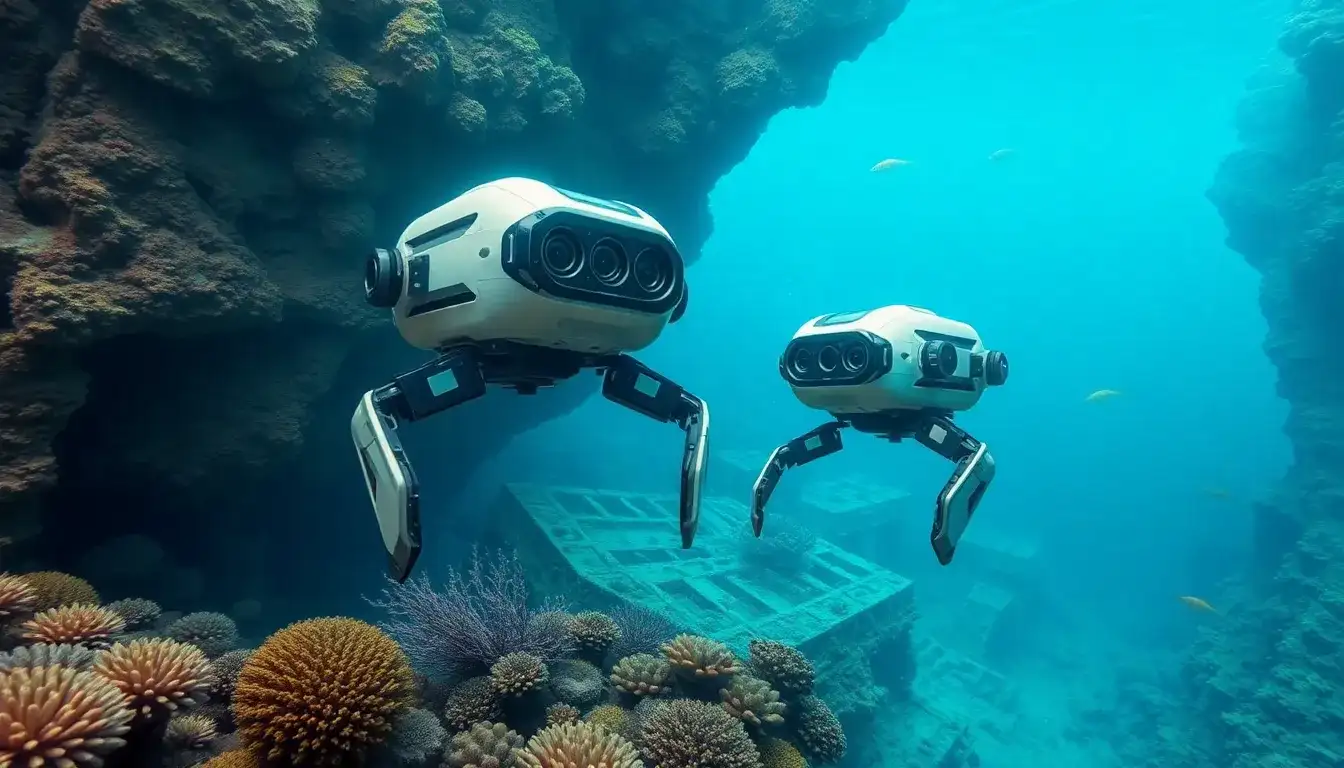
Robots Underwater as “Doctors”: Faster than Human Inspections by 60%, with Accuracy Exceeding 95%
Date: February 18, 2026
In recent years, underwater robots have advanced significantly, often referred to as “doctors” of submerged structures. They conduct inspections up to 60% faster than human divers and boast an accuracy rate of over 95%. This technological innovation is particularly beneficial for large-scale infrastructure projects such as bridges, dams, and underwater pipelines.
These underwater robots are typically deployed in challenging conditions where human divers face significant risks, such as high currents and low visibility. Equipped with advanced sensors, these machines can operate without divers needing to maneuver in potentially hazardous environments.
As a part of ongoing research, a project led by Guangzhou University has been at the forefront of developing these underwater robots. In November 2025, the project received recognition from several engineering and construction organizations, highlighting its achievements in enhancing inspection precision and safety.
Data indicates that underwater robots can reduce inspection durations by up to 60%, with a baseline inspection time cut down by 70%. The reliability of their assessments exceeds 95%, making them a valuable tool for civil engineering inspections.
The robots are commonly used in over 80 engineering projects across the country, providing crucial inspections for infrastructure maintenance and development. Their applications extend to various sectors, including energy, transportation, and environmental monitoring.
As these robots become more widely adopted, they are expected to contribute significantly to improving operational efficiency and safety standards in underwater inspections. The integration of artificial intelligence into these systems allows for real-time data collection and analysis, ensuring that potential issues can be addressed promptly.
Future developments in underwater robotics are likely to include enhancements in automation and sensor technologies, enabling them to adapt to a broader range of environmental conditions. This innovation aims to refine inspection techniques further and reduce reliance on human divers, especially in risky situations.
In summary, underwater robots are revolutionizing the way inspections are conducted in submerged environments, providing faster and more accurate assessments than traditional methods. Their continued evolution promises to enhance safety and efficiency across various engineering sectors.
Original article by NenPower, If reposted, please credit the source: https://nenpower.com/blog/ai-underwater-robots-revolutionizing-inspections-with-60-faster-results-and-over-95-accuracy/

