

Enhanced Solar Photovoltaic System Management and Integration: The Digital Twin Concept
The rapid adoption of solar photovoltaic (PV) energy across various countries necessitates more coordinated approaches for the sustainable monitoring and maintenance of these widely distributed installations. To tackle this challenge, several digitization architectures have been proposed, with one of the latest being the digital twin (DT) system architecture. DTs have demonstrated effectiveness in predictive maintenance, rapid prototyping, efficient manufacturing, and reliable system monitoring. However, while the concept is well established in fields such as wind energy conversion, its application in PV remains limited. The recent rise in autonomous platforms, particularly robotics, has expanded the scope of PV management, revealing gaps in real-time monitoring needs. DT platforms can be redesigned to accommodate such applications and facilitate integration into the broader energy network.
This work provides a system-level overview of current trends, challenges, and future opportunities for DTs in renewable energy systems, particularly in PV systems. It emphasizes how advancements in artificial intelligence (AI), the Internet of Things (IoT), and autonomous systems can be leveraged to create a digitally connected energy infrastructure that supports sustainable energy supply and maintenance.
Introduction
The ongoing transformation of power systems is influenced by three primary forces: digitalization, decarbonization, and decentralization. Among these, digitalization is significantly shaping the future of power grids and energy systems. Digital technologies such as AI, DTs, blockchain, and next-generation wireless communication are at the forefront of this transformation. DTs, in particular, offer digital replicas of physical assets, facilitating data collection, analytics, control, and sharing while enabling bidirectional control. They accurately represent the core physical characteristics of these assets and integrate advanced digital technologies. For instance, AI-driven energy forecasting and predictive maintenance can be embedded into DTs, providing actionable insights that enhance efficiency, reliability, and performance.
Digital Replicas in Energy Systems
Despite claims from several industrial pioneers regarding practical DTs, there is limited published evidence within the scientific community. The term “digital twin” has often been loosely interpreted across various studies. A DT is defined as a virtual (digital) replica of a physical counterpart that allows for automatic data exchange between the physical and digital versions. Common misconceptions exist regarding what constitutes a DT; it should not be confused with a digital model or digital shadow. A DT requires automated, real-time, bidirectional data flow, whereas digital models and shadows involve manual data exchange.
DTs have applications across multiple industries, including manufacturing and energy. The global DT market size is projected to reach approximately USD 16.75 billion in 2023, with a compound annual growth rate (CAGR) of 35.7%. In PV systems, challenges such as real-time energy yield monitoring, fault detection, maintenance logs, and battery management necessitate sustainable solutions. DTs, with their real-time monitoring capabilities, are proposed as suitable solutions for enhancing management processes.
Digital Twins for Solar Photovoltaics
In the context of PVs, DTs can be applied throughout the solar cell production, module manufacturing, physical system design, integration, operation, and maintenance phases. Recent literature reveals that most publications related to solar photovoltaics focus on system management, performance, efficiency, and machine learning approaches. Traditional digitized systems have been used to monitor PV performance; however, these systems are limited in their capabilities compared to DTs, which are designed to gather and process information more effectively.
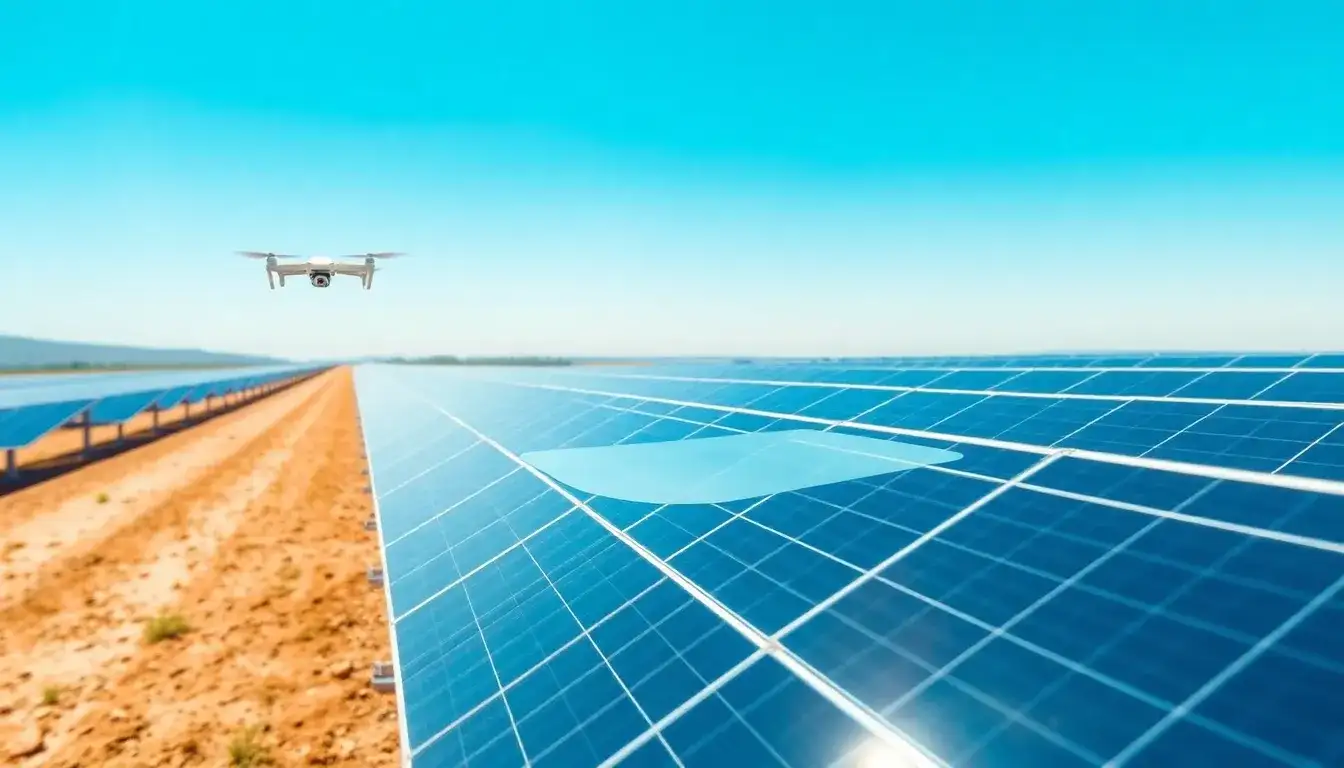
This paper aims to provide a comprehensive view of the implementation of PV DTs across the entire PV lifecycle, emphasizing post-construction monitoring and maintenance. It includes the integration of autonomous platforms, such as aerial and ground robots, and discusses current trends, challenges, and future applications.
PV-DT Based on Developmental Stage
Solar Cell Prototyping and Manufacturing
The application of DTs in solar cell prototyping and quality assurance has gained global significance. For instance, DTs have been used to optimize solar cell composition and mechanical properties, aiding in the production of high-efficiency cells. These intelligent manufacturing processes focus on quality control and lifecycle assessment.
PV Array Design, Planning, and Installation
Digital shadows can facilitate renewable energy planning for cities or districts, identifying opportunities to improve district heating systems. The application of various machine learning models can enhance forecasting during the project design phase, ensuring reliable cash flow estimates for contractors.
PV Module Power Estimation, Optimization, and Management
DTs play a crucial role in power management across different PV installation scales. Applications include residential management systems, energy management in microgrids, and optimization frameworks for solar energy and battery storage systems.
PV Power Generation Forecasting
Algorithms developed for forecasting PV power generation rely on DTs to estimate uncertainties and instabilities in power generation, enhancing energy scheduling and utility-scale planning.
PV Installation Monitoring and Maintenance
PV-DTs offer efficient monitoring and maintenance solutions, enabling fault detection and classification across different components, including modules and electronics. They can also assess the overall site following adverse weather events.
PV-DT Architecture and Technologies
The architecture of DTs varies based on specific applications, but general frameworks exist. Effective communication and data transfer between the physical and digital twins are essential. Technologies enabling PV DTs include weather monitoring sensors, multi-physics modeling, and advanced electronic component integration.
Current Industry Trends
Recent advancements in the solar photovoltaics industry have led to a range of commercialized software solutions offering different DT capabilities. Companies are increasingly focused on smart energy management for residential buildings, although many products still face limitations in predicting energy yield.
Challenges of PV-DT
Numerous challenges hinder the development of PV-DT systems, including the integration of multi-physics models, communication issues, data acquisition inaccuracies, and the need for improved machine learning model accuracy. Cybersecurity concerns and economic implications also play significant roles in the adoption and scalability of DTs.
Future Trends
As technology advances, the future of PV-DTs is expected to encompass significant growth in various areas, including the integration of autonomous agents, decentralized energy management systems, and the increased use of wireless sensors. Standardization and regulatory compliance will also be critical in ensuring the successful implementation of DTs in the solar industry.
Conclusions
This work provides a comprehensive overview of the current trends, challenges, and future applications of PV-DT systems. Emphasizing the importance of operation and maintenance, the study highlights the potential for DTs to enhance smart utility and energy management systems in urban areas, ultimately contributing to more sustainable energy solutions.
Original article by NenPower, If reposted, please credit the source: https://nenpower.com/blog/advancing-solar-photovoltaic-management-through-digital-twin-integration/

