

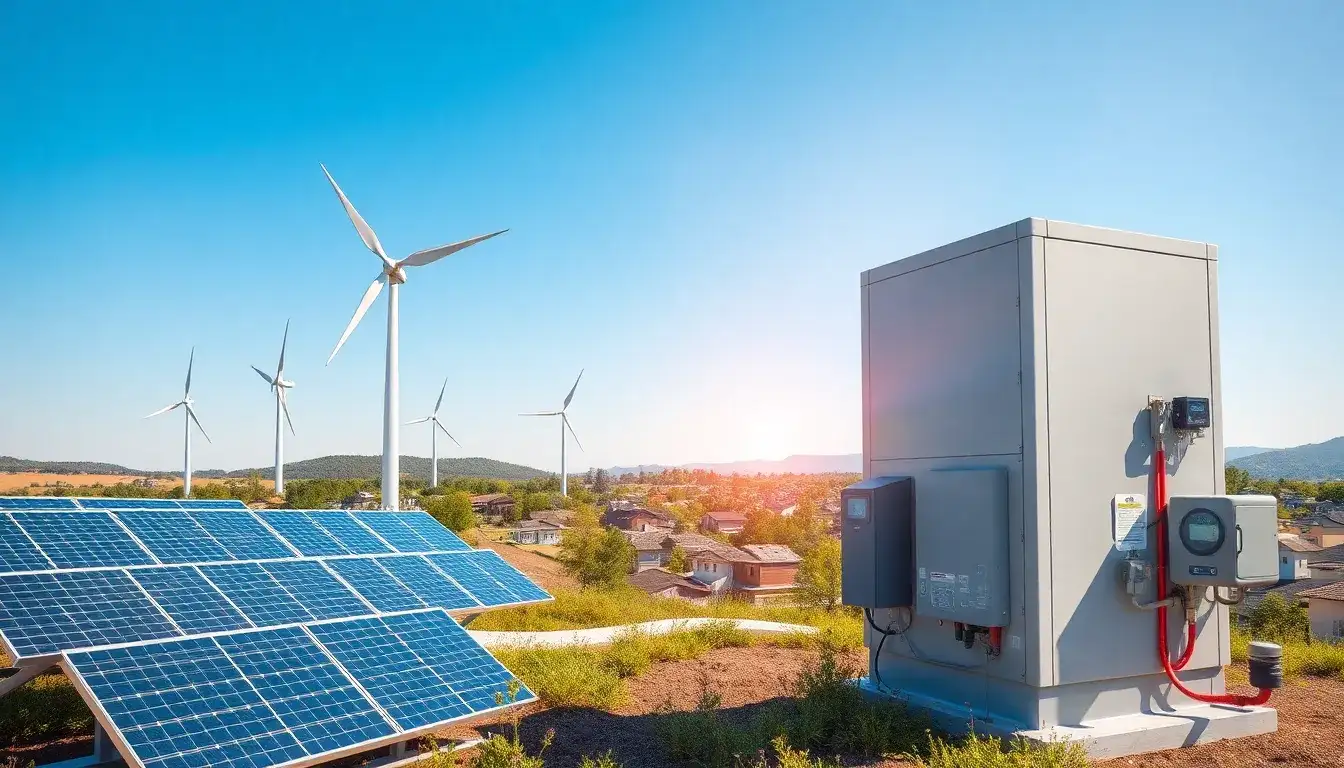
Microgrids are increasingly recognized for their role in enhancing energy reliability and sustainability. The Polar Star Power Network provides a wealth of information on microgrids, helping you stay updated on the latest developments. For more insights into microgrid technology, be sure to follow the Polar Star Power Network.
During the 14th Five-Year Plan, China’s energy and power sector is expected to continue its upward trajectory, particularly in wind energy. The trend toward larger and smarter onshore wind turbines is gaining momentum. New business models that integrate wind power with energy storage and microgrids are becoming more common, and there is significant potential for upgrading aging wind farms. Meanwhile, the commercialization of floating offshore wind energy is accelerating.
Innovative energy storage solutions are essential for ensuring the stability and reliability of power supply systems. On the supply side, energy storage complements renewable energy sources like wind and solar, while on the grid side, it is increasingly used for peak shaving, frequency regulation, and enhancing overall grid efficiency and safety. On the consumer side, energy storage is being adopted across residential and commercial sectors.
In a recent policy analysis, the focus was on the direct connection of green electricity, aimed at addressing three major challenges in distribution reform. This initiative has led to various forms of reform in distribution services, such as integrated source-grid-load-storage systems and smart microgrids. However, these reforms face numerous challenges that have hindered smooth project implementation.
Recent developments in energy policies highlight the importance of expanding the advantages of ultra-high voltage transmission equipment and converters, strengthening smart grid capabilities, and accelerating the integration of smart microgrids and wind-solar-storage systems.
Efforts are underway to promote the application of low-carbon technologies, including photovoltaics, hydrogen energy, geothermal, and smart microgrids. These initiatives aim to support energy-saving measures and carbon reduction strategies in energy-consuming units, leading to the establishment of zero-carbon factories and comprehensive energy demonstration projects.
On May 30, a delegation led by Thailand’s Deputy Prime Minister Pirapan Salirathavibhaga visited Trina Solar, expressing hopes for deeper energy cooperation. The group toured Trina’s innovation center, energy storage microgrid demonstration station, and the National Key Laboratory for Photovoltaic Science and Technology. They inquired about the project’s construction and application, gaining insights into Trina’s capabilities in energy storage and smart microgrid solutions.
In Gansu province, the new energy storage capacity has reached 4.54 GW, with a total installed capacity for new energy sources at 67.2 GW. The province is actively fostering projects that support local consumption of renewable energy, including zero-carbon parks and integrated source-grid-load-storage systems.
On May 28, the Shandong Jingnong Energy Group launched a microgrid system manufacturing project in the High-tech Zone, with an investment of 180 million yuan to develop microgrid systems and new distributed energy storage integration systems.
As the market for new energy continues to grow, the integration of source-grid-load-storage systems is seen as a best practice for addressing energy challenges in industrial parks. Jiangsu province is leading the way by issuing guidelines for zero-carbon park construction, emphasizing the importance of digital and smart development in microgrid systems.
In summary, the ongoing transition to smart microgrids and the integration of renewable energy sources highlight the need for innovative solutions in energy management. As the sector evolves, the collaboration between various stakeholders will be crucial in driving forward the development of efficient and sustainable energy systems.
Original article by NenPower, If reposted, please credit the source: https://nenpower.com/blog/advancements-in-microgrid-technology-powering-the-future-of-renewable-energy-systems/

