

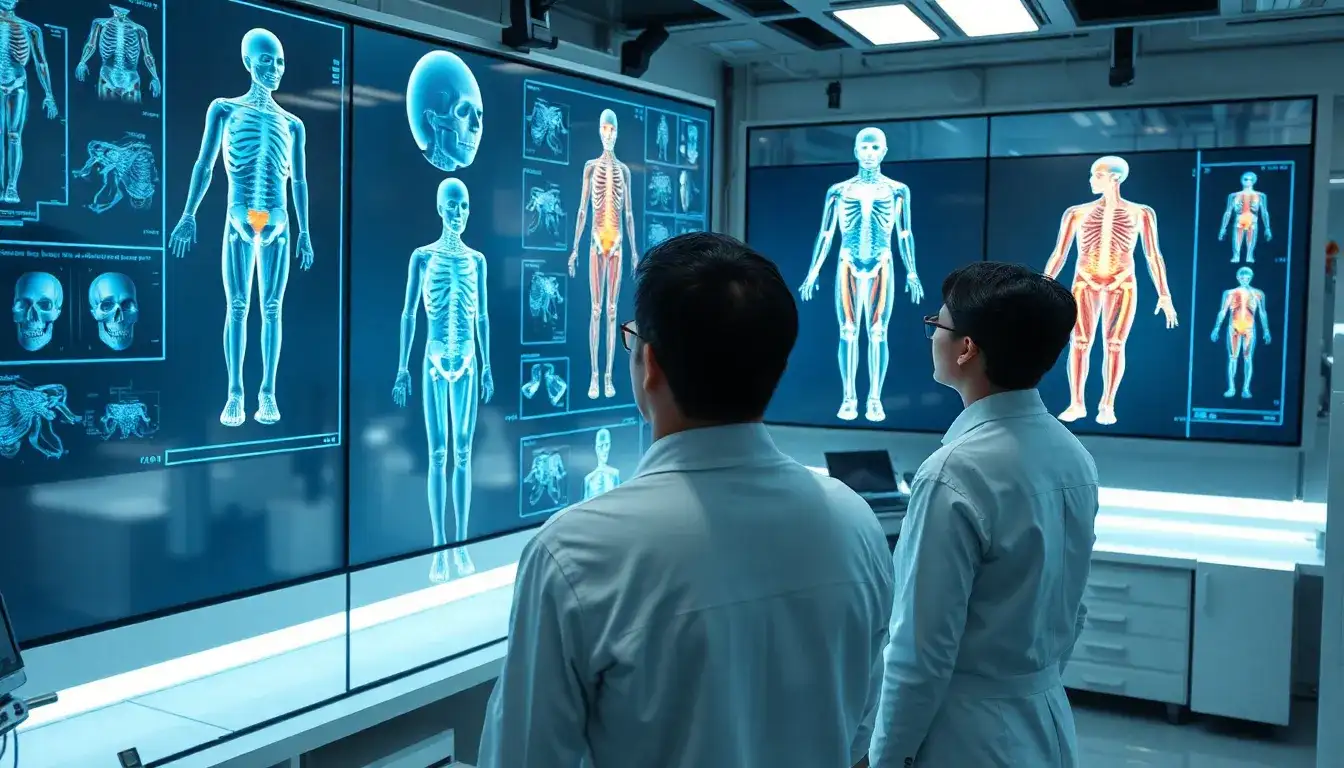
Large-scale, high-precision three-dimensional human body data repositories are being transformed by the emergence of “digital humans.” Recent discussions at a conference highlighted the potential of machine learning to enable humans to distinguish complex features more effectively. A significant focus was on the three-dimensional human body model, which serves as a cornerstone for various applications, including animated avatars, biometric recognition, and intelligent systems.
However, traditional methods relying on 2D imaging techniques or basic 3D human body models have limitations in accuracy and may lead to discrepancies between modeled and real human bodies. Moreover, challenges persist due to the lack of large-scale, high-precision, and realistic datasets for 3D human body representations, which directly impacts the efficacy of data-driven modeling techniques.
On February 26, a team from the Chinese Academy of Sciences presented their findings at the IEEE Transactions on Circuits and Systems for Video Technology (TCSVT), providing insights into these challenges. Their work aims to address the complexities associated with 3D human body data modeling through innovative methodologies.
The team’s research is based on advanced high-precision 3D/4D human body data collection techniques, developed over the past three years. Their approach to establishing a robust framework for accurate three-dimensional human body data repositories is significant. With this foundation, they propose a method for creating point cloud representations that can adapt to different applications, enhancing the quality and precision of human body modeling.
By leveraging their findings, the team aims to facilitate a shift towards more autonomous and intelligent human-machine interactions. They emphasize the need for seamless integration between digital models and real-world applications, ensuring that machine learning algorithms can effectively utilize these enhanced datasets.
The implications of this research extend beyond mere data representation; it seeks to redefine how machines understand and interact with the complexities of human anatomy. The development of a comprehensive dataset that reliably captures the variability inherent in human forms could lead to more accurate simulations and applications in various fields, from healthcare to entertainment.
As the research progresses, the team anticipates that their comprehensive 3D human body data repositories will serve as a fundamental resource for advancing machine learning capabilities. This evolution towards more sophisticated human-machine interactions promises to enhance user experiences across multiple domains.
In conclusion, the ongoing advancements in three-dimensional human body data collections and modeling techniques are paving the way for a future where machines can more accurately interpret and respond to human characteristics. The efforts of the team at the Chinese Academy of Sciences are a significant step toward achieving this goal.
Original article by NenPower, If reposted, please credit the source: https://nenpower.com/blog/advancements-in-large-scale-high-precision-3d-human-body-data-repositories-transforming-the-future-of-human-recognition-technology/

