

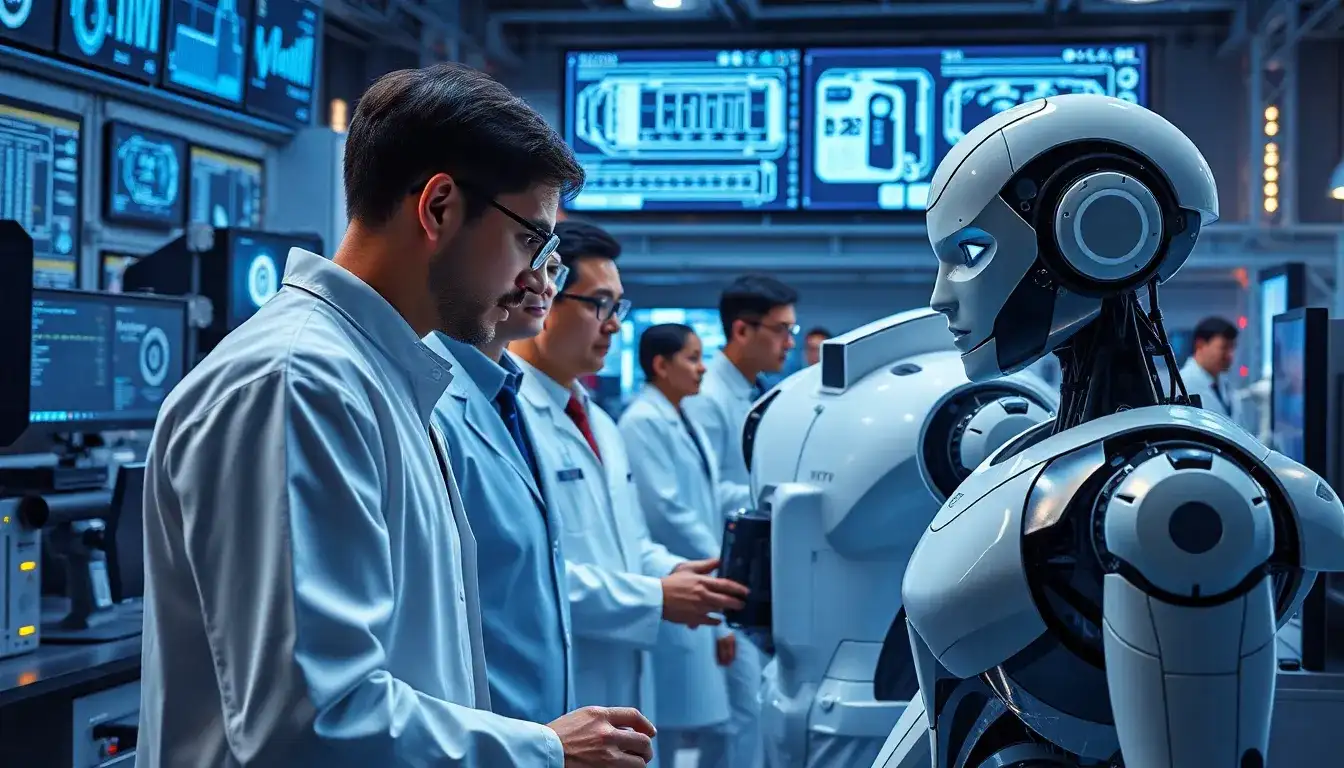
With advancements in technology and policy support, humanoid robots are expected to gain significant traction by 2026. What does this mean for the future of smart manufacturing?
As we approach the beginning of 2026, the government has introduced new policies to boost the humanoid robot industry, aiming to enhance production efficiency and quality while reducing costs. As a key focus for national development, humanoid robots are seen as essential tools for various service sectors, especially in manufacturing and logistics.
On January 21, the Ministry of Industry and Information Technology confirmed the promotion of humanoid robots and their associated components, emphasizing the importance of supporting the industry through relevant policy measures. This initiative aims to stimulate market demand and create new opportunities for innovation.
As of November 2025, humanoid robots are projected to become mainstream in production environments, with significant investments expected to enhance their capabilities. Major companies are already developing innovative solutions that incorporate AI, machine learning, and advanced automation technologies.
For instance, a leading company is expected to unveil its new model, the GOVLA, which will feature cutting-edge capabilities in autonomous operation and real-time adaptability. This model is designed to work in various environments, providing high precision and efficiency.
By September 2025, several key players in the industry will showcase their latest advancements in humanoid robotics at significant tech events, highlighting their commitment to enhancing operational efficiency and reducing costs in manufacturing processes.
Moreover, as the demand for humanoid robots increases, companies are focusing on integrating AI technologies to enable these machines to learn and adapt to their environments effectively. The upcoming iterations of humanoid robots are expected to feature advanced sensory systems and machine learning algorithms, allowing for sophisticated interactions and tasks.
In conclusion, the growth of humanoid robots in the coming years will be driven by technological advancements and robust policy support. As businesses increasingly adopt these technologies, the landscape of manufacturing and service industries will undoubtedly transform, leading to greater efficiency and innovation.
Original article by NenPower, If reposted, please credit the source: https://nenpower.com/blog/advancements-in-humanoid-robots-chinas-strategy-for-2026-and-beyond/

