

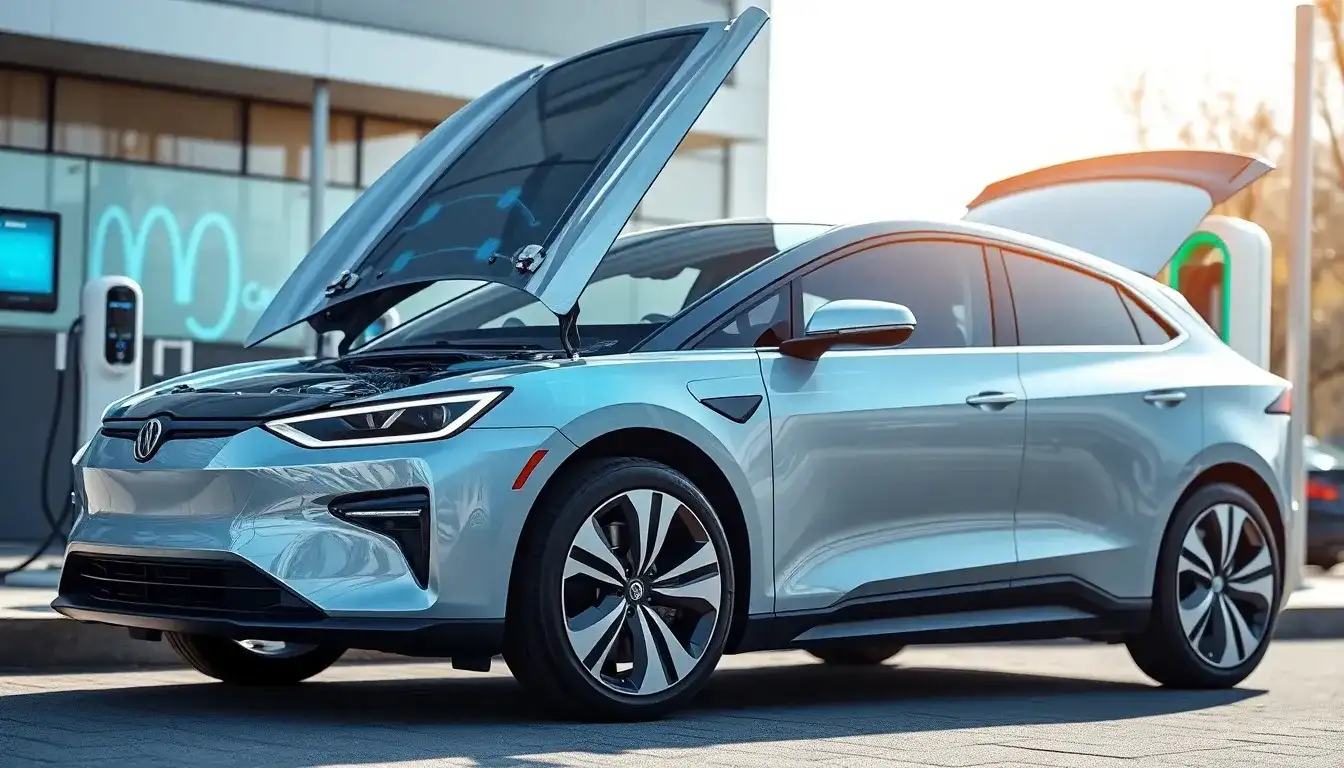
Electric vehicles (EVs) are advancing rapidly, driven by significant breakthroughs in battery technology—an evolution that companies like VinFast are harnessing to propel the industry forward. While it may seem that electric vehicles are a modern invention, they actually dominated the streets over a century ago. In 1900, lead-acid batteries enabled EVs to achieve a remarkable range of up to 100 miles. However, as roads improved and vehicles became faster, these heavy, low-energy-density batteries struggled to keep pace, leading to the rise of internal combustion engines and the decline of EVs.
Fast forward to 1996, when an American manufacturer launched an all-electric car that still relied on the outdated lead-acid technology. Its second generation, equipped with nickel-metal hydride (NiMH) batteries, also failed to compete with gasoline-powered vehicles due to insufficient energy density. The turning point came in 1998 when a Japanese manufacturer introduced an EV powered by a lithium-ion battery. This technology, while not immediately recognized, could store up to three times more energy than lead-acid batteries and about twice as much as NiMH batteries.
By 2008, the world began to take notice of lithium-ion technology, which encompasses various chemistries rather than being a single type. The majority of these batteries use a graphite anode, while advancements have been primarily focused on the cathode. Early lithium-ion batteries combined lithium with nickel, cobalt, or manganese, but manufacturers have since refined these combinations to optimize energy density, safety, and cost. A significant trend in the industry has been the reduction of cobalt content, which is both costly and ethically controversial, in favor of high-nickel formulations. Another chemistry, lithium iron phosphate (LFP), has gained popularity for its affordability and safety, albeit with slightly lower energy storage capacity. By 2024, LFP and nickel-manganese-cobalt (NMC) batteries are expected to power 94% of light electric vehicles worldwide, according to S&P Global Mobility.
These improvements are not merely theoretical. A recent study by Geotab revealed that EV batteries now degrade at just 1.8% per year, down from 2.3% in 2019. At this rate, batteries could last over 20 years, alleviating concerns regarding longevity. Companies like VinFast are taking advantage of these advancements with vehicles that feature cutting-edge battery management systems designed to extend battery life and enhance safety. Furthermore, VinFast is investing heavily in battery research and collaborating with leading partners to pave the way for the next generation of EV technology. Their confidence in their products is reflected in their industry-leading warranties, which span seven to ten years depending on the model, providing EV buyers with peace of mind and more miles on the road.
Looking to the future, two emerging technologies promise to revolutionize EV batteries. Solid-state batteries replace flammable liquid electrolytes with stable solid materials, potentially increasing energy storage by 50-80% while mitigating fire risks. Sodium-ion batteries represent another innovation; instead of relying on lithium, they utilize abundant sodium, making them more affordable and sustainable. While their energy density is lower than that of LFP batteries, they excel in safety and performance in cold weather. Both technologies face challenges ahead, but progress is accelerating. As costs decrease and performance enhances, EVs may soon surpass gasoline-powered vehicles in terms of longevity and reliability. The journey toward better EV batteries has been ongoing for decades, but the next significant breakthrough may be just around the corner.
Original article by NenPower, If reposted, please credit the source: https://nenpower.com/blog/advancements-in-battery-technology-boost-electric-vehicle-reliability/

