

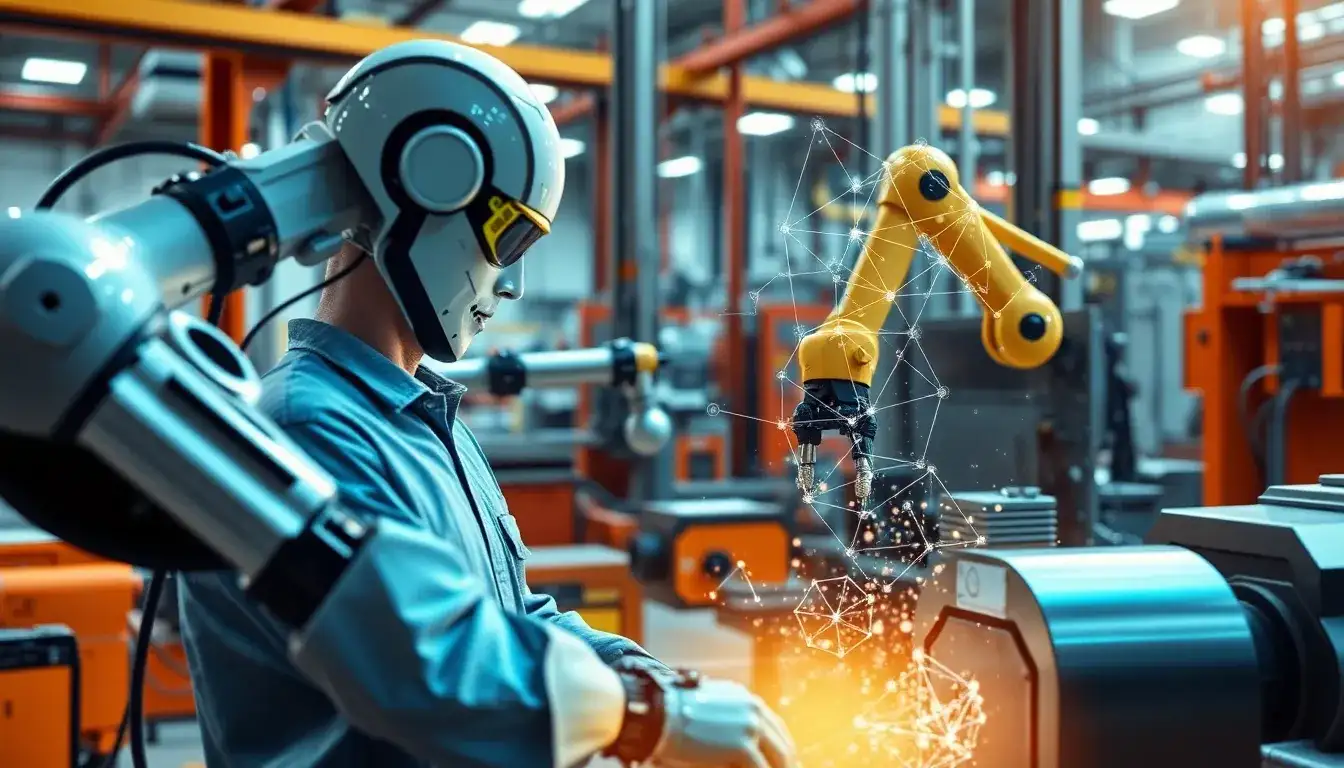
Artificial intelligence is rapidly transforming various industries, including manufacturing, logistics, and healthcare. According to a recent report, the integration of AI technologies is expected to enhance productivity and efficiency significantly across these sectors.
As outlined in the “Artificial Intelligence + Manufacturing” initiative, it aims to promote the development of AI applications in manufacturing, focusing on areas such as process optimization, quality control, and predictive maintenance. The report emphasizes the importance of leveraging AI to improve operational efficiency and reduce costs in manufacturing processes.
In recent years, advancements in AI technology have enabled significant improvements in production lines. Many companies are now employing AI-driven solutions to streamline operations and enhance productivity. A recent survey indicates that AI is seen as a catalyst for innovation, driving new business models and operational strategies.
For instance, in the Guangxi region of China, initiatives are underway to establish a central AI application hub to foster collaboration among AI enterprises. This hub is expected to facilitate the development of AI technologies and their applications in various industries, including agriculture and manufacturing.
One notable application of AI is in the logistics sector, where companies are increasingly adopting smart systems to optimize delivery routes, manage inventory, and improve customer service. The deployment of AI technologies has been shown to enhance supply chain efficiency, resulting in significant cost savings.
Furthermore, AI applications are being integrated into healthcare to improve patient outcomes. AI-driven diagnostic tools are being utilized to assist healthcare professionals in identifying diseases more accurately and swiftly. These tools leverage vast amounts of data to provide insights that can lead to better treatment decisions.
In addition to improving operational efficiency, AI is also being applied in environmental monitoring. Companies are using AI systems to monitor air quality, track pollution levels, and analyze environmental data to inform policy decisions.
As industries increasingly embrace AI technologies, the demand for skilled professionals in the AI domain continues to grow. Educational institutions are responding by offering specialized programs to equip the workforce with the necessary skills to thrive in an AI-driven economy.
Overall, the integration of artificial intelligence into various industries is expected to continue accelerating in the coming years, leading to innovative solutions and improved operational capabilities.
Original article by NenPower, If reposted, please credit the source: https://nenpower.com/blog/advancements-in-ai-technology-revolutionizing-manufacturing-and-industry-applications/

