

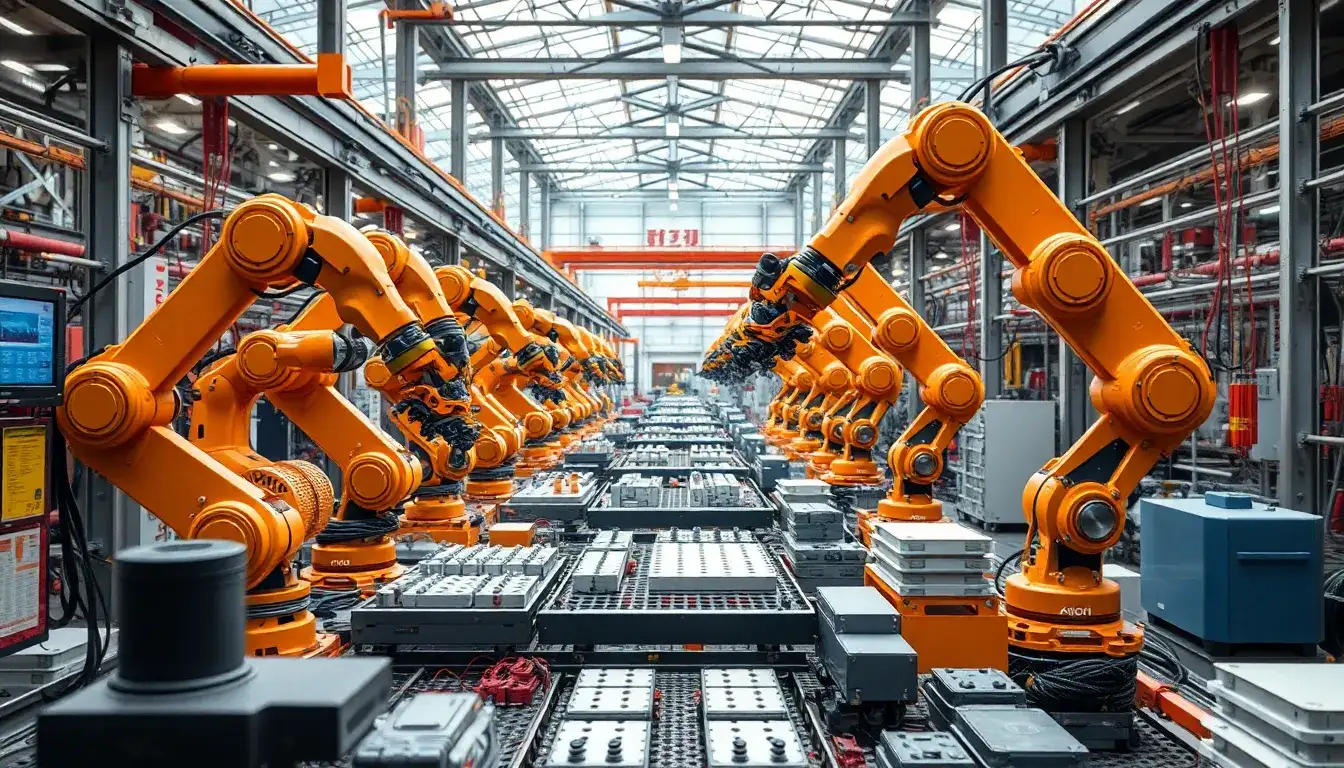
Emerging Innovations in Robotics: A Glimpse into Advanced Human-like Machines
On February 13, 2026, it was reported that advanced humanoid robots are making significant strides in production capabilities, particularly in the realm of manufacturing.
These humanoid robots, equipped with cutting-edge artificial intelligence, have been deployed in various production lines, showcasing their potential to operate autonomously without the need for human intervention. For instance, in a recent demonstration, a humanoid robot was able to perform tasks such as picking up items, handling documents, and assisting customers, all while functioning continuously for 14 hours a day.
The robots have been designed to overcome challenges related to precision and speed, which are crucial for effective operation in industrial settings. Their development is part of a broader initiative to enhance productivity through automation, with capabilities now reaching up to 90% efficiency in certain tasks.
As the technology matures, the integration of robotics in manufacturing is expected to lead to significant reductions in operational costs and improvements in product quality. By 2024, companies specializing in humanoid robotics are projected to reach a remarkable number of over 74,032 units produced, contributing to a total market value surpassing 2012 levels.
Amidst these advancements, the industry is focused on achieving sustainable practices. Companies are adopting eco-friendly materials and processes to reduce carbon footprints. A notable example is the development of green manufacturing technologies that utilize renewable energy sources.
In the realm of automation, the introduction of AI-driven systems enables real-time monitoring and adjustments, enhancing efficiency and reducing waste. By 2025, the overall production value is anticipated to reach 4.9 trillion yuan, reflecting a substantial increase in the adoption of intelligent manufacturing solutions.
Furthermore, the integration of AI in robotics is paving the way for a new era of smart factories, where machines can learn and adapt to their environments, ultimately leading to improved product outcomes and operational efficiency.
This transformation in the robotics landscape is not merely a technological shift but a fundamental change in how industries approach production and service delivery. The future of humanoid robots appears promising, with ongoing developments aimed at refining their capabilities and expanding their applications across various sectors.
Original article by NenPower, If reposted, please credit the source: https://nenpower.com/blog/advancements-in-ai-driven-manufacturing-the-rise-of-intelligent-automation-in-china/

