

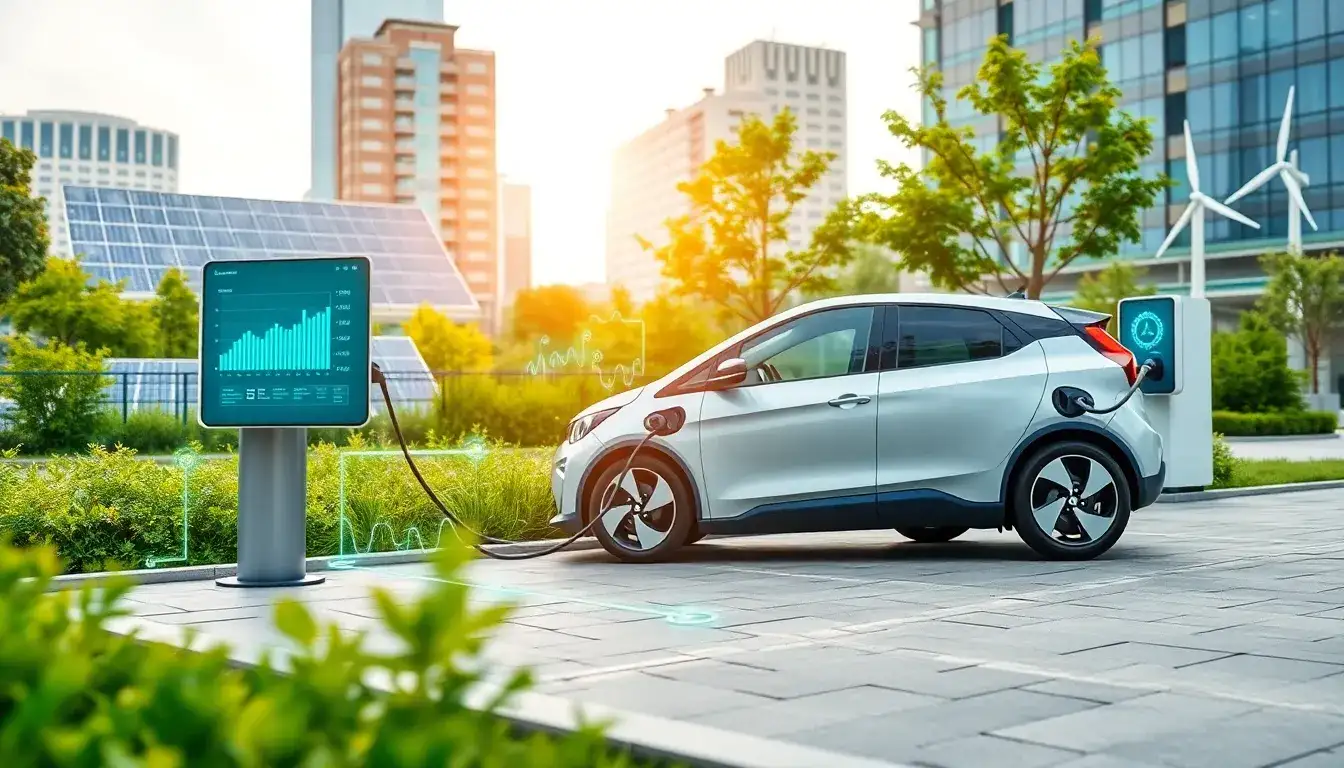
Chevrolet Interactive “Accelerated Run”: Unlocking New Energy Codes and Building Future Ecologies
Recently, the National Development and Reform Commission, along with three other departments, issued a notification regarding the first batch of pilot projects for vehicle-to-grid (V2G) interactions. Following expert evaluations, nine cities including Shanghai, Changzhou, Hefei, Huaibei, Guangzhou, Shenzhen, Haikou, Chongqing, and Kunming, along with 30 projects such as the “Beijing Pilot Project for Vehicle-to-Grid Collaboration Based on New Energy Storage,” have been included in the pilot scope.
Against the backdrop of a global push for energy revolution, vehicle-to-grid interactions have emerged as a crucial technology connecting the transportation and energy systems. It has become a key mechanism for promoting the construction of a new power system in China and achieving the “dual carbon” goals. The establishment of large-scale pilot applications in multiple cities marks the beginning of a new phase in the field of vehicle-to-grid interaction in China.
The challenge now lies in how to activate this “mobile energy repository,” which is vital for energy security and is also a key force in reshaping the future industrial ecology.
Addressing “Charging Difficulties” Through Large-Scale Applications
China’s new energy vehicle industry has witnessed explosive growth. By the end of 2024, the number of new energy vehicles in China is expected to reach 31.4 million, with a total of 12.818 million charging facilities, a year-on-year increase of 49%. The annual charging volume is projected to surpass 110 billion kilowatt-hours, with a growth rate of 38%. These figures clearly illustrate the trend of resonant growth between new energy vehicles and charging infrastructure.
From a macro perspective, the construction of charging networks has largely matched the expansion of new energy vehicles. However, at a micro level, issues such as resource mismatch and oversupply remain pressing. For instance, in Shenzhen, a city with 1.08 million new energy electric vehicles and 360,000 public charging piles, the average utilization rate of charging piles is less than 8%. This contradiction between “charging difficulties” and “idle charging piles” highlights the urgent need for efficient configuration and utilization of charging and battery swapping facilities.
To address this issue, vehicle-to-grid interaction has emerged as a solution. This technology enables two-way energy flow between vehicles and the grid, providing innovative solutions for power system flexibility and renewable energy consumption. During peak electricity usage, energy stored in vehicle batteries can be fed back into the grid, offering power support. Through orderly charging and reverse discharging technologies, vehicle-to-grid interactions effectively guide the spatiotemporal differences in charging and battery swapping demand, thereby enhancing the utilization efficiency of charging facilities.
According to Hu Zechun, Deputy Director of Tsinghua University’s Power System Research Institute, developing large-scale vehicle-to-grid interactions within urban power grids can reduce the peak-to-valley difference, consequently decreasing the investment needed for corresponding urban power grids and sources, making it a crucial resource for ensuring the safe and stable operation of power systems.
Currently, the concentrated charging of new energy vehicles coincides with peak residential electricity usage, leading to an expanding peak-to-valley difference in the power grid. Vehicle-to-grid technology can intelligently adjust the timing of a portion of the charging to off-peak hours, effectively smoothing out the power grid load curve. Essentially, the technical logic of vehicle-to-grid interactions is designed to mitigate the impact of electric vehicles on grid stability.
The first batch of pilot project notifications emphasizes that promoting the integration of new energy vehicles with the grid is essential for supporting the construction of a new energy system and a new power structure. The State Grid Energy Research Institute has indicated that new energy vehicle sales are expected to maintain rapid growth during the 14th Five-Year Plan period, with a penetration rate of over 70% expected by 2030 and an ownership penetration rate of 30%.
During the 14th Five-Year Plan, it is crucial to prepare in terms of technology, mechanisms, and policies for the potential normalization of vehicle-to-grid interactions. According to Liu Kai, Deputy Director of the Technical Department of the China Association of Automobile Manufacturers and Director of the China Charging Alliance, vehicle-to-grid technology, along with corresponding policies and pricing mechanisms, can influence electric vehicle users’ charging behaviors, effectively determining the timing of electric vehicle charging and discharging, which not only helps resolve charging issues but also allows users to gain benefits through electricity market transactions, further promoting the adoption of new energy vehicles.
Exploring Diverse Innovative Practices
The development of vehicle-to-grid technology relies on the collaboration of energy state-owned enterprises, automotive manufacturers, and charging infrastructure companies. State Grid and China Southern Power Grid have taken the lead in exploring the practical application of vehicle-to-grid interactions. Companies like Guangzhou Automobile Group and NIO have begun producing new energy vehicles with vehicle-to-grid functionality since around 2020 and have actively participated in the construction of vehicle-to-grid demonstration projects. Charging infrastructure enterprises such as Teld have promoted bidirectional charging and discharging equipment, as well as flexible microgrid systems, which provide robust support for the large-scale application of vehicle-to-grid technologies.
In the first batch of pilot cities, Guangzhou has leveraged the synergy between the Southern Power Grid’s Guangzhou Power Supply Bureau and GAC Group to maximize the chain effect of power infrastructure and the new energy vehicle industry. They have collaborated with key application units such as the Guangzhou Public Transport Group to create a leading national demonstration project for “automobile + electricity” dual-chain collaboration, aiming for the commercial-scale application of four key scenarios: community private V2G, park unit V2G, public transport V2G, and public charging and swapping stations V2G.
Shanghai has initiated a “Battery Swapping Station + Power Grid” demonstration project in collaboration with SAIC Motor Corporation and Contemporary Amperex Technology Co., Ltd. This project achieves quick battery swapping and responsive grid frequency regulation through standardized battery pack designs and battery swapping station construction. Hefei, in partnership with NIO and other enterprises, has established a vehicle-to-grid operation platform and launched the “Vehicle-to-Grid Benefit Movement” model, supported by government policies that provide rewards for newly built V2G charging piles and participation in reverse discharging.
On March 28, China Southern Power Grid held a large-scale vehicle-to-grid interaction activity for the first time across provinces, attracting over 100,000 new energy vehicles from 63 cities in five provinces, including Guangdong, Guangxi, Yunnan, Guizhou, and Hainan, with an interactive electricity volume reaching 500,000 kilowatt-hours. Since the launch of vehicle-to-grid interactions in May last year, the Southern Power Grid has cumulatively facilitated the consumption of 8 million kilowatt-hours of new energy, generating over 5 million yuan in benefits for participants such as virtual power plant operators and electric vehicle owners. By the end of this year, the annual valley-filling response electricity volume in the Southern Power Grid’s operating area is expected to exceed 10 million kilowatt-hours, with V2G discharging exceeding 3 million kilowatt-hours.
Southern Power Grid is actively exploring a “government-enterprise collaboration, industry integration, market-driven” development path for vehicle-to-grid interactions through the “vehicle-pile-grid” full-chain collaborative innovation, injecting new momentum into building an autonomous and controllable modern industrial chain.
Of course, technological innovation is the foundation for the development of vehicle-to-grid interactions. Currently, innovations in this field focus on two main routes. On one hand, virtual power plant technology aggregates distributed energy resources such as new energy vehicles to provide flexible adjustments and support for the grid, ensuring stable grid operation. On the other hand, the battery swapping model responds quickly to power grid frequency regulation needs through standardized battery pack designs and battery swapping station construction.
A representative from NIO explained that each of its battery swapping stations is designed as a “charging and swapping integrated station.” By flexibly distributing power at the station, NIO’s battery swapping stations can automatically adapt to local electricity prices, conducting off-peak charging to save operational costs while helping to flatten the grid load curve. By 2024, NIO’s battery swapping stations are expected to cumulatively transfer nearly 310 million kilowatt-hours of electricity during peak periods.
From the current business models of vehicle-to-grid technology practiced in the industry, three main diversified modes have emerged. The first is the peak-valley electricity price difference revenue model, which uses the price difference to achieve “using the vehicle to sustain the vehicle,” effectively reducing user charging costs. The second is the subsidy revenue model, where government and enterprise subsidies for users and operators participating in vehicle-to-grid interactions stimulate market participation enthusiasm. The third is the grid regulation service revenue model, which generates income by providing grid regulation services through vehicle-to-grid platforms, offering a new avenue for the commercialization of vehicle-to-grid technology.
Zhang Xiang, a visiting professor at Huanghe Science and Technology College, believes that as vehicle-to-grid technology continues to develop and its application scale expands, it will have a profound impact on the automotive industry’s value chain. Vehicle-to-grid technology will also promote deep integration across energy, transportation, and information sectors, providing new momentum for the energy revolution and the transformation of the automotive industry.
Bridging the “Last Mile”
Despite the initial successes of pilot projects in various locations, achieving large-scale applications still requires overcoming the “last mile” challenges related to technology, standards, market mechanisms, and infrastructure. The core of vehicle-to-grid interactions lies in the bidirectional energy flow between electric vehicles and the grid, but the maturity of the technology remains the primary obstacle to its promotion.
On one hand, the high frequency of charging and discharging poses higher demands on the cycle life and safety of power batteries. Although battery technology has significantly improved, consumers still worry that participating in vehicle-to-grid projects will accelerate battery degradation. On the other hand, the level of intelligence in charging facilities is inadequate; private charging piles generally lack smart control features, making them difficult to adapt to the dynamic load adjustment needs of the grid. Furthermore, the communication protocols and data interfaces among different manufacturers have yet to be standardized, leading to inefficient collaboration among vehicles, piles, and grids.
A resident in a battery swapping station in Guangzhou shared her experience with a reporter, stating that she purchased a pure electric vehicle with a range of 670 km a year ago, which supports discharging back to the grid. She typically charges at a rate of 0.3 yuan per kilowatt-hour, spending 18 yuan for 60 kilowatt-hours. She has also participated in discharging activities, receiving a subsidy of 3.5 yuan per kilowatt-hour for discharging 40 kilowatt-hours, taking 90 minutes and earning 140 yuan. However, she mentioned that she would not continue participating due to the lengthy discharging time, unless the process is shortened and the location becomes more convenient. Another electric vehicle owner expressed that the discharging returns are not worth it and that the increased charging and discharging cycles could negatively affect battery health.
Moreover, vehicle-to-grid interactions span multiple industries, including automotive manufacturing, electricity, and communication, but there are significant gaps in the current standard system. For instance, vehicle-to-grid functionalities have yet to be incorporated into mandatory standards for new energy vehicles and charging facilities, and electricity grid interconnection and metering rules have not fully considered bidirectional charging and discharging needs. The lack of synchronous progress in standard-setting across industries leads to poor technical compatibility and limited application scenarios.
Gong Chengming, Vice President of Teld, stated in an interview that “continuing to promote vehicle-to-grid interactions requires addressing four major challenges: first, the independent metering of electricity supply scenarios to encourage post-meter resources to participate in the electricity market and expand participation; second, the improvement of policies, standards, and markets to guide vehicle-to-grid interactions towards large-scale, standardized, and commercialized development; third, researching new entities and their information channels for interaction with the grid, ensuring safe and efficient access for massive distributed resources; and fourth, creating a favorable atmosphere for vehicle-to-grid interactions to enhance vehicle owners’ participation willingness and promote sustainable and healthy development.”
Currently, the launch of the first batch of large-scale vehicle-to-grid application pilots marks a new phase in the integration of new energy vehicles and the grid in China. In the future, a combination of policy guidance, technological innovation, and model exploration is expected to establish an industry ecology of “vehicle-pile-grid” collaborative development. Industry experts predict that by 2030, the technical standard system for vehicle-to-grid interactions will be largely established, market mechanisms will be refined, and new energy vehicles will become an important bidirectional regulation resource for power systems. At that point, every electric vehicle will act as a “nerve ending” for the grid, with each charging and discharging cycle participating in energy value distribution, providing solid support for China’s energy transition and the achievement of “dual carbon” goals.
Original article by NenPower, If reposted, please credit the source: https://nenpower.com/blog/accelerating-vehicle-to-grid-integration-unlocking-new-energy-solutions-for-future-ecosystems/

