

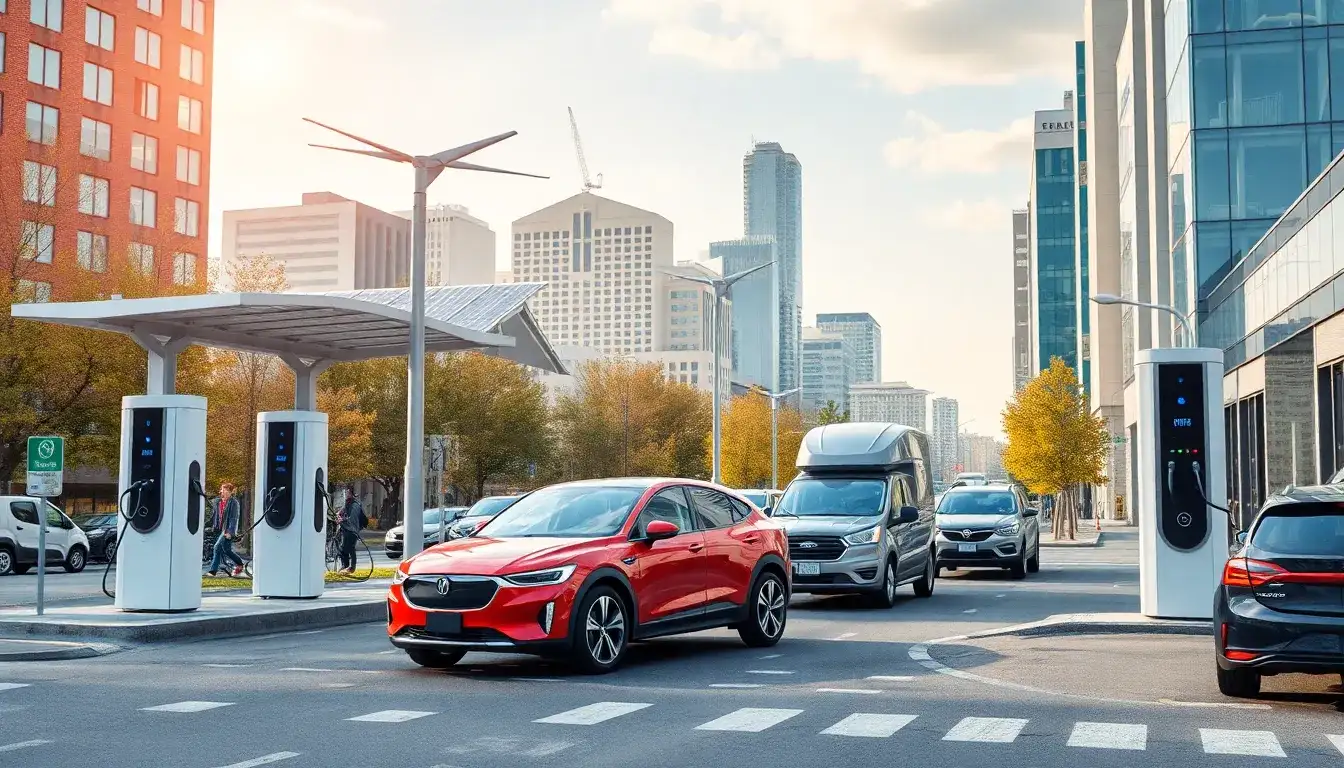
Technological Advancement, Policy Promotion, and Market Response Accelerate the Construction of Charging Infrastructure
As of May 12, 2025, the continuous growth of new energy vehicle registrations is driving a new wave of infrastructure development, primarily focused on charging stations. The rise of electric vehicles (EVs) has led to an urgent need for enhanced charging infrastructure.
Leading companies in the new energy sector, including Gongde Times, Shanghaijin, and China Petroleum, are leveraging their respective strengths to expand the charging network. This initiative aims to increase the speed of charging station construction, thereby addressing the growing demand for electric vehicles.
Under the goal of “carbon neutrality,” China is prioritizing the development of charging infrastructure as a key element of its energy transition strategy. The government is implementing policies to promote the rapid deployment of charging stations, which is critical for supporting the growing fleet of electric vehicles.
By 2025, the goal is to establish 1,000 new charging stations within a short timeframe, with plans for a total of 10,000 stations in the near future. This ambitious plan is expected to significantly boost the availability of charging facilities across the country.
Currently, China’s charging infrastructure has made impressive progress, with over 4,443 charging stations already constructed. With the growing electric vehicle market, there is a need to establish more than 3,000 additional charging stations to ensure adequate support for EV users.
The electric vehicle market is poised to become the cornerstone of the future energy landscape. As the demand for charging infrastructure grows, the industry is focusing on enhancing the efficiency and accessibility of charging stations.
The National Development and Reform Commission (NDRC) has signaled its support for further investments in charging infrastructure. In February 2023, a joint initiative was announced to establish a comprehensive charging network, aiming to integrate 30,000 charging points across China.
To support this initiative, the government is providing financial incentives and regulatory support to accelerate the construction of charging stations. This includes streamlining the approval process and providing subsidies to encourage investment in charging infrastructure.
The new energy vehicle industry is expected to thrive through collaboration among various stakeholders, including government agencies, enterprises, and technology providers. The focus will be on building a robust charging network that meets the needs of electric vehicle users efficiently.
As the sector develops, challenges remain, particularly regarding standards and interoperability among different charging technologies. Addressing these issues will require coordinated efforts across the industry to ensure a seamless experience for users.
In the coming years, the electric vehicle market is likely to see exponential growth, and the charging infrastructure must keep pace with this expansion. The government and private sector must work together to create a sustainable and efficient charging network that supports the transition to electric mobility.
The future of transportation in China is poised for transformation, with electric vehicles and charging infrastructure at the forefront of this change. The ongoing development efforts will play a crucial role in shaping the landscape of the new energy sector.
Through technological innovations and supportive policies, the vision for a sustainable energy future is becoming increasingly attainable.
Original article by NenPower, If reposted, please credit the source: https://nenpower.com/blog/accelerating-the-development-of-electric-vehicle-infrastructure-strategies-policies-and-market-responses/

