

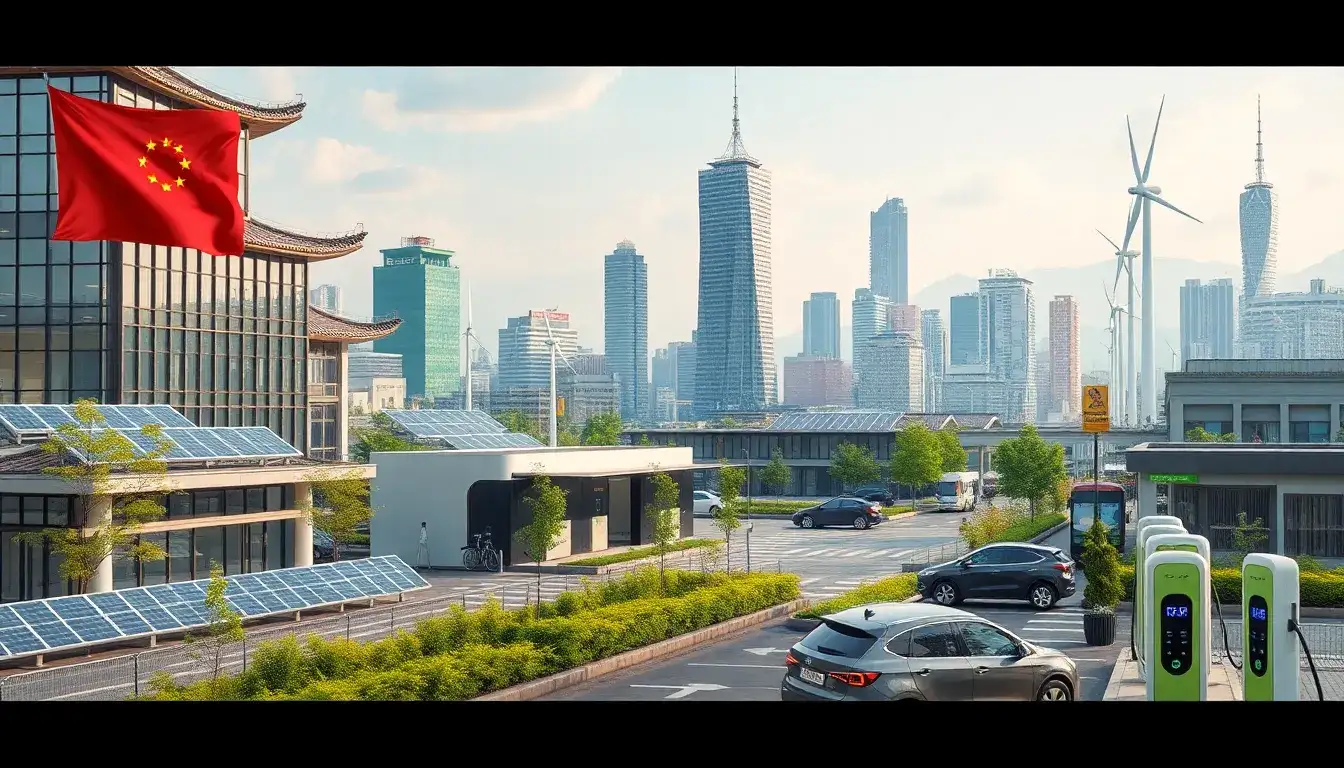
As China aims to achieve its dual carbon goals, energy remains a crucial battleground, with electricity as the primary force driving this effort. According to the latest data from the National Bureau of Statistics, the national industrial capacity utilization rate for large-scale industries was 73.6% in the first quarter of 2024.
Recently, the National Energy Administration issued a notification titled “Notice on Promoting the Grid Connection and Dispatching of New Energy Storage”. This notification outlines plans to standardize the management of new energy storage grid connections, optimize dispatching mechanisms, and fully leverage the role of new energy storage in supporting the construction of a modern power system. Several experts have indicated that new energy storage is a vital technology and foundational equipment for building this new power system, serving as an essential support for achieving carbon peak and carbon neutrality goals. It is crucial to advance the diversified development of new energy storage technologies, transitioning from pilot demonstrations to large-scale commercial applications, thereby accelerating the establishment of a new energy system.
Technological Innovation Fuels Breakthroughs
As renewable energy technologies continue to evolve, the significance of energy storage technology—acting as a key link between energy production and consumption—has become increasingly prominent. Experts suggest that through innovative energy storage solutions, we can better address the intermittency and instability of renewable energy sources, enhancing overall energy utilization efficiency.
Innovation is the essence of development, and technological advancements are driving cost reduction and efficiency improvements in new energy storage. Recently, a 300-megawatt compressed air energy storage demonstration project in Yicheng, Hubei, achieved its first successful grid connection, marking it as the world’s first 300-megawatt compressed air energy storage power station. This project employs an innovative “compressed air energy storage system solution,” which not only enhances the peak-shaving capabilities of the regional power grid but also facilitates the integration of more renewable energy sources, such as wind and solar power.
According to Li Hong, a researcher at the Institute of Physics of the Chinese Academy of Sciences, new energy storage technologies will increasingly integrate with artificial intelligence, big data, and cloud computing, leading to more efficient and intelligent energy storage and utilization processes. Digital technologies are empowering the development of new energy storage, providing it with “smart wings.”
One example is the “light-storage-charging” smart microgrid project in Chengdu, where a striking photovoltaic awning provides power for a fleet of electric vehicles charging in an orderly manner. Beneath this impressive exterior, sophisticated technology highlights the “intelligent” core of the system, which integrates cadmium telluride photovoltaic systems, tiered energy storage, and electric vehicle charging and discharging, achieving seamless connectivity across charging networks, microgrids, and energy storage networks.
In Tangshan, Hebei, China’s first electric heavy-duty truck virtual power plant has transformed into an intelligent manager for power dispatching, aggregating distributed photovoltaic systems, charging piles, and energy storage from various locations in the grid. This virtual power plant consolidates battery storage resources from 11 heavy-duty truck charging and swapping stations and utilizes digital methods and intelligent algorithms for precise control, flexibly dispatching electricity to reduce the peak-to-valley difference in the grid and promote power supply-demand balance and renewable energy integration. Currently, the maximum adjusting capacity of the Tangshan electric heavy-duty truck virtual power plant has reached 22,300 kilowatts.
Recently, regions such as Chongqing, Guangdong, Fujian, and Shandong have introduced plans or implementation details related to virtual power plants. Yang Kun, executive vice chairman of the China Electricity Council, stated that as a new business model in energy intelligence, virtual power plants have broad application prospects. In the context of transitioning the power grid structure toward cleaner, low-carbon sources, developing virtual power plants is of significant practical importance for promoting supply-demand balance, enabling low-cost grid integration of distributed energy, ensuring the absorption of clean energy generation, and advancing green energy transitions.
Expanding Applications of New Energy Storage
With the rapid development of renewable energy sources like wind and solar, their intermittency and volatility increasingly impact grid security. Additionally, factors related to climate change and extreme weather are exacerbating the challenges of planning, production, and operation within power systems, making issues of electricity supply assurance and system balance even more pressing. The need to establish robust new energy storage systems to ensure energy security and the stable operation of energy systems is becoming increasingly urgent.
The Notice emphasizes the importance of accurately understanding the functional positioning of new energy storage. It calls for further standardization of new energy storage grid management and continuous improvement of its dispatching mechanisms to effectively support the construction of a modern power system.
In recent years, China’s new energy storage industry has experienced rapid growth. According to data from the National Energy Administration, by the end of 2023, the cumulative installed capacity of new energy storage projects in the country reached 31.39 million kilowatts/66.87 million kilowatt-hours, equivalent to the installed capacity of 1.4 Three Gorges Hydropower Stations, which can meet the electricity needs of 20 million households, with an average storage duration of 2.1 hours. The newly added installed capacity in 2023 was approximately 22.6 million kilowatts/48.7 million kilowatt-hours, an increase of over 260% compared to the end of 2022.
Compared to traditional energy storage, new energy storage offers significant advantages. The Ningdong Energy Base in Ningxia has successfully installed a “multi-functional power bank” in the grid, officially launching the province’s first grid-connected energy storage power station. According to relevant officials, this grid-connected energy storage station has overcome the traditional reliance on stable voltage and frequency provided by grid-connected energy storage systems. It not only allows for efficient charging and discharging for flexible peak shaving but also provides essential functions for the stable operation of the power system, such as short circuit capacity and rotational inertia, acting as a proactive regulator for the grid.
New energy storage applications are diverse, including peak shaving, frequency regulation, grid expansion, emergency responses, and renewable energy integration. Many experts highlight the need to maintain safety as a priority while maximizing the key role of new energy storage in building a modern power system.
Diverse Stakeholders Drive Market Development
Shanxi Province has issued the “Implementation Plan for the Development of New Energy Storage in Shanxi (2024-2025)”, aiming to achieve a total grid-connected capacity of over 2 GW by 2025. Meanwhile, Qinghai has initiated a new one-stop service model for renewable energy grid connections, allowing 100% online processing of new energy grid connection applications, thus enhancing customer experience. Shandong Province has also released several policy measures to support the healthy and orderly development of new energy storage, encouraging renewable energy facilities to participate in market transactions with full energy storage capacity, thereby promoting the healthy development of renewable energy and energy storage.
Regions across the country are rapidly laying out the new energy storage industry while enhancing services for grid connections, using market-oriented approaches to facilitate new energy storage deployment.
Industry experts suggest that with the steady advancement of electricity market reforms in China, the energy storage application market is set to continue expanding. Various regions should explore new business models such as shared storage, cloud storage, and energy storage aggregation to adapt to these developments.
Shared energy storage breaks the traditional one-to-one matching between energy storage stations and power generation stations, shifting to a one-to-many relationship that meets the necessary energy storage requirements for renewable energy grid integration. This model has been increasingly prominent in the new energy storage market, with its grid-connected scale continuously expanding.
The first shared energy storage station in Jiangsu has delivered over 60 million kilowatt-hours of electricity to the grid; the first phase of the largest centralized shared energy storage project in southern China has begun operations; a shared energy storage project in Jingyuan County, Ningxia, has commenced construction with a total investment of 460 million; and the first independent shared energy storage demonstration project in Yunnan is under development. Currently, over 15 provinces, including Shandong, Hunan, Qinghai, Liaoning, Anhui, Henan, Zhejiang, Shanxi, Yunnan, Gansu, Hebei, and Xinjiang, have implemented policies related to shared energy storage.
Experts emphasize that the key to developing shared energy storage lies in establishing a reasonable pricing mechanism and trading model that allows benefiting parties to fairly allocate energy storage costs while ensuring that investment parties receive reasonable returns. This requires enhanced coordination among renewable power plants, grid operators, and energy storage investors.
The Secretary-General of the Energy Storage Application Branch of the China Chemical and Power Industry Association recommends that shared energy storage be utilized under principles of supply assurance, safety, and absorption capacity, maximizing the charging and discharging frequency of shared storage, ensuring that shared energy storage is utilized effectively and efficiently.
Original article by NenPower, If reposted, please credit the source: https://nenpower.com/blog/accelerating-development-of-new-energy-storage-in-china-to-achieve-carbon-neutrality-goals/

