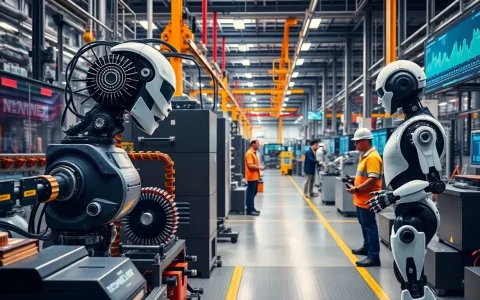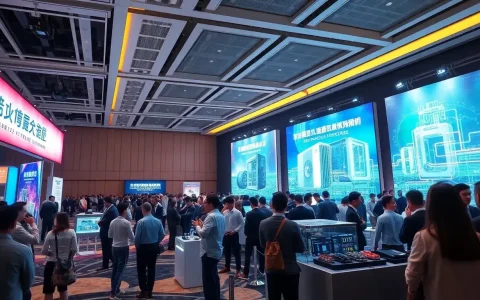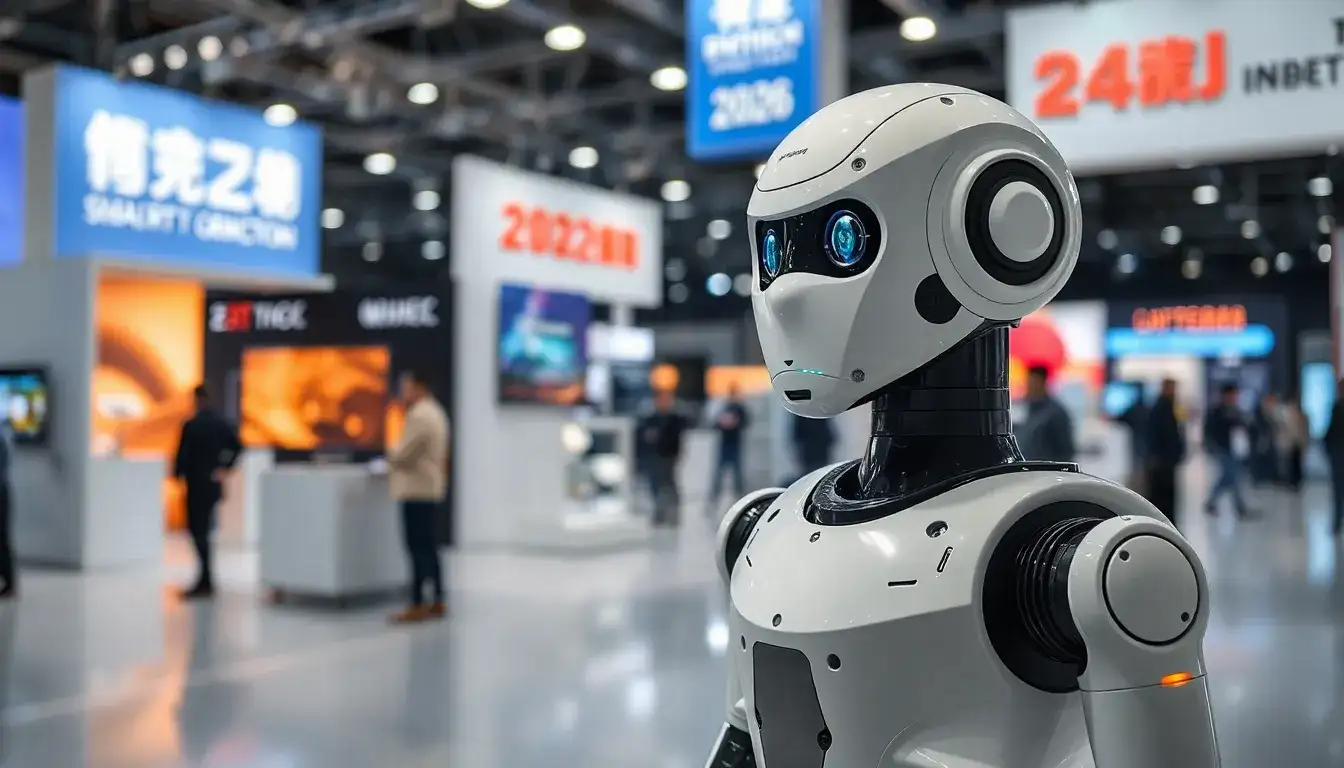
As the global trend towards automation accelerates, intelligent inspection robots are becoming a central force in the operational systems of various industries, marking a critical point in technological iteration. The 2026 China International Intelligent Inspection Robot Exhibition, themed “Unbounded Intelligence: Empowering Various Industries—Focusing on Technological Innovation and Application of Inspection Robots,” will take place from September 16 to 18, 2026, at the Wuhan International Expo Center. This year’s exhibition will gather over 500 leading enterprises from around the world. The focus will be on target detection and recognition technologies, which serve as the “intelligent eyes” of inspection robots. The event will showcase cutting-edge technological achievements and innovative applications, driving the intelligent inspection industry towards a more advanced form characterized by precise perception and intelligent decision-making.
1. Target Detection and Recognition Technology: The Core Driving Force of Intelligent Inspection Robots
Within the technological framework of intelligent inspection robots, target detection and recognition technology is fundamental for achieving autonomous inspections and anomaly alerts. Traditional manual inspections rely on human observation and experience, leading to inefficiencies, high miss rates, and significant risks in hazardous scenarios. In contrast, intelligent inspection robots equipped with advanced target detection and recognition systems leverage technologies such as computer vision, deep learning, and multi-sensor fusion to precisely identify equipment defects, environmental anomalies, and violations, marking a revolutionary shift from “manual inspections” to “intelligent inspections.” According to industry data, the domestic intelligent sensor market exceeded 160 billion yuan in 2024, with an annual compound growth rate of about 15%, 1.5 times the global growth rate, providing solid hardware support for the development of target detection and recognition technologies.
At the exhibition, numerous enterprises will showcase high-precision defect recognition algorithms based on deep learning, capable of real-time identification of various defects such as rust, cracks, instrument readings, thermal anomalies (infrared), and gas leaks (spectral), achieving an accuracy rate exceeding 95%, and improving efficiency by 3 to 10 times compared to manual inspections. For instance, the “trinity” AI inspection system deployed by Zhongkong Technology at the Zhenhai Refining and Chemical Company utilizes target detection and recognition technology for a three-dimensional inspection approach that includes aerial surveillance, mid-level cruising, and ground guarding, achieving a leak point identification rate of 99% and effectively ensuring safe production in tank areas.
2. Multi-modal Fusion: Innovative Breakthroughs in Target Detection and Recognition Technology
The perception capabilities of single sensors are limited, making it challenging to address complex and variable inspection scenarios. This exhibition will prominently feature multi-modal fusion target detection and recognition systems, which achieve early fault warnings and root cause analysis through the collaborative analysis of multi-source data such as visible light, infrared, sound, and gas. This transforms reactive maintenance into predictive maintenance. For example, the intelligent inspection solution from Cloud Deep Technology integrates the “Jueying X30” quadruped robot with the “Shanmao M20” wheeled robot, which combines laser radar, visual sensors, infrared thermal imaging, gas detection, and sound recognition. This system can capture risk signals such as overheating, smoke, moisture, and abnormal sounds in real time, with hotspot identification and warning accuracy consistently exceeding 95%, resulting in a 200% increase in overall inspection efficiency.
In practical applications at a large storage center in North America, this solution successfully addressed longstanding issues in traditional warehousing related to reliance on human labor, spatial blind spots, and delayed responses. A single robot can reliably handle the workload of approximately three dedicated inspection personnel, facilitating the transition of warehousing operations from a “labor-intensive” model to a “technology-driven” one. Additionally, the exhibition will showcase adaptive sensor fusion technology, which dynamically optimizes data weight through federated learning algorithms, allowing for stable recognition of equipment anomaly signals even in complex environments with strong electromagnetic interference, achieving a false alarm rate as low as 0.1%. The autonomous path planning system based on SLAM technology enables real-time obstacle avoidance and path optimization in dynamic environments, reducing the response time to sudden obstacles to 0.2 seconds, further enhancing the stability and reliability of target detection and recognition systems.
3. Full-Scene Applications: Empowering Various Industries with Target Detection and Recognition Technology
The innovative breakthroughs in target detection and recognition technology lay the foundation for the widespread application of intelligent inspection robots across various sectors. The exhibition will feature multiple industry-specific zones, including power, petrochemicals, rail transportation, data centers, and public safety, showcasing the application outcomes of target detection and recognition technology in different scenarios. In the electricity sector, intelligent inspection robots equipped with target detection and recognition systems can promptly identify line faults and equipment anomalies, ensuring the safe and stable operation of power systems. The intelligent grid inspection robots of State Grid Corporation of China effectively overcome the shortcomings of traditional manual inspections by digitizing inspection results, reducing costs, and enhancing the intelligent operation level of the grid system.
In the petrochemical industry, target detection and recognition technology enables intelligent inspection robots to replace humans in dangerous and toxic environments for inspections, monitoring equipment operating conditions in real-time and promptly identifying safety hazards. The intelligent inspection robots of Yunnan Yuntianhua Dawei Ammonia Co., Ltd. utilize target detection and recognition systems to achieve round-the-clock monitoring of five high-risk areas, increasing inspection frequency from 12 times daily to continuous monitoring, while reducing manual labor intensity by 80%. In the public safety sector, 5G-enabled unmanned police patrol vehicles equipped with target detection and recognition systems can identify abnormal behaviors (such as fights or smoke from fires) in real-time, achieving second-level alerts through AI algorithms. The unmanned patrol vehicles deployed in Hebi City completed over 800 patrols at large events such as the “Cherry Blossom Festival,” covering more than 9,000 kilometers, effectively reducing the occurrence of security incidents.
In laboratory settings, the laboratory safety inspection robots developed by Beijing University of Science and Technology accurately identify risks such as leaks, equipment anomalies, and improper protective gear through target detection and recognition systems, promoting a shift from “human and material defenses” to “intelligent prevention and control” in laboratory safety management.
4. Technical Exchanges and Ecological Co-Building: Promoting Continuous Upgrades of Target Detection and Recognition Technology
To foster communication and collaboration in target detection and recognition technology, the exhibition will host the China Intelligent Inspection Robot Industry Development Conference and eight specialized sub-forums, with topics such as “Multi-Sensor Fusion Algorithm Optimization” and “AI Vision and Target Detection Technology Innovation” at the forefront. Academics, leading enterprise CTOs, and industry user representatives from around the globe will gather to discuss the development trends and application prospects of target detection and recognition technology, promoting profound integration of technological innovation and industrial implementation. Additionally, a “one-on-one business matchmaking session” will be held to create precise connections for enterprises, facilitating the transformation of target detection and recognition technology results into market applications. The exhibition will also present the latest industry policy directions to help enterprises understand market access standards and subsidy application directions, enabling them to strategically align products and solutions with policy requirements and quickly penetrate essential markets.
5. Conclusion
As the core technology of intelligent inspection robots, target detection and recognition technology is profoundly transforming operational models across industries, injecting powerful momentum into the digital transformation of industries. The 2026 China International Intelligent Inspection Robot Exhibition will serve as a crucial platform for showcasing, exchanging, and collaborating on target detection and recognition technologies, bringing together global intelligence to drive technological innovation and empower various industries. Let us look forward to this industry event and witness the bright future of the intelligent inspection industry!
Original article by NenPower, If reposted, please credit the source: https://nenpower.com/blog/2026-china-international-smart-inspection-robot-expo-advancements-in-target-detection-and-recognition-technology/