

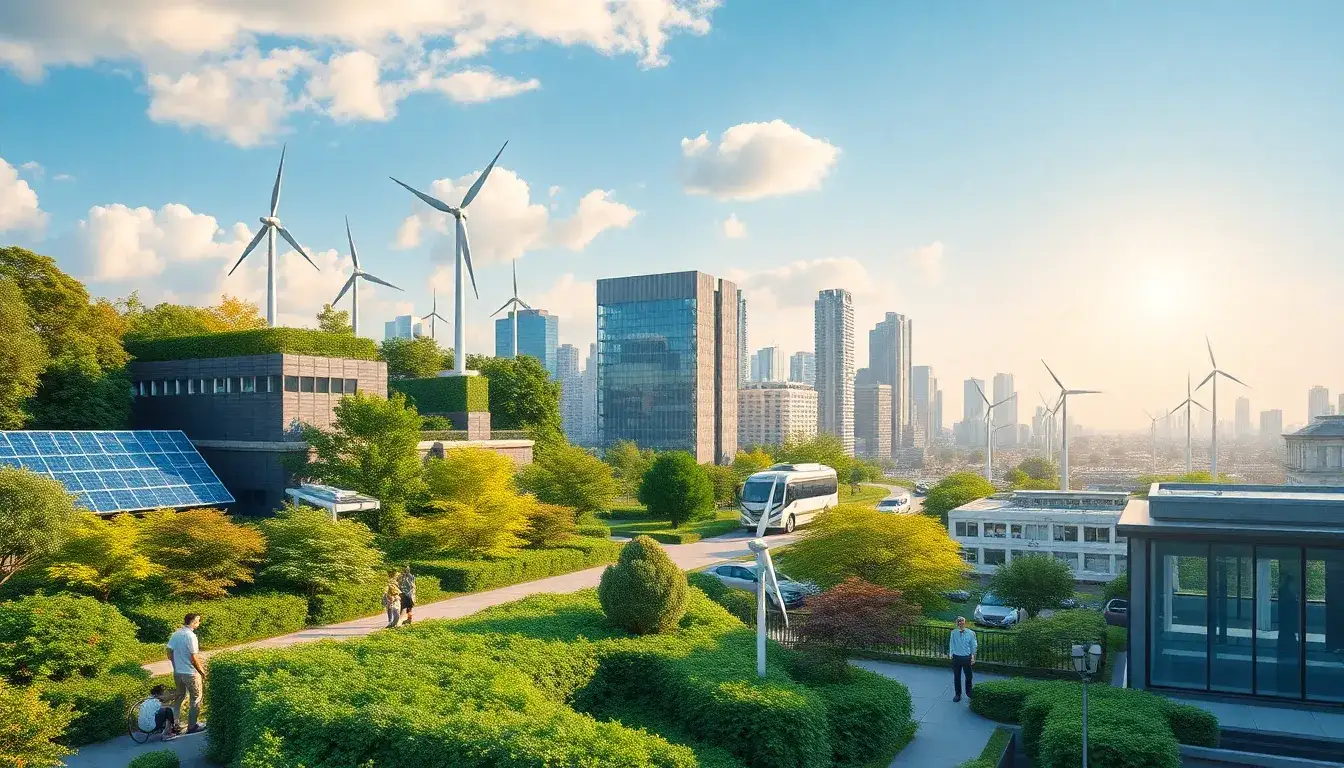
On the afternoon of May 8, the 2025 Urban New Energy Forum, themed “Green Intelligent Energy for a Safe and Sustainable Future,” was successfully held. The forum was organized by the Changping District Government and hosted by the Changping District Bureau of Commerce. Key attendees included Liu Meiying, Deputy Secretary-General of the Beijing Municipal Government, Li Xiangying, Director of the Beijing Trade Promotion Council, Wang Rui, Deputy Director of the Beijing Investment Promotion Service Center, and Bao Zhihua, Vice Chairman of the Changping District Political Consultative Conference.
Over a hundred participants attended, including experts from the Chinese Academy of Sciences, representatives from the world’s top 500 new energy companies, and delegates from 50 Chinese and Japanese energy enterprises. Together, they discussed the construction of a comprehensive energy system and sought high-quality development in advanced energy industries, aiming to create a new model of mutually beneficial energy cooperation.
This event served as a key promotional activity for the China Pavilion during the 2025 World Expo in Osaka, Japan. During the forum, Liu Meiying emphasized the close relationship between China and Japan, highlighting their shared vision and collaborative efforts in the transition to green energy. As the capital of China, Beijing is committed to fulfilling its global climate governance promises, implementing ecological civilization concepts, and integrating green and low-carbon development into the city’s foundational framework.
The “Energy Valley” in the Future Science City is recognized as the core area for Beijing’s energy industry, having established a robust cooperation platform characterized by precise policy support, a well-developed innovation ecosystem, and abundant market opportunities. Liu expressed a desire for more energy companies to engage with Beijing, leveraging technological innovation to jointly pave the way for a sustainable energy future.
The forum featured keynote speeches and roundtable discussions, providing a broad platform for in-depth exchanges among participants. Yu Ziqi, Deputy Director of the Energy Planning and Engineering Design Institute at the Chinese Academy of Sciences, presented on “Building a Green Intelligent Comprehensive Energy System to Promote Urban Sustainable Development.” He analyzed critical issues in the energy sector, noting that global cities and buildings account for approximately 75% of total energy consumption, primarily from fossil fuels. In China, carbon emissions from building operations contribute around 28% of the nation’s total emissions. Therefore, the transition to renewable energy in buildings is crucial for energy conservation and restructuring urban energy consumption.
Liu Lianyu, President of the Energy Service Business Line at Mingyang Smart Energy Group, provided an in-depth analysis of “The Development of Offshore Wind Power in China and Prospects for Sino-Japanese Cooperation.” He highlighted that offshore wind power is a vital component of renewable energy development, and China is currently a global leader in this sector, possessing autonomous capabilities in the design, research, manufacturing, installation, and operation of large-capacity offshore wind turbines. The country also boasts a notable supply chain advantage in wind energy.
During the forum, two significant Sino-Japanese energy cooperation projects were signed. The partners agreed to adhere to principles of “equality, mutual benefit, complementary advantages, resource sharing, and joint development,” focusing on the digital energy sector. They aim to collaborate on developing a digital energy management platform and establish a Sino-Japanese intelligent energy AI incubation platform, promoting synergistic innovation and industrial integration in intelligent energy, artificial intelligence, and green technology.
In the roundtable discussion, six entrepreneurs from China and Japan delved into the vital topic of “how to establish an efficient, diverse, and intelligent comprehensive energy system to demonstrate leadership in advanced energy sectors.” Participants unanimously agreed that technological innovation and comprehensive utilization are essential pathways for achieving energy efficiency and sustainable development. They emphasized the importance of developing deep-sea wind energy resources and utilizing floating wind technology to integrate marine energy and the ocean economy.
Bao Zhihua provided a detailed overview of the current state and policies of the energy industry in Changping District. The district has implemented over 30 policy measures aimed at nurturing high-tech enterprises, promoting advanced manufacturing, and supporting the development of hydrogen energy and the energy internet. This year, they plan to introduce policies to support new energy storage development.
After more than a decade of development, the “Energy Valley” has become one of the most resource-rich areas for energy innovation in the country and serves as the main base for developing advanced energy industries in Beijing. The region has established 60 national and provincial key laboratories and engineering technology centers, along with 7 academician workstations. Many top-tier companies, including national oil companies and several major power generation groups, have set up branches or R&D headquarters in the area. Additionally, a multitude of high-quality private high-tech enterprises have taken root, creating a collaborative innovation model involving state-owned enterprises, private companies, and universities, with over 20,000 research talents contributing to the ecosystem.
As of now, more than 300 energy companies have established operations in the “Energy Valley,” creating high-growth sectors in energy internet, clean utilization of fossil fuels, and mature wind and solar energy markets. This year, the focus will also include new directions in perovskite technology, innovative energy storage, and intelligent charging and swapping. Currently, a comprehensive industrial chain covering R&D, pilot testing, production, sales, and trading services has been largely established in the new energy sector.
Capitalizing on the momentum of the “dual carbon” strategy, Changping District aims to leverage the Future Science City to build an internationally influential Energy Valley, break through key foundational technologies in energy, aggregate benchmark projects in the energy field, and demonstrate advanced energy scenarios. The goal is to establish the Energy Valley as a new symbol of commitment to the national “dual carbon” strategy.
Changping District warmly invites elites from various sectors, especially those in the energy field, to explore and invest in the Future Science City, working together to create an internationally influential Energy Valley and contribute to Beijing’s development as a global center for technological innovation and the successful achievement of national “dual carbon” strategic goals.
Original article by NenPower, If reposted, please credit the source: https://nenpower.com/blog/2025-urban-new-energy-forum-highlights-green-smart-energy-for-a-sustainable-future-2/

