

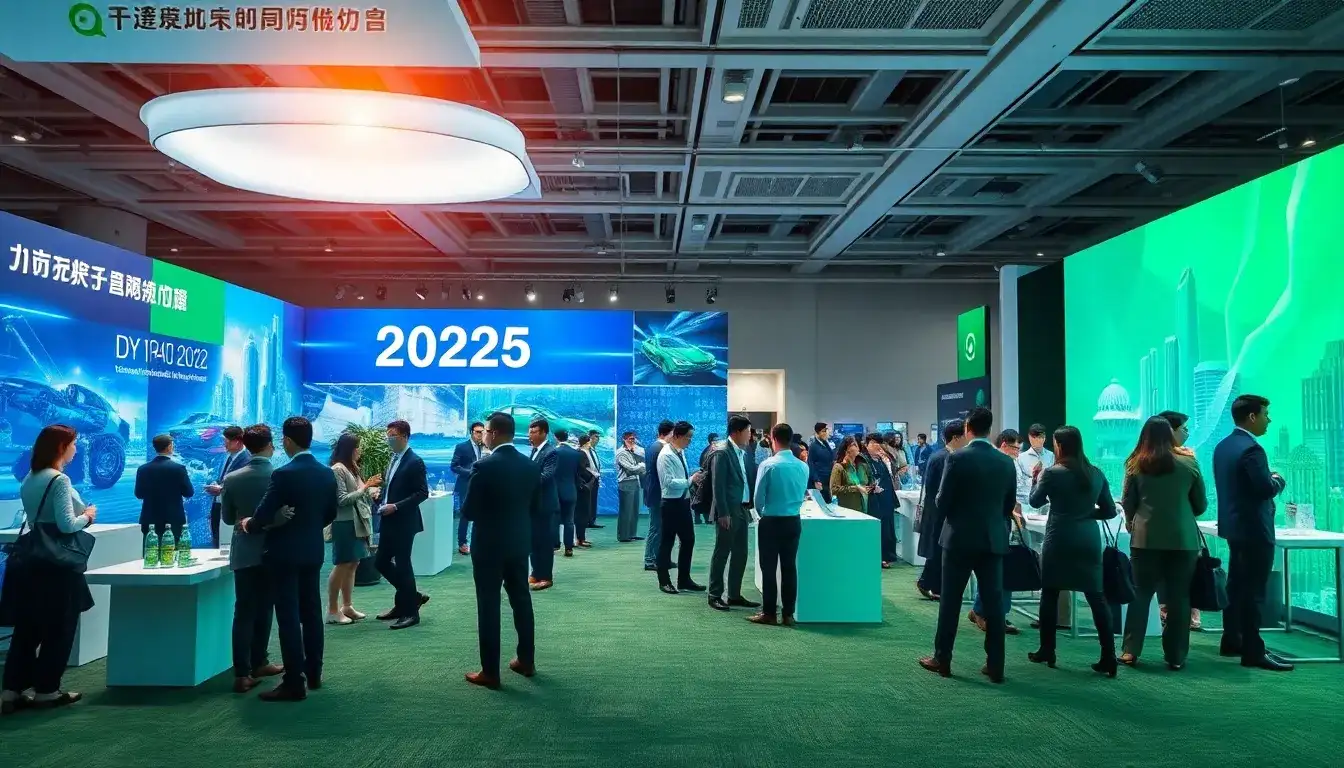
Technological Revolution: The Second Green Hydrogen Industry Innovation Development Conference 2025 Grandly Held
On April 23, 2025, the “Second Green Hydrogen Industry Innovation Development Conference” was grandly held in Nanjing, co-hosted by the Polar Star Power Network and the Beijing Carbon Neutrality Society. The theme of this conference was “Sharing New Opportunities in Green Energy, Co-Creating a New Future for the Green Hydrogen Era.” It attracted representatives from national and local government departments, energy and power groups, hydrogen equipment manufacturing companies, research institutions, and financial institutions, who engaged in in-depth discussions on hydrogen energy policy orientation, opportunities for green hydrogen development, hydrogen station construction, technological innovation in the industry chain, and the expansion of application scenarios. This provided valuable insights and contributions to the development of the hydrogen energy industry.
Jiang Fan, Chairman of the Beijing Carbon Neutrality Society, delivered the opening remarks at the conference, emphasizing that green hydrogen, as the ultimate carrier of clean energy, is the key to solving the challenges of integrating renewable energy and achieving deep decarbonization. Currently, the global energy structure is accelerating its transformation, with green hydrogen showing a strong trend of diversified development in industries such as manufacturing, transportation, and construction. According to data, by 2060, China’s hydrogen energy demand is expected to exceed 100 million tons, with green hydrogen accounting for over 80% of this demand.
Jiang Fan further introduced that the Beijing Carbon Neutrality Society was officially established in 2023, initiated by the Beijing Energy Group, North China Electric Power University, and Beijing University of Technology. It aims to collaborate widely with experts, academic institutions, leading enterprises, and high-tech companies to form an academic social group. The society has established long-term strategic partnerships with several domestic universities, high-tech companies, and carbon trading institutions, launching a series of influential brand activities and academic forums, collecting numerous advanced technologies and exemplary cases in green and low-carbon development.
Zhou Quan, President of Polar Star, mentioned in his speech that, driven by policy and technology, China’s green hydrogen industry is experiencing explosive growth. Policies are promoting the planned development of green hydrogen in key sectors such as energy, shipping, and chemicals, empowering the transformation of high-carbon, high-energy-consuming industries. Meanwhile, several technological routes for green hydrogen are continuously evolving, with the localization of PEM electrolyzers accelerating and achieving significant cost reduction and efficiency improvement. The overall technical level of AEM electrolyzers is at the forefront globally, consistently leading market changes.
During the conference, Xiong Huawen, Director of the Energy Environment Center of the National Development and Reform Commission’s Energy Research Institute, pointed out that the green ammonia and methanol industry in China is developing rapidly, with the total production capacity of green ammonia projects under construction reaching about 80 tons/year, mainly concentrated in resource-rich areas in North China, Northwest China, and Northeast China. From a planning perspective, the proposed capacity for green ammonia is expected to reach 8 million tons/year, accounting for over 10% of the total national synthetic ammonia capacity, which corresponds to an annual demand of about 1.4 million tons of green hydrogen. In the green low-carbon methanol sector, the construction capacity is 300,000 tons/year, with planned capacity reaching 10 million tons/year (nearly 10% of existing methanol capacity), anticipated to drive annual demand for green hydrogen by 1.5 million tons. The potential annual demand for green hydrogen from just these two chemical carriers approaches 3 million tons, highlighting the vast market potential and development opportunities within the green hydrogen sector.
He Guangli, Chief Hydrogen Expert at the State Energy Group and Director of the Hydrogen (Ammonia) Technology Center at the Low Carbon Institute, shared the current situation and challenges of domestic alkaline electrolysis hydrogen production technology, proposing paths for performance and technology improvement based on practical experience. He also announced that the Low Carbon Institute is working to establish a national-level hydrogen innovation platform and a source of original technologies in the hydrogen sector, targeting three major application scenarios: coupling hydrogen with coal chemical processes, hydrogen for heavy-duty transportation, and hydrogen storage. The focus is on the production of green hydrogen (ammonia), liquid hydrogen production and supply, hydrogen safety, and detection technologies. Key technologies and equipment such as next-generation alkaline electrolyzers, mild-condition ammonia synthesis, hydrogen liquefaction, rapid hydrogen filling machines, and 90MPa compressors are being developed to advance hydrogen research and application.
Wang Yongliang, Executive Director and first specially invited expert of the China Energy Research Society, highlighted three major challenges facing the hydrogen energy industry: first, the lack of cost competitiveness, as the price of green hydrogen is significantly higher than that of traditional hydrogen production methods; second, prominent technical bottlenecks, which need to balance energy, material, and financial considerations, particularly addressing the low volumetric energy density of hydrogen in mobile scenarios; and third, a shortage of patient capital, as most investors pursue short-term returns, which contradicts the long-term nature of hydrogen energy. Wang emphasized that the industry’s development should focus on large-scale application scenarios, validate the feasibility of technologies through large-scale testing, and establish an ecosystem involving industry, academia, research, and application.
He proposed that the transition to green fuels should focus on adjusting the carbon-hydrogen ratio; for example, aviation fuel SAF can achieve a green alternative by blending hydrogen to reduce carbon content. Additionally, catalyst technology—balancing activity, stability, and economic viability—should be a current research priority, necessitating accelerated breakthroughs through collaboration among industry, academia, and research institutions. He suggested that industry layouts should leverage advantageous parks and quality scenarios to reduce costs and improve efficiency, while policies should align with the electrification and market-oriented directions of the 14th Five-Year Plan, maintaining strategic stability and seeking steady progress while respecting industry development laws to avoid overheating.
In his presentation, Zhang Chunyan, Deputy General Manager of the State Grid Shanghai Integrated Energy Service Co., shared his thoughts on the role of electric-hydrogen integrated energy systems in the development of new power systems. He believes that the synergy between electricity and hydrogen, initiated by green hydrogen, will serve as a bridge connecting power energy systems with industries and transportation, becoming a core engine of energy transformation. The key issues in electric-hydrogen synergy lie in breakthroughs in core technologies for hydrogen production, storage, transfer, and utilization. The value of electric-hydrogen synergy lies in the deep coupling of electricity and hydrogen, constructing a new energy system centered on electricity and bonded by hydrogen, promoting renewable energy absorption, supporting the growing flexibility demands of power systems, and penetrating deeply into energy systems that require further decarbonization.
Zhang proposed that future electric-hydrogen synergy should coordinate the layout of the hydrogen industry, rationally promote the scientific development of the green hydrogen industry, strengthen top-level design, advance planning for electric-hydrogen synergy, avoid simplistic integration, insist on innovation leadership, promote the development of safe, efficient, flexible, and adaptable electric-hydrogen synergy technologies, ensuring core technologies are self-controllable. Additionally, the construction of mechanisms and standards should be strengthened to promote multi-scenario demonstration applications, complete the policy ecosystem, and accelerate the sustainable development of the electric-hydrogen synergy industry and new business models for industry coupling.
The Dongzhou team of the China Electric Power Construction Group Hebei Electric Power Survey and Design Institute pointed out that hydrogen energy holds multiple strategic values and application scenarios in the new power system. As an efficient energy storage solution, hydrogen can smooth out the volatility of wind and solar power, facilitating the cross-temporal and spatial transfer of curtailed wind and solar energy through water electrolysis for hydrogen production. As a resource for flexible regulation, the rapid peak-shaving capability of hydrogen engines and the distributed deployment of hydrogen fuel cells can enhance grid resilience. The hydrogen-electric coupling model and the construction of zero-carbon parks have already demonstrated their effectiveness in low-carbon transitions. Currently, the core challenge hindering the large-scale application of hydrogen energy lies in technological economic viability, as the key materials for electrolyzing water for hydrogen production rely on imports, and the storage and transportation technologies have not yet overcome hurdles. The cost of green hydrogen is as high as 20-25 RMB/kg, which needs to be reduced to below 15 RMB/kg to be competitive. Additionally, the investment in hydrogen energy infrastructure is substantial, and the commercial models are still immature, requiring a synergistic push from policy guidance and market mechanisms.
Feng Wujun, Deputy Secretary of the Beijing Carbon Neutrality Society, shared the challenges and responses faced by the hydrogen energy industry for high-quality development. He believes that the high-quality development of the hydrogen energy industry should start from the scientific positioning in the medium to long-term development plan, unfolding from four major innovative ideas: systematic planning of chain links, top-level design of application scenarios, core products being controllable, and innovation breakthroughs in energy and carbon integration. A systematic approach is needed to scientifically advance the R&D of infrastructure and equipment for the entire hydrogen production, storage, transportation, and utilization process. In the hydrogen production phase, multiple technical routes such as water electrolysis, biomass, seawater hydrogen production, and nuclear reactor thermal energy for hydrogen production should be encouraged. For storage and transportation, long-distance, large-scale hydrogen transport will primarily utilize hydrogen blending in natural gas pipelines or newly built pure hydrogen pipelines, making full use of the oil pipeline network in oil refining regions to promote organic liquid storage and transportation, while developing various storage and transportation technologies like ammonia for mid and short distances.
In the application phase, significant efforts should be made to explore application scenarios, promoting key research and applications in domestic urban natural gas blending, hydrogen gas turbines, high-proportion hydrogen combustion transformations in gas turbine units, hydrogen-fueled gas engines, and green methanol. Huo Jingxin, Senior Manager of China Shipbuilding Industry Corporation (Handan) Hydrogen Energy Technology Co., noted that the main performance of PEM electrolysis hydrogen production equipment surpasses that of alkaline hydrogen production equipment, but cost remains a core bottleneck. However, recent bidding trends indicate that the price of megawatt PEM equipment has decreased to about three times that of alkaline equipment. As one of the earliest companies in China to simultaneously invest in both alkaline and PEM routes, Pier Hydrogen has formed a capacity of 3.5GW, achieving a single hydrogen production capacity of 3000Nm³/h and commercial delivery, successfully bringing third-generation electrolysis hydrogen production technology (AEM) to the market, with new overseas orders reaching 900 million RMB last year, thanks to their commitment to high-quality development and independent innovation.
Qi Kui from Hubei Inteli Electric Co., shared a keynote speech on the integrated digital platform for wind-solar-hydrogen storage and hydrogen production power solutions. He pointed out that whether in large-scale new energy hydrogen production scenarios or distributed off-grid hydrogen production scenarios, traditional energy scheduling technologies struggle to effectively couple the volatility of new energy with hydrogen production and the energy balance required for cluster-scale production, becoming one of the challenges affecting industry development. Qi Kui believes that the hydrogen energy industry is a typical interdisciplinary fusion industry, and the solutions differ from past industries. As a leading rectifier power supply enterprise in the hydrogen production industry, Inteli’s InGreen Ecs green hydrogen system focuses on off-grid stability, energy balance, and production clustering. The production clustering strategy, based on a multi-objective strategy and a full-time model, can help users achieve overall system coupling. Currently, the InGreen Ecs integrated digital platform for wind-solar-hydrogen storage has been applied in multiple off-grid hydrogen production projects and has received widespread recognition from customers.
At the conference, Luo Shichun, Vice President of Hydrogen Maple Group, highlighted the core advantages of magnesium-based solid-state hydrogen storage technology and integrated solutions for production, storage, transportation, and refueling. The magnesium-based solid-state hydrogen storage technology of Hydrogen Maple achieves inherent safety through storage and transportation at normal temperature and pressure, eliminating high-pressure leakage risks. The modular 20-foot hydrogen storage tank can store up to 1 ton of hydrogen and can flexibly expand capacity, providing both large-scale and long-term storage capabilities. The hydrogen absorption and release process generates no by-products, with hydrogen purity reaching 99.999%. This technology is suitable for hydrogen storage, medium to long-distance hydrogen transportation, and various scenarios in metallurgy and chemicals, particularly in wind-solar-hydrogen coupling scenarios, where large-scale, long-duration hydrogen storage can address the volatility of renewable energy.
Chen Yiwei, Secretary of the Party Branch and General Manager of Ammonia Technology Co., shared the successful experience of the Anhui Energy Group’s coal-fired power ammonia co-combustion decarbonization demonstration project. He pointed out that the national policy “Action Plan for Low-Carbon Transformation and Construction of Coal Power (2024-2027)” lists green ammonia co-firing as one of the three methods for transformation and construction, providing robust support for the consumption of renewable energy in coal-fired power plants. This ammonia co-firing demonstration project is the first of its kind for Anhui Energy Group, showcasing the technology for coal-fired unit co-firing, and has been selected as a significant technological equipment in the energy sector by the National Energy Administration, providing a model for ammonia co-firing decarbonization projects nationwide. The project features three core technologies: a successfully developed kW-level plasma ammonia cracking combustor, a high-power pure ammonia combustor, and a dual-medium ultra-large capacity liquid ammonia evaporator. Chen believes that ammonia co-firing can reduce carbon emissions from coal power, enhance renewable energy consumption capacity, and promote the low-carbon transformation of the energy system. Its industrial path can focus on applications such as the replacement of auxiliary oil guns in waste-to-energy plants and fuel supplementation in natural gas boilers, further facilitating the consumption of renewable energy as ammonia co-firing technology is applied in more sectors, supporting China’s “dual carbon” strategic goals.
Lin Gang, Founder of Shanghai Mufan Power Technology Co., introduced that hydrogen and ammonia, as fuels, have significant advantages in storage and transportation maturity, energy density, and global trade compatibility, yet face core challenges in the “ammonia-to-electricity” phase due to a lack of large-scale applications. Mufan Power has developed the world’s first three-fuel zero-carbon dry low-nitrogen burner, capable of burning hydrogen, ammonia, and natural gas without hardware modifications, covering power ranges from kilowatts to tens of megawatts, and supporting various hydrogen carriers such as high-pressure hydrogen, liquid hydrogen, organic liquid storage hydrogen, and industrial by-product hydrogen, providing a crucial technological pathway for carbon neutrality. Their core product, the hydrogen-ammonia gas turbine, boasts a power output of 8000 kW while concurrently generating 18 tons/hour of steam, featuring a compact structure and high fuel flexibility. Its high and low-pressure electrical modules can be deployed independently or integrated, aiding in green power supply for industrial parks and peak shaving for wind and solar power, with its high power density and rapid start-stop characteristics adapting well to the volatility of renewable energy, while the hydrogen-based energy storage system offers economic solutions for long-duration storage.
Zhang Weijia, Regional Market Director of Guohua Technology Advanced Hydrogen Production BG, shared the outlook for the green hydrogen industry and Guohua Technology’s innovative practices. She noted that green hydrogen is a key direction for hydrogen energy development with immense potential and a broad industrial prospect. As the first second-level enterprise under a central state-owned enterprise dedicated to hydrogen energy, Guohua Technology responds actively to national strategic needs, driving the development of the green hydrogen industry through a 1+2 business layout (core technology fully autonomous + “Hydrogen Teng” fuel cell product line and “Hydrogen Yong” PEM electrolysis hydrogen production product line). The “Hydrogen Teng” fuel cell product line, which includes water-cooled fuel cells, air-cooled fuel cells, and power generation fuel cells, is primarily applied in urban passenger transport, heavy-duty freight, shipping, drones, forklifts, backup power, and distributed energy supply. The “Hydrogen Yong” PEM electrolysis hydrogen production product line has achieved the deployment of the first integrated PEM hydrogen production station in China and the largest green hydrogen synthesis and green ammonia innovation demonstration project.
The “Hydrogen Yong Intelligent Hydrogen Island” integrated green hydrogen energy solution relies on a digital platform that combines intelligent computing, assisted decision-making, and cluster control, alongside high-performance equipment for small, medium, and large PEM electrolysis hydrogen production. It has the comprehensive implementation capability for all scenarios of hydrogen production business. As a leading enterprise in the field of hydrogen energy in China that has achieved material-level autonomy, Guohua Technology will continue to play a leading and demonstrative role as a central enterprise, actively joining forces with upstream and downstream partners to build a hydrogen energy industrial ecosystem.
Li Ying, Market Director of Qingqi Group, stated that as a comprehensive green hydrogen enterprise covering catalysts, bipolar plates, electrolyzers, and system integration, Qingqi focuses on core material technology innovation and large-scale application of alkaline electrolyzers. Currently, among the three core materials of alkaline electrolyzers—catalysts, bipolar plates, and membranes—there is a flourishing development of nickel-based multi-alloy catalysts, while breakthroughs in lightweight, corrosion resistance, and structural optimization of bipolar plates are needed, and membranes are awaiting verification of domestic load-bearing membranes in large electrolyzers. To address industry pain points, Qingqi has innovated in the combination of nickel-based non-precious metal multi-alloy catalysts through material-process-application synergy, utilizing electrochemical workstations and multi-level testing platforms to select optimal solutions, completing the final mile from R&D to production, and validating the characteristics of hydrogen energy catalysts regarding reverse current resistance and load strength. Qingqi Group has established an annual production capacity of 2GW for electrolyzers in Gansu Jiuquan and 100,000 bipolar plates in Changzhou, Jiangsu. These technological achievements have been successfully applied in large-scale commercial projects of central enterprises, yielding the best data in the industry and providing reliable technical support for large-scale hydrogen production projects. She emphasized that the next generation of electrolyzers should focus on inherent safety and off-grid hydrogen production, enhancing the resistance of catalysts, bipolar plates, and membranes to current shocks and corrosion, constructing high-stability systems to promote the large-scale development of green hydrogen.
Li Yan, Senior Researcher at Shanghai Hydrogen Era Technology Co., shared insights on the company’s core green hydrogen equipment and system solutions. The company primarily focuses on green hydrogen production equipment, extending into the entire hydrogen energy “production, storage, refueling, and utilization” industry chain. Their dual-line production strategy for “ALK + PEM” hydrogen production is one of their advantages: the new generation of kilowatt-level Z series alkaline electrolyzers achieves significant performance and stability improvements without using precious metal electrodes and composite membranes, overcoming the limitations of traditional alkaline electrolyzer designs. The PEM electrolysis hydrogen production products feature high current density, high reliability, and low energy consumption, making them more suitable for distributed and flexible hydrogen production scenarios. To ensure product stability and reliability, the company has established performance testing platforms at the material, module, and system levels, as well as multifunctional testing verification platforms for ALK (10MW) and PEM (1.5MW). Currently, the company has developed an integrated solution system covering the entire green hydrogen industry chain and has created several typical hydrogen energy projects in the global clean energy transition, accumulating rich practical experience and technological reserves, providing replicable technological pathways and engineering templates for the industry’s large-scale development.
Zhang Wenhai, General Manager of the Market and Risk Management Department of DNV GL (China) Co., Ltd., emphasized that hydrogen energy, due to its small molecular weight, wide flammability range, low ignition energy, and rapid combustion speed, presents higher potential risks than oil and gas facilities. Research indicates that the probability of hydrogen leakage is approximately three times that of natural gas, and once leaked, it is more easily ignited, leading to explosions or detonations, posing significant threats to personnel and facilities. Zhang pointed out that current safety standards, such as the 4.5-meter explosion-proof zone outside factories, may be insufficient. Utilizing quantitative simulation technologies to redefine explosion-proof zones may be more scientific. He suggested adopting mature explosion-proof wall designs and optimized pipeline layouts from the petrochemical industry to enhance safety levels. For hydrogen facilities, particular attention should be paid to preventing indoor leakage diffusion risks and secondary disasters from fireball heat radiation after high-pressure pipeline ruptures. Through scientific risk simulation and transparent management, confidence in hydrogen energy applications among the government and the public can be strengthened, but the industry must increase investments in safety technology and enhance public education on hydrogen energy risks to promote the safe and large-scale implementation of hydrogen energy.
Wang Zhe, Deputy Director and Chief Engineer of the Shanghai Hydrogen Utilization Engineering Technology Research Center and a professor at Tongji University, shared insights into the current state of the green hydrogen market both domestically and internationally, as well as the challenges and opportunities it faces. He believes that clean power-driven electrolysis technology is crucial in both the short and long term. As part of a long-term vision, clean hydrogen can also be produced through various new advanced methods, such as solar photoelectrochemical hydrogen production technology and biological hydrogen production technology, alleviating the investment pressure of building GW-level electrolysis facilities and significantly expanding clean power generation and transmission infrastructure. From the perspective of the green hydrogen market, global low-emission hydrogen production is expected to reach about 700,000 tons in 2023, potentially escalating to 49 million tons/year by 2030, with about two-thirds of low-emission hydrogen production expected to come from water electrolysis; including early-stage projects, this proportion might rise to nearly 75%. Professor Wang also pointed out that the green hydrogen industry still faces challenges in low-temperature electrolysis technologies (PEM, ALK, AEM) and high-temperature electrolysis technologies (O-SOEC, P-SOEC), as well as comprehensive system design and cost challenges. Reducing electrolysis costs requires technological innovations in electrolyzers and balance of plant (BOP) systems, better leveraging future market opportunities based on economies of scale.
During the conference, the grand opening of the 2025 “Polar Star Cup” Hydrogen Energy Influential Enterprise Awards ceremony took place. Nearly 100 companies in the hydrogen energy industry chain competed through multiple rounds of technical challenges and strength contests, with over 40 benchmark enterprises ultimately receiving awards. These industry pioneers are driving development through innovation, establishing a foundation through technology, breaking through barriers in core technology and commercialization exploration, and winning the 2025 “Polar Star Cup” Hydrogen Energy Industry Influential Enterprise Awards, 2025 “Polar Star Cup” Hydrogen Energy Technology Innovation Awards, and 2025 “Polar Star Cup” Hydrogen Energy Excellent Practice Awards. Award-winning enterprises are breaking the shackles of the industry with hardcore technology, injecting strong momentum into industrial upgrading. This honor embodies the innovative wisdom of deep collaboration among industry, academia, and research, witnessing China’s historic leap from a follower to a leader in hydrogen energy.
The list of award-winning enterprises is as follows (in no particular order):
Original article by NenPower, If reposted, please credit the source: https://nenpower.com/blog/2025-second-green-hydrogen-industry-innovation-development-conference-highlights-opportunities-in-clean-energy/

