

Release of Electric Safety Technology for New Energy Vehicles in 2025
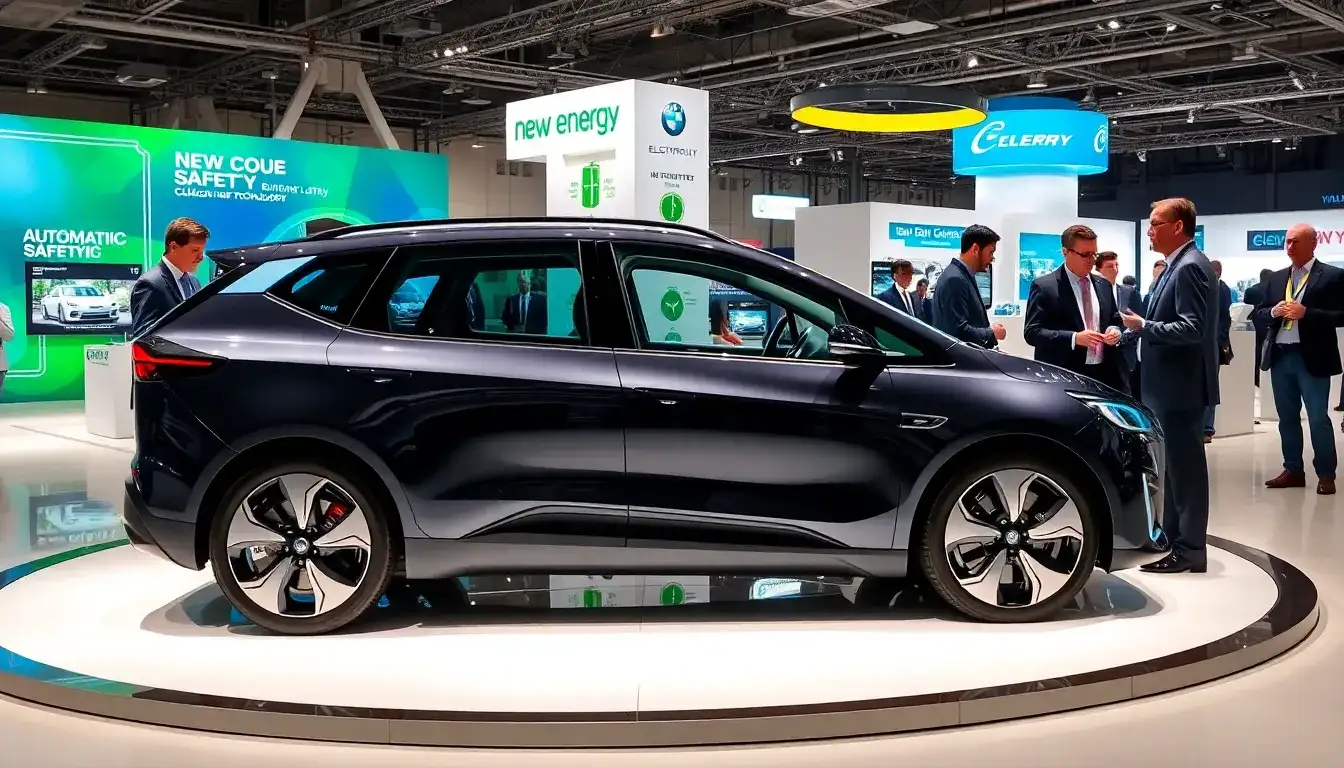
On April 22, 2025, the China Automotive Technology and Research Center’s New Energy Testing Center held a conference in Shanghai titled “Release and Exchange of Electric Safety Technology for New Energy Vehicles.” This event brought together over 80 experts from various sectors, including the industry, enterprises, and media, to discuss cutting-edge technological trends in electric safety for new energy vehicles. They exchanged insights on critical areas such as electromagnetic safety, charging, and thermal management, injecting new momentum into the development of electric safety technologies.
Zhou Hua, a member of the Party Committee and Deputy General Manager of the China Automotive Technology and Research Center, stated that as a central enterprise, the center aims to “lead the progress of the automotive industry and support the construction of a strong automotive nation.” With a commitment to independence, fairness, and third-party assessment, the center actively leverages its technological, data, and industry platform advantages to support China’s new energy vehicle development strategy and carbon neutrality goals, providing solid backing for the advancement and high-quality development of the automotive industry.
First Release of Electric Safety Technology Report and Evaluation Results
During the conference, the New Energy Testing Center released the first batch of electric safety evaluation results for new energy vehicles in 2025, along with the “2025 Annual Report on Electric Safety Technology for New Energy Vehicles.”
Nine models—including the Starship 7, iCAR V23, Star Era ET Range Extender, Star Era ES Range Extender, with Z06, Aito M8 Range Extender, Han L, Leapmotor B10, and Lynk & Co 900—received the first “NESTA Six-Dimensional Electric Safety Certificate” for 2025. NESTA evaluates vehicles based on typical consumer usage scenarios with stricter and more comprehensive requirements, covering six dimensions: charging safety, electromagnetic safety, functional safety, high-voltage safety, battery safety, and fire safety. Models certified by NESTA can be regarded as “hexagonal warriors” of electric safety.
Additionally, models such as the Zeekr 001, BYD Han L, Tang L, Hao Po HL, and Geely received the “CCTA Charging New National Standard Functional Verification Certificate.” Eight charging products from companies like Huawei, Li Auto, Keda, AVIC, Phoenix, Yonggui, and Zhidian Weilian obtained high-quality charging certificates, while the Leapmotor B10 received a high-quality thermal management certificate.
Based on comprehensive validation practices and research from entire vehicles, systems, and components, the New Energy Testing Center published the industry’s first “2025 Annual Report on Electric Safety Technology for New Energy Vehicles,” which systematically analyzes the current state of new energy vehicle development in China, technological trends, and the main causes of frequent electric safety incidents. The report introduces the NESTA electric safety technology verification system across six dimensions—charging, electromagnetic, functional, high-voltage, battery, and fire safety—to provide technical support for enterprises’ research and development.
The report highlights that as competition in the new energy vehicle industry intensifies, some new technologies are mass-produced without thorough validation, leaving potential safety risks. In the future, the NESTA verification system will continue to align with cutting-edge industry technologies, expand testing projects and user scenarios, and promote the enhancement of testing standards and regulations.
Diving into Technical Details to Enhance the Electric Safety Verification System
With advancements in new energy vehicle technology and testing verification methods, the New Energy Testing Center has introduced several verification brands focusing on electromagnetic safety, charging quality, and thermal management quality, including “Automotive Electromagnetic Protection Technology Verification (EMTA),” “New Energy Vehicle Charging and Discharging Technology Verification (CCTA),” “Premium Charging Technology Verification,” and “High-Quality Thermal Management System Technology Verification (PITMS).”
In terms of electromagnetic safety, the complexity of China’s road electromagnetic environment significantly exceeds current standards in Europe and the United States, with over 100 complicated electromagnetic scenarios and composite field strengths reaching 140V/m, far exceeding the industry standard of 30V/m. Additionally, concerns such as “radiation anxiety” reflect users’ worries about electromagnetic safety in new energy vehicles. The Automotive Electromagnetic Protection Technology Verification (EMTA) focuses on “intelligence, safety, and health,” establishing a technology verification system that covers three dimensions: electromagnetic safety for assisted driving, overall vehicle electromagnetic performance, and human electromagnetic health. This approach addresses industry pain points and ensures vehicle electromagnetic safety in complex electromagnetic environments through precise scene-based validation.
Regarding charging, the rapid iteration of charging technologies and the variety of charging stations demand collaboration between vehicle manufacturers and charging station companies to enhance efficiency and safety. The New Energy Testing Center offers two verification brands, CCTA and Premium Charge, targeting vehicle manufacturers and charging station companies, covering evaluations from basic safety and compatibility to extreme charging levels, providing technical solutions for products aimed at different market segments.
Effective thermal management is crucial for vehicle performance and user experience. For both pure electric and hybrid (including range-extending) power systems, the New Energy Testing Center has proposed a high-quality thermal management evaluation scheme that encompasses four dimensions: thermal safety, comfort, functional safety, and energy consumption. This evaluation not only examines the maximum load capacity and safety redundancy of thermal management systems under extreme conditions but also considers the comfort of in-vehicle climate and NVH performance to meet passenger needs, providing a comprehensive assessment of system energy consumption across all scenarios.
Empowering Overseas Expansion with Growing User Influence
To meet the global development demands of new energy vehicles, the New Energy Testing Center has established a cooperation with TÜV Rheinland Greater China in areas such as charging technology, electric drive control, and energy systems. This partnership aims to create a regular communication mechanism, co-develop technical standards, and initiate a cross-national mutual recognition program for electric safety technology verification, achieving “one test, dual certification” to enhance the efficiency of Chinese automotive enterprises in international markets and provide safety assurances for global users.
Moreover, the New Energy Testing Center has formed strategic partnerships with China Life Property & Casualty Insurance Co., Ltd. and Chery Automobile’s Exeed brand, signing agreements to collaboratively launch innovative insurance products tailored for new energy vehicles, such as “Combined Assisted Driving Insurance” and “Electric Safety Special Insurance,” offering cost-effective and precise insurance solutions for users in the new energy sector.
Gao Jidong, General Manager of the New Energy Testing Center, remarked, “The NESTA, Premium, and other verification brands are driving the industry from ‘compliance testing’ to ‘quality evaluation,’ steadily achieving high-quality development while maintaining safety standards.” Looking ahead, the New Energy Testing Center will closely follow industry-leading technologies, continuously iterate verification methods, and promote improved industry collaboration mechanisms to help automotive enterprises enhance product safety quality and safeguard user driving safety.
Original article by NenPower, If reposted, please credit the source: https://nenpower.com/blog/2025-electric-safety-technologies-for-new-energy-vehicles-unveiled-at-industry-conference/

