

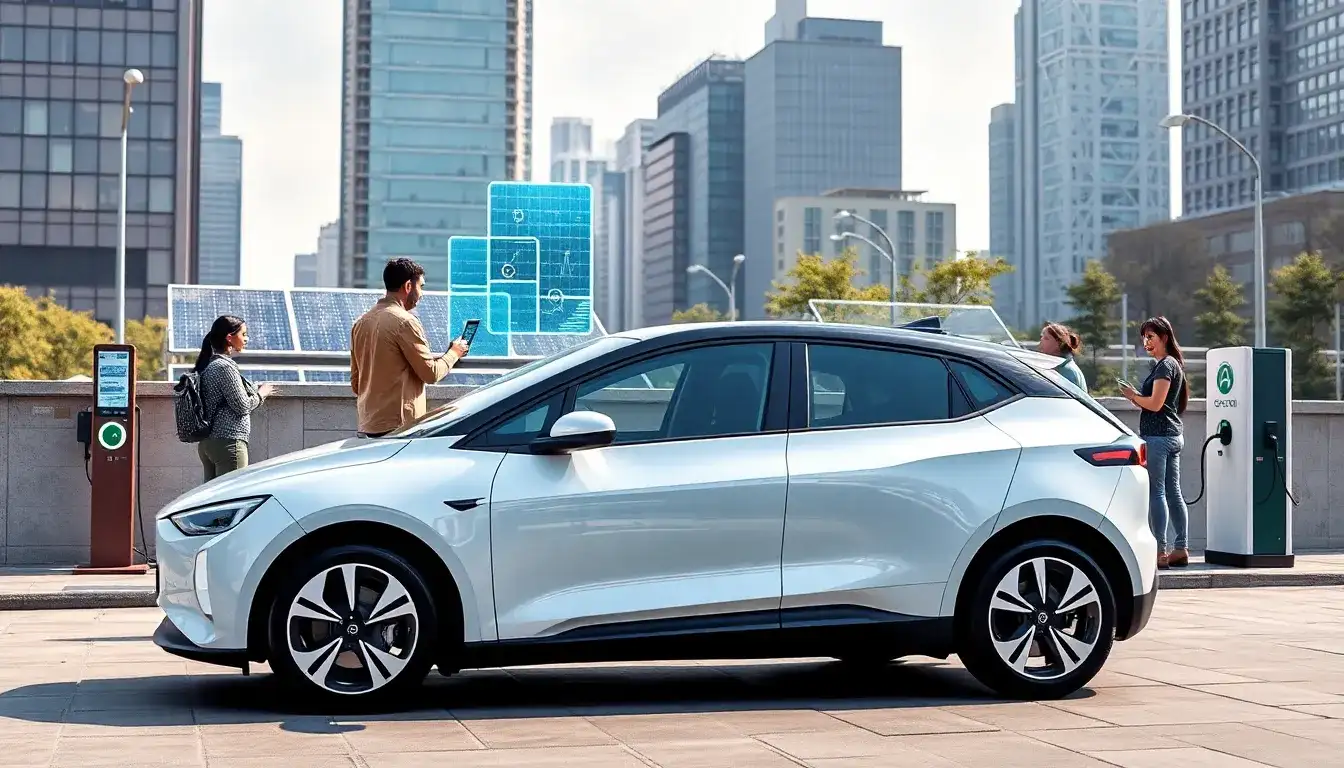
2025 Consumer Insights: New Energy Vehicle Industry Report
As the global automotive industry accelerates its transition to electrification, the new energy vehicle (NEV) sector is undergoing profound transformation and restructuring. Currently, one in every five cars sold worldwide is an NEV, which has gradually penetrated the mass consumer market from its initial phase as a technological innovation. This shift is fundamentally changing consumer perceptions of automobiles and transportation.
This report compiles and interprets vast data from multiple platforms globally, covering the period from December 1, 2023, to November 30, 2024. It provides an in-depth analysis of the NEV market landscape, consumer behavior, and external environmental influences, offering valuable insights for industry professionals. The report is based on the publication “2025 Consumer Insights: New Energy Vehicle Industry – Exploring the Current State of the NEV Industry Based on Data” released by Rongwen and includes data from over 400 research reports on the NEV sector. The compilation has been shared in a discussion group, where participants can consult, customize data reports, and engage with over 600 industry professionals for collective growth.
From a market competition perspective, NEV brands are fiercely competing globally, with brands like Tesla, BYD, and Hyundai showcasing their strengths in different markets. Consumers express both interest and concern regarding key factors such as battery performance and charging infrastructure during the car buying process. Additionally, online platforms like social media are playing an increasingly significant role in purchasing decisions. The impact of tariff issues arising from trade tensions also significantly affects the development of the NEV industry. Before delving into these core aspects, understanding the overall situation of the automotive market in 2024 can provide a better context for grasping NEV industry developments.
Market Overview and Characteristics in 2024
The automotive market in 2024 exhibits distinct characteristics and variations. In terms of timing, the performance in the second half of the year is notably better than that in the first half. For instance, domestic demand for passenger vehicles reached 9.81 million units from January to June 2024, while it soared to 13.19 million units in the latter half, reflecting year-on-year growth rates of 0.9% and 4.0%, respectively. This change is primarily attributed to policy support, such as the “old-for-new” policy announced on July 24, which expanded subsidy recipients and increased subsidy amounts, significantly enhancing the central government’s funding share. By September, local replacement subsidies were fully rolled out, with average subsidies of around 15,000 yuan for NEVs and 10,000 yuan for fuel vehicles. As a result of these policies, there was a significant increase in vehicle scrappage applications from late July onwards, with an estimated sales boost of over 1.6 million units for the year.
In terms of pricing, the low-price market segment performed exceptionally well. Data shows that from January to November 2024, sales of passenger vehicles priced at 100,000 yuan saw a year-on-year increase of 25.3%, while those priced at 200,000 yuan fell by 2.7%. In the fuel vehicle sector, sales in the 100,000 yuan category grew by 7.5%, while those in the 200,000 yuan category declined by 20.3%. For NEVs, the 100,000 yuan segment experienced a remarkable growth of 86.0%. This indicates a growing consumer preference for cost-effectiveness when choosing vehicles.
The NEV market’s growth is impressive, significantly outpacing that of fuel vehicles. In 2024, NEV sales for passenger vehicles reached 14.372 million units, marking a year-on-year increase of 47.2%, while fuel vehicle sales declined by 12.3%. In terms of domestic demand, NEV sales totaled 14.512 million units, reflecting a growth rate of 39.1%, with fuel vehicles down by 17.2%. The penetration rate of NEVs among passenger vehicles reached 47.8% in 2024, consistently exceeding 50% for six consecutive months in the second half of the year. In certain provinces, such as Hebei and Beijing, penetration rates have surpassed 50%. Policy incentives, including vehicle purchase tax exemptions and road usage fees, as well as green license plate and insurance benefits, have significantly enhanced the appeal of NEVs.
Looking back at NEV sales data over the years, the growth trend has been robust. Since its inception in 2013, the market has expanded continuously, especially gaining momentum from 2020 onwards, with sales peaking in 2024.
Market Dynamics and Competitive Landscape
In this thriving market environment, the development of the NEV sector has attracted numerous brands to compete. The global brand landscape exhibits significant differences and dynamic changes. Tesla holds a dominant position in media exposure related to NEVs. Data indicates that from December 1, 2023, to November 30, 2024, Tesla’s news exposure was more than double that of BYD, with positive evaluations exceeding negative ones by approximately 53%. These favorable evaluations largely stemmed from Tesla’s production milestones, such as producing its six millionth vehicle in March 2024. Notably, developments from competitors, including claims of the fastest charging battery, often lead to comparisons with Tesla, indirectly boosting its mention frequency.
In regional market competition, different brands exhibit their own advantages. BYD recorded the highest news mentions in mainland China and Japan, exceeding 21,400 times. In 2024, BYD’s global news reports related to legal and government topics surged by 372%, significantly outpacing Tesla’s 68% increase. The term “tariff” ranked 11th among BYD’s most popular keywords, while Tesla’s keywords were less frequently associated with governmental news. Hyundai excelled in the Indonesian and South Korean markets, emerging as the brand with the highest media presence in those regions.
When considering the overall trends in the automotive market in 2024, the competitive landscape among NEV brands interacts with sales performance across various price segments and policy directions. The heat in the low-price market has prompted brands to invest more in cost-effectiveness and promotion, influencing their competitiveness and market share in different regions.
Consumer Behavior and Key Focus Areas
As the NEV market continues to evolve, consumer focus has shifted from merely reducing reliance on fossil fuels to addressing practical issues such as battery performance and charging infrastructure, as well as broader social topics like environmental impact. This aligns with consumers’ increasing emphasis on cost-effectiveness in the automotive market in 2024, where these practical issues directly affect their usage experience and expenditures.
Regarding charging infrastructure, approximately 28% of discussions about NEV charging on global social media mentioned charging stations, with negative comments outnumbering positive ones by a factor of three. Over 76,000 conversations about electric vehicle charging referenced “home,” while around 380,000 discussed “charging stations,” indicating that consumers prioritize the convenience of on-the-go charging. Slow charging times and limited charging infrastructure are key factors affecting their decisions to choose NEVs. Tesla’s Supercharger stations were the most frequently mentioned product in discussions, with positive feedback accounting for 19.4% and negative feedback 12.8%, focusing on charger availability and experiences of non-Tesla electric vehicle owners.
Battery-related discussions also garnered significant attention, with positive mentions comprising 20.5%, neutral at 46.8%, and negative at 32.7%. Positive feedback centered on production, market, and technology milestones, while negative discussions focused on environmental and social issues, including child labor in cobalt mining, environmental impacts of nickel mining, effects of heavy batteries on tire degradation, and battery performance in cold climates. About 12% of discussions related to electric vehicle batteries mentioned range and related keywords, while 11% referenced sustainability and climate change, reflecting consumers’ dual concerns about battery performance and environmental impact.
Online platforms play a crucial role in the car purchasing decision-making process. On Reddit, approximately 12% of electric vehicle discussions pertained to purchasing topics, as international consumers use this forum to research products and seek peer recommendations. From December 2023 to November 2024, discussions about the availability of public charging infrastructure and reliance on battery power were prominent topics in NEV purchasing decision conversations. Among the specific mentions related to purchasing, car topic discussions totaled 323,791, while mentions regarding car specifications, reviews, and comparisons amounted to 222,818. Mentions of car dealerships and retailers reached 31,876, and used car discussions totaled 20,243.
In terms of consumer behavior in the automotive market for 2024, NEV buyers not only focus on the vehicle’s performance and price but also pay close attention to the adequacy of charging facilities and overall battery performance. This aligns with the observed trend favoring low-priced models, as consumers seek a better experience within a limited budget. For example, in the SUV segment, the frequency of comparisons among models priced between 100,000 and 150,000 yuan has significantly increased, accounting for over one-fifth of the total. This data clearly indicates that in 2024, consumers are more inclined to include models in this price range when selecting SUVs, substantially enhancing the interest in this price segment. A specific SUV model priced between 100,000 and 150,000 yuan saw a notable increase in inquiries and test drive appointments compared to 2023. The sedan market is also experiencing a downward pricing trend, with an increase in comparisons for models priced below 100,000 yuan, indicating a significant rise in interest in this lower price segment. For example, a popular low-priced sedan saw a considerable increase in online search volume and in-person viewing numbers in 2024. This trend toward lower price points reflects consumers’ growing emphasis on cost-effectiveness, influencing their preferences for NEV brands and models.
External Environmental Influences and Future Trends
The challenges posed by tariffs due to trade tensions have become a significant external factor affecting the development of the NEV industry. The year-on-year growth rate of global media mentions related to NEVs was 13%. Notably, on May 14, 2024, the U.S. government announced plans to raise import tariffs on NEVs manufactured in China, resulting in a substantial spike in NEV mentions in the media on that day. Concurrently, social media mentions of NEVs increased by 4%, while discussions specifically about NEV tariffs surged by 76%, highlighting tariffs as a hot topic among consumers.
The growing concern over tariff issues has led consumers to focus more on brand and cost when purchasing vehicles. For industry brands, this presents both challenges and opportunities. Brands can create content addressing trade policy issues, utilize consumer insights to develop pricing and communication strategies, and establish interactions and trust with their audience. For instance, Zeekr leveraged collaborations with influencers at Thailand’s Elle Fashion Week to reach a large female and Gen Z audience, enhancing its brand image and recognition.
Looking ahead, competition for consumer loyalty in the NEV market is just beginning. As external economic factors become a focal point, industry marketers must rely on automation tools to stay abreast of developments and anticipate shifts in consumer perceptions and expectations. By monitoring discussions on social media and other channels, brands can identify concentrated audience platforms and reasons, pinpoint untapped market segments, and employ data-driven marketing strategies, such as targeted influencer marketing campaigns, to build lasting connections with new audiences.
In product development, brands should focus on consumer concerns about batteries and charging infrastructure by enhancing battery performance through technological innovation and strengthening charging infrastructure. Moreover, improving supply chain transparency and actively addressing environmental and social issues can bolster brand competitiveness and consumer trust.
In summary, amidst external challenges such as tariffs, the NEV industry must adjust its development strategies in line with market trends and evolving consumer behaviors. Policy directions, pricing preferences, and consumers’ pursuit of cost-effectiveness all provide guidance for the future development of NEV brands. In the context of rapid growth within the global NEV industry, brands must accurately grasp market dynamics and deeply understand consumer needs to gain a competitive edge and promote the sustainable development of the sector.
Original article by NenPower, If reposted, please credit the source: https://nenpower.com/blog/2025-consumer-insights-trends-and-analysis-in-the-electric-vehicle-industry/

