

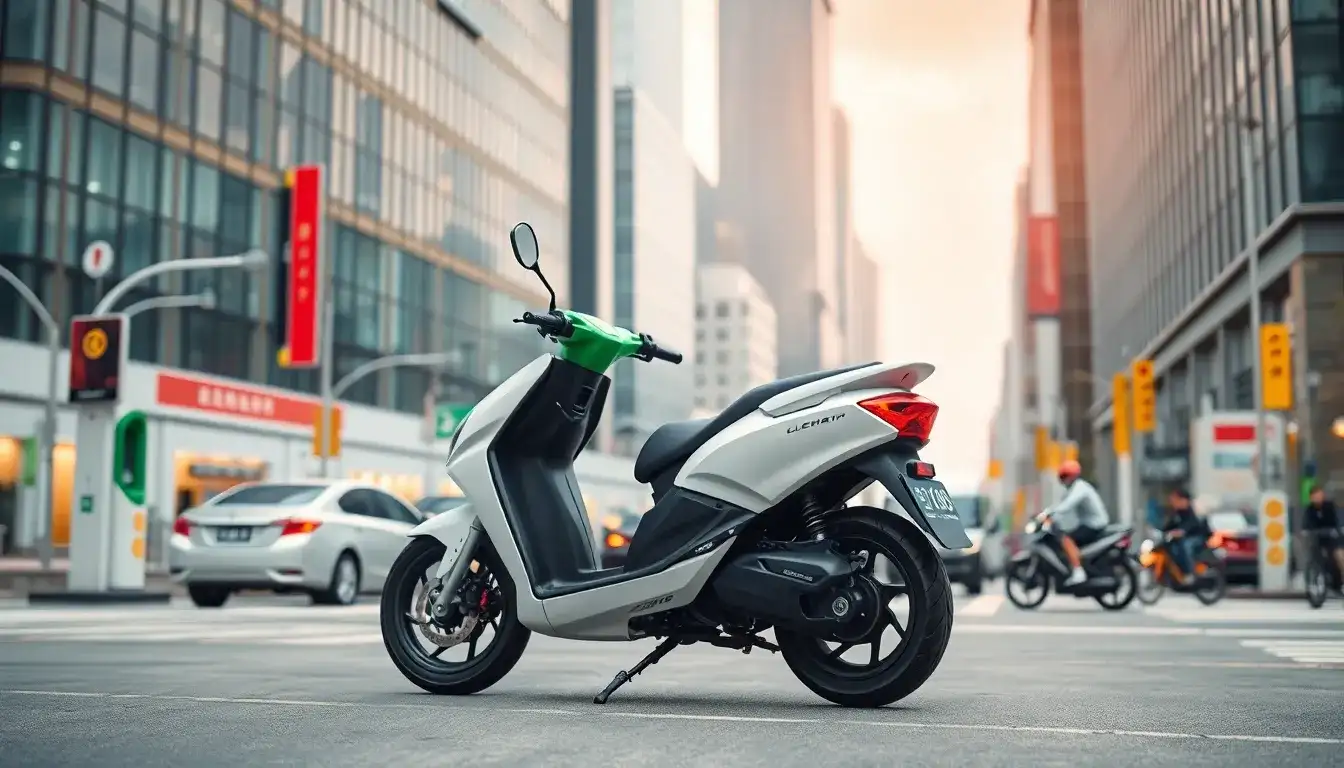
2025 Electric Two-Wheeler Market Summary Report and 2026 Market Outlook
In 2025, driven by the dual initiatives of trade-in programs and the transition to new national standards, the domestic electric two-wheeler market underwent significant changes, performing better than expected for the year. The official shift to the new standards is set to enhance safety and promote smarter travel solutions for electric two-wheelers. This article focuses on the trends and highlights of the electric two-wheeler market in 2025, while also predicting the direction and opportunities for the market in 2026.
2025: Rapid Growth Amid Multiple Challenges
In 2025, the electric two-wheeler market in China faced considerable macroeconomic pressures. The growth of the national retail sales of consumer goods continued to slow, and the natural population growth rate remained under strain, indicating structural challenges regarding consumer willingness to spend and market size. Additionally, the sustained high prices of core raw materials, such as lithium carbonate, significantly increased production costs. However, the market demonstrated remarkable resilience in this environment characterized by “shrinking demand and cost pressures.” This shift signifies a transition from a focus on simple scale expansion to a high-quality competitive phase centered on technological upgrades, product value enhancement, and refined operations, where smart safety becomes crucial for navigating cycles and achieving growth.
According to AVC PSI production and sales data, the production scale of the electric two-wheeler market in China reached 63.16 million units in 2025, reflecting a year-on-year growth of 14.8%. Throughout the year, the market exhibited a “high first half, low second half” trend due to the implementation of the Electric Bicycle Safety Technical Specification (GB 17761—2024). Growth momentum gradually weakened in the second half, with the growth rate falling to -4.4% year-on-year in the fourth quarter, indicating that both the market and the supply chain were still in a phase of adjustment and adaptation during the transition to the new standards.
The new electric bicycle national standard was published on December 31, 2024, and officially came into effect on September 1, 2025. It completely replaces the old standard and emphasizes enhancements in battery safety, fire performance, charger protection, and vehicle speed regulations. The new standards drive upgrades in vehicle design, prompting companies to increase their research and development investments in intelligence, weight reduction, and safety.
Market Landscape: Brands Shine Amid Pressures
The competitive landscape of the electric two-wheeler market in China is undergoing subtle yet profound changes. Brands like Yadea and Aima have seen their domestic market shares increase year-on-year, thanks to their strong channels and brand power, while Tailg and Green Source are experiencing a contraction in market share. Notably, Ninebot, known for its smart offerings, has surged into the industry’s top four in sales, disrupting the previous hierarchy. Despite these shifts, the overall brand concentration in the domestic market has remained relatively stable, with intensified competition among the leading players.
From a financial standpoint, the market pressures have not hindered the growth of the leaders. Yadea has seen significant revenue growth compared to the same period last year, while Ninebot continues to demonstrate robust growth in its focus area of smart electric two-wheelers. This confirms that the industry is rapidly evolving towards value competition and differentiated innovation.
Battery Technology: Lead-Acid Batteries Dominate, Lithium Batteries Require Continuous Upgrades
The implementation of the new standards has driven a profound transformation in product structure towards a “safety-oriented” approach, with battery safety as a core focus. Market data indicates that in the main sales models of leading brands, the proportion of lead-acid battery models rose significantly from 54.9% in the first quarter to 90.6% in the fourth quarter, highlighting that optimizing safety and range capabilities has become the focal point of current competition. In parallel, the development path for lithium batteries is clearly directed towards higher-level technological and safety upgrades. On the technology front, innovations in materials and structural optimizations continue to enhance energy density and cycle life. In terms of safety, the adoption of intelligent battery management systems systematically builds a comprehensive safety defense from the cell to the system, promoting the reliable application and value return of lithium batteries in high-end and high-performance segments.
Future Strategies: Transforming Under New Consumption Patterns
In light of new consumption models, the industry continues to build a tripartite upgrade system around “people, goods, and venues,” steering the market from a singular product transaction model towards deeper user engagement. On the “people” front, the focus is on continuously cultivating relationships between brands and users through refined tiered operations and community-building, breaking away from traditional one-way transaction models to establish a user ecosystem based on long-term trust and emotional connection. Regarding “goods,” the key is to drive technological innovation through scenario-driven demands, enhancing product technological value by integrating “hardware, software, and services” into an ecosystem that meets consumers’ dual expectations for personalization and sustainability. In terms of “venues,” efforts are directed towards creating a new hybrid channel model that integrates online and offline experiences, achieving bidirectional traffic and service loops through “online engagement and offline experience,” thus ensuring comprehensive coverage from demand response to experiential delivery. Through the synergy of “people, goods, and venues,” the foundation for high-quality growth in the industry is further solidified.
Original article by NenPower, If reposted, please credit the source: https://nenpower.com/blog/2025-china-electric-two-wheeler-market-report-and-2026-outlook-trends-challenges-and-opportunities/

