

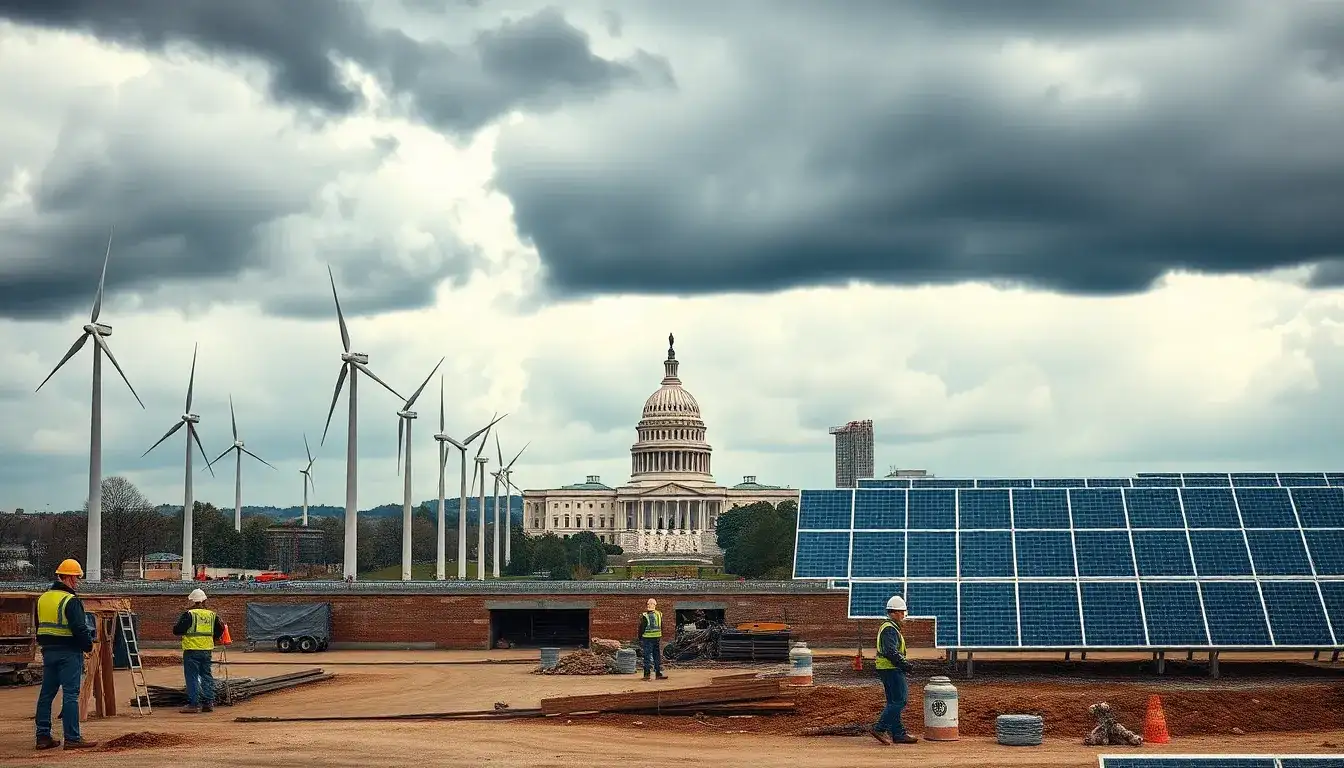
“$14 Billion Wiped Out”: Massive Wave of Hydrogen, Battery, and Solar Projects Cancelled or Delayed Across the U.S. in Energy Collapse
—
In a dramatic turn of events, over **$14 billion** in green energy projects across the U.S. have been unexpectedly canceled or postponed this year due to looming political uncertainties, particularly in Republican-led states. This situation threatens thousands of jobs and undermines the nation’s renewable energy objectives.
### Key Points
– **Over $14 billion** in green energy projects have been canceled or postponed due to political uncertainties.
– The cancellations have resulted in a loss of **10,000 potential jobs** in the renewable energy sector.
– Proposed tax reforms by Republicans threaten the tax credits established by the **Inflation Reduction Act**.
– Ironically, Republican-led states, which have benefited from clean energy advancements, are the most affected, jeopardizing both economic growth and environmental goals.
The green energy sector in the United States is facing unexpected challenges, with more than **$14 billion** in projects either canceled or delayed in 2023 alone. Political uncertainty, primarily driven by proposed tax reforms, is the main factor behind these cancellations. Ironically, many of the most affected states are Republican-led, which have historically benefited from advancements in renewable energy. This scenario underscores the complex relationship between politics and the evolving clean energy industry, creating a ripple effect that impacts employment and economic growth nationwide.
### Visible Impact on Employment
Recent analyses reveal that the cancellation of green energy projects has led to the loss of **10,000 potential jobs** in the renewable sector. These jobs were linked to essential technologies such as solar, wind, battery storage, and hydrogen energy. Notable examples include the halt of the **Kore Power battery plant** in Arizona and the suspension of two electric vehicle production sites by **BorgWarner** in Michigan. Furthermore, **Bosch** has put a significant **$200 million** investment on hold for a hydrogen fuel cell plant in South Carolina. These projects were crucial not only for job creation but also for advancing sustainable technologies.
The pause on these initiatives highlights the significance of tax credits provided by the **Inflation Reduction Act (IRA)**. This legislation, passed during the Biden Administration, was designed to support emerging green technologies. However, proposed changes in tax policy threaten to dismantle these incentives, leaving many planned and ongoing projects in jeopardy.
### Republican States Face Greater Impact
Ironically, Republican-led states and districts are experiencing the greatest impact from these cancellations. More than **$12 billion** in projects have been affected in these areas, which have seen substantial growth in renewable energy over the years. States like **Georgia** and **Tennessee** have heavily invested in the battery and electric vehicle supply chains, which have not only boosted employment but also positioned them as leaders in the clean energy transition. Yet, proposed fiscal reforms threaten to halt this progress, potentially reversing years of growth and investment. The consequences extend beyond economic setbacks; they could hinder efforts to combat climate change, as these states play a crucial role in the national strategy to reduce carbon emissions.
### The Role of Political Uncertainty
The core issue behind these project cancellations is the proposed tax reform by Republicans in the House of Representatives, which aims to dismantle substantial portions of the tax credits established by the Inflation Reduction Act. These credits are vital for maintaining investment in clean technologies. Without them, many companies are reconsidering their commitment to the U.S. market, leading to a reassessment of planned projects. Political uncertainty not only deters investment but also creates an unstable environment for innovation. Companies are less likely to invest in long-term projects if there is a risk that supportive policies could be revoked. This unpredictability may discourage future investments and collaborations crucial for advancing the country’s renewable energy objectives.
### The Future of Clean Energy Initiatives
The current situation raises critical questions about the future of clean energy in the United States. While the potential for renewable energy remains vast, the political climate presents significant challenges. The need for bipartisan support in creating a stable and conducive environment for green investments is more urgent than ever. As we move forward, it is crucial to consider how policy decisions impact not only the economy but also the environment and society at large. The stakes are high, and the decisions made today will shape the country’s energy landscape for years to come. Will the U.S. be able to navigate these political hurdles and continue its journey toward a sustainable future?
Original article by NenPower, If reposted, please credit the source: https://nenpower.com/blog/14-billion-lost-as-political-uncertainty-delays-or-cancels-major-u-s-green-energy-projects/

