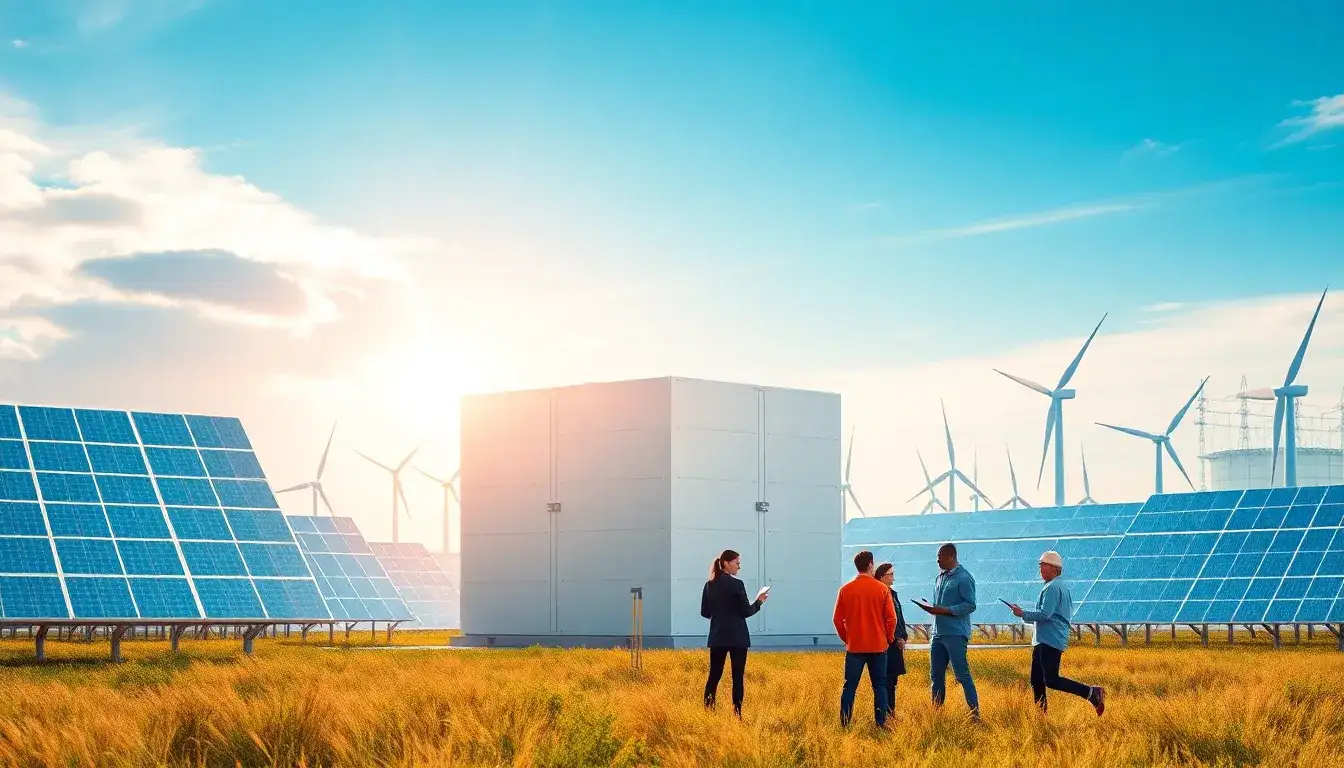
Global Investment of $1.2 Trillion Required for Battery Storage to Support Renewable Energy Growth
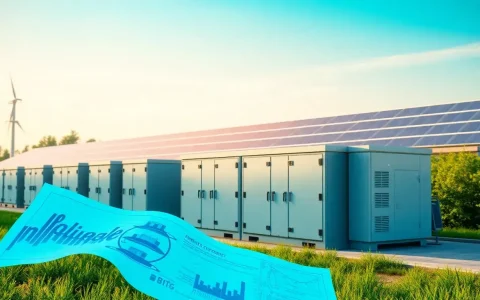
A recent analysis by energy consultancy Wood Mackenzie reveals that a global investment of $1.2 trillion will be necessary over the next decade to develop battery energy storage systems (BESS) that can support the addition of 5,900 gigawatts (GW) of new wind and solar capacity worldwide. This report emphasizes a projected 55 percent increase in global power demand by 2034, with more than 80 percent of new capacity expected to come from variable renewable energy sources.
According to Robert Liew, Research Director at Wood Mackenzie, “Grid-forming battery energy storage systems represent a critical breakthrough for renewable energy integration. As global power demand is projected to surge 55 percent by 2034, with variable renewable energy making up over 80 percent of new capacity additions, GFM BESS provides the technological bridge between renewable abundance and grid stability requirements.”
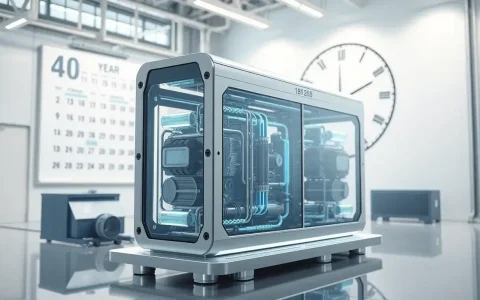
Grid-forming battery systems differ from traditional grid-following systems as they actively support voltage and frequency stability, a crucial factor as the proportion of intermittent renewable sources increases. The report indicates that the power sector will face a 1,400 GW capacity gap for grid-forming battery storage installations between 2024 and 2034. This highlights the urgent need for large-scale deployment of storage systems to ensure grid reliability.
Several markets in the Asia-Pacific region already operate with wind and solar contributing between 46 percent and 90 percent of peak demand. The report suggests that markets with high renewable penetration are likely to favor grid-forming capabilities to manage stability concerns. “Grid-forming BESS provides multiple critical functions for stability including independent voltage source capabilities, high current transient support during disturbances, inertia response similar to conventional power plants, and black start functions,” the report stated.
The analysis referenced the 2025 Spanish blackout as an example of the risks tied to high renewable penetration without corresponding grid-forming infrastructure. Liew pointed to the Red Sea Project as a case study for grid-forming technology, noting, “As the world’s largest off-grid renewable energy project, it showcases how a utility-scale power system can operate continuously on 100 percent renewable energy for almost two years.”
While incorporating grid-forming capabilities adds about 15 percent to system costs—primarily due to advanced inverters and software—the report notes that battery prices have dropped by 10–40 percent across global markets in the past year. This decline has enhanced the economic viability of such installations. Hybrid utility-scale solar and battery storage systems are already competitive in cost with onshore wind, and projections suggest that battery systems will outcompete coal and gas power generation costs in several non-US markets by 2040.
Regulatory support for grid-forming battery technology is also gaining momentum. Countries such as the United States, Australia, and others have issued technical guidelines to promote the deployment of these systems. “Increasing clean energy targets, policy developments, and proven pilot projects are accelerating the adoption of grid-forming technology,” Liew added. “With global battery capacity expected to triple by 2035, grid-forming capabilities will likely become a baseline requirement for new storage deployments.”
Countries like India, China, Japan, and Vietnam currently manage renewable energy penetration levels ranging from 46 percent to 92 percent of peak demand, positioning them as key regions for the early adoption of grid-forming storage systems. The report emphasizes that managing renewable curtailment and enhancing grid resilience will be vital to energy transition efforts in these markets.
Original article by NenPower, If reposted, please credit the source: https://nenpower.com/blog/1-2-trillion-investment-required-for-battery-storage-to-enable-global-renewable-energy-growth/