

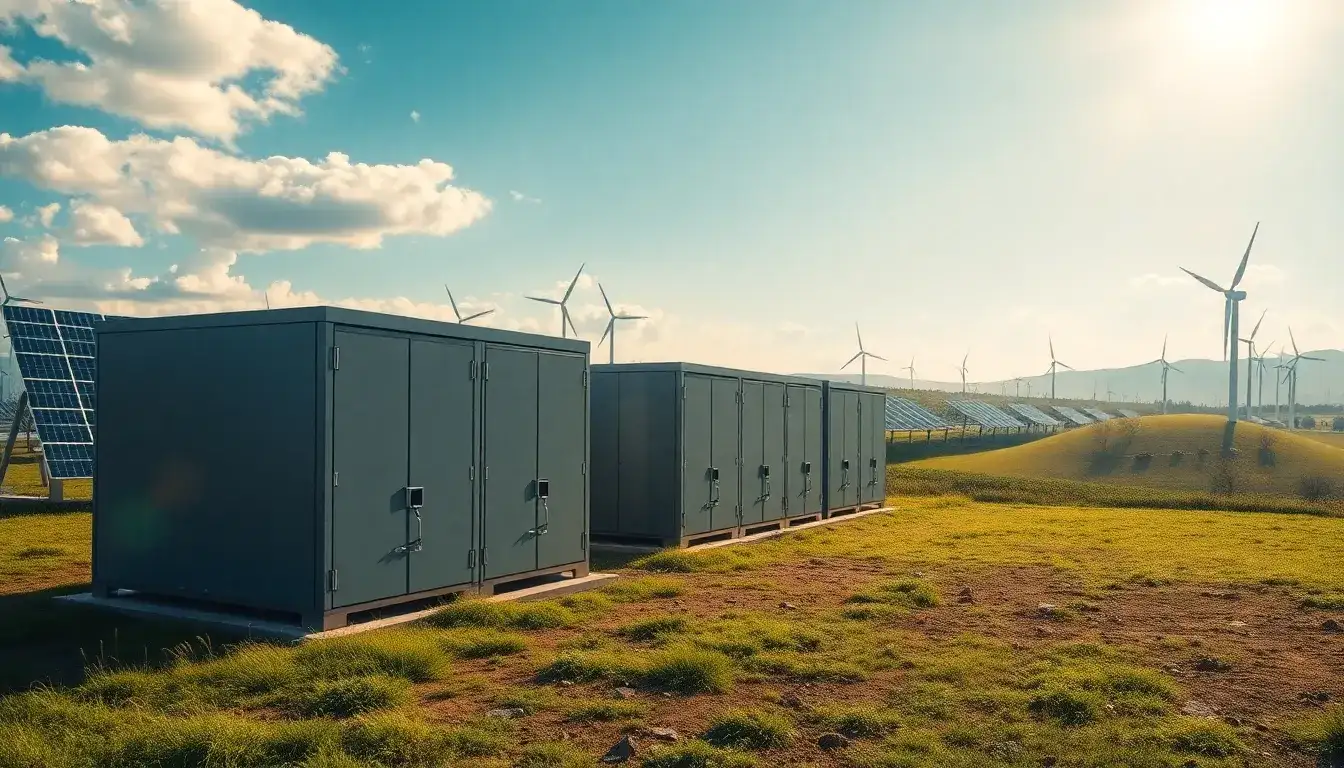
US$ 1.2 trillion in battery storage investments needed to support global renewable buildout
==========================================================================
Investments of US$ 1.2 trillion in battery energy storage systems (BESS) will be essential to support the installation of over 5,900 GW (Gigawatts) of new wind and solar capacity globally through 2034, according to Wood Mackenzie. The deployment of grid-forming technology (GFM) must accelerate over the next decade to enable the projected US$ 5 trillion global expansion of renewable energy.
Unlike traditional grid-following systems, which only respond to grid conditions, grid-forming battery energy storage systems can actively create and maintain grid stability. This capability is becoming increasingly crucial as renewable energy emerges as the primary source of power generation worldwide.
“Grid-forming battery energy storage systems represent a critical breakthrough for renewable energy integration,” stated Robert Liew, research director at Wood Mackenzie. “As global power demand is projected to surge by 55% by 2034, with variable renewable energy accounting for over 80% of new capacity additions, GFM BESS provides the technological bridge between renewable abundance and grid stability requirements.”
### Critical Capacity Gap Amid Growing Renewable Penetration
A recent report by Wood Mackenzie indicates that the global power sector is facing a capacity gap of 1,400 GW for additional battery energy storage installations utilizing GFM for grid stability from 2024 to 2034. Several Asia-Pacific markets are already experiencing variable renewable energy from wind and solar power contributing between 46% to 90% of peak load conditions. This scenario presents a significant market opportunity as grid-forming capabilities become the preferred solution for regions with increasing renewable energy integration.
While the momentum for renewable integration continues to grow, recent incidents of grid instability underscore the urgent need to advance storage and grid technologies concurrently. For example, the 2025 Spanish blackout exemplifies the rising risk associated with high renewable energy penetration without sufficient grid-forming capabilities or advanced storage infrastructure to ensure system reliability.
Grid-forming BESS offers several critical functions for stability, including independent voltage source capabilities, high current transient support during disturbances, inertia response akin to conventional power plants, and black start functions for complete system recovery following outages.
### Higher Costs Mitigated by Falling Battery Prices
Though grid-forming capabilities add approximately 15% to overall system costs—largely due to upgraded inverters, controls, and software—these cost barriers are becoming increasingly manageable. Average battery energy storage prices have decreased between 10% and 40% across global markets over the past year, according to Wood Mackenzie.
The economic rationale for new advanced battery storage systems is strengthening in various global markets. Hybrid utility solar installations paired with battery energy storage are already directly competing with onshore wind costs, while projections suggest that utility-scale battery systems may undercut coal and gas power generation costs by 2040 in markets outside the United States.
### Regulatory Momentum Amid Market Uncertainty
Regulatory support for grid-forming battery technology is gaining traction, with major markets such as China, the United States, and Australia introducing comprehensive technical guidelines to facilitate the deployment of grid-forming batteries. These guidelines reflect an increasing recognition of the technology’s role in stabilizing grids as solar, wind, and storage systems contribute a growing share of power generation.
While international standards are still under development, early regulatory signals indicate a preference for advanced grid-forming capabilities. In the Asia-Pacific region, countries like China, India, Japan, and Vietnam are already managing renewable energy penetrations ranging from 46% to 92% of peak demand. This high variability has led to increased curtailment, highlighting the necessity for technologies that can ensure grid stability while optimizing renewable energy output.
With global electricity demand projected to grow at a compound annual rate of 3% through 2040, grid-forming batteries are emerging as a practical alternative to conventional synchronous generators. Their ability to provide voltage and frequency stability positions them as a foundational technology for high-renewable power systems.
“We’re witnessing a convergence of key factors: declining battery costs, stronger clean energy targets, supportive policy developments, and proven pilot projects, all accelerating the adoption of grid-forming technology,” noted Liew. “With global battery capacity expected to triple by 2035, grid-forming capabilities will likely become a baseline requirement for new storage deployments. This is crucial not only for grid reliability but also for maximizing the value of renewable energy investments at scale.”
Original article by NenPower, If reposted, please credit the source: https://nenpower.com/blog/1-2-trillion-investment-needed-in-battery-storage-to-drive-global-renewable-energy-expansion-says-wood-mackenzie/

