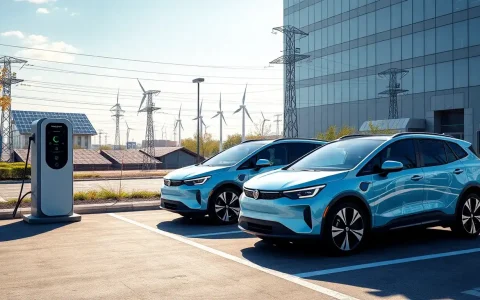
In 2027, the carbon footprint report is set to arrive, raising a significant question: How well are electric vehicle manufacturers prepared?
Recently, the Ministry of Industry and Information Technology released the “Notice on the Development of Carbon Footprint Management Work for Electric Vehicles”, outlining the framework for carbon footprint calculation, standard system, and evaluation certification by the end of 2026. This foundational setup is crucial for establishing a carbon footprint management system for electric vehicles, which will include regulations, certification standards, and data collection systems.
The report emphasizes that the carbon footprint calculation for electric vehicles is a critical starting point for setting up a robust carbon management system in the automotive industry, aiming to realize the “dual carbon” target through effective implementation.
Challenges in Carbon Footprint Management
The product carbon footprint is a key indicator of emissions from electric vehicles during their lifecycle. To achieve the “dual carbon” goal, carbon footprint management must be robust and effective. In July 2024, the National Development and Reform Commission will issue the “Accelerated Carbon Emission Management System Work Plan”, which aims to streamline and manage carbon emissions for electric vehicles and new energy vehicles.
By 2025, the government will clarify the carbon footprint calculation methods while establishing a system for product carbon footprint management. This will be crucial for adapting to green trade requirements.
According to industry experts, the carbon footprint management report is essential for driving the electric vehicle industry towards sustainable development, ensuring adherence to national standards and facilitating compliance with international regulations.
Implementation Phases
The rollout of the carbon footprint reporting will proceed in two phases. The first phase will run from January 1, 2027, where carbon footprint reports will be mandatory. The second phase will follow a trial period, ensuring that manufacturers are equipped to handle the new regulations effectively.
This phased approach not only allows for gradual implementation but also provides manufacturers ample time to adapt their systems and processes to meet the upcoming standards.
As the carbon footprint management system is established, it will be crucial for manufacturers to actively engage in compliance to ensure that their products meet the environmental standards set forth by regulatory bodies.
Future Outlook
With the impending carbon footprint reporting requirements, electric vehicle manufacturers are encouraged to align their strategies with the new regulations. This includes enhancing data collection methods, ensuring compliance with carbon reporting standards, and improving supply chain transparency.
In conclusion, the transition towards a sustainable electric vehicle market will demand cooperation between manufacturers, regulatory bodies, and stakeholders to successfully implement the carbon footprint management system. The automotive industry must be prepared for the challenges ahead to meet the dual carbon targets effectively.
Original article by NenPower, If reposted, please credit the source: https://nenpower.com/blog/navigating-the-2027-carbon-footprint-regulations-challenges-and-opportunities-for-electric-vehicle-manufacturers/